Adjustable Dumbbells for Small Spaces: What to Buy
This article may contain affiliate links. If you make a purchase through these links, we may earn a small commission at no extra cost to you. This helps us keep creating free content.
Hinweis: Dieser Artikel ersetzt keine ärztliche Beratung. Besprich Trainingsfragen im Zweifel mit Arzt oder Physiotherapie.
One pair of adjustable dumbbells replaces about 15 pairs of fixed dumbbells and takes up roughly the footprint of a shoebox. For an apartment or a spare-bedroom corner, that single fact is the whole argument. A full fixed-weight rack from 5 to 50 pounds needs a six-foot bench and a wall it can lean against. The same range lives in a 10-inch tray you can slide under a desk.
The catch is that not every adjustable dumbbell suits a small room. Some are bulky at the low weights you actually use most, some rattle on every rep, and a few have a dial mechanism that jams if you set them down at an angle. Below is a practical sort of what matters when floor space and storage are the constraints, plus concrete models with approximate US retail prices.

Why adjustable beats a fixed set in tight spaces
A fixed dumbbell set scales badly. To train arms, shoulders, chest and legs you need light weights for some moves and heavy ones for others, so you end up buying the whole ladder. Each pair sits on a rack, and that rack is a piece of furniture. In a 120-square-foot bedroom it competes with the bed.
Adjustable pairs collapse that ladder into two handles. You change the load in seconds, either by turning a dial or moving a pin, and the unused plates stay docked in a base. Nothing else lives on the floor. For most home training you spend 80 percent of your sets between 15 and 35 pounds, and a single adjustable pair covers that comfortably without a second piece of equipment in the room.
The three mechanisms, compared
PowerBlock Elite EXP Adjustable Dumbbells
One pair replaces a whole rack and stores in the space of a shoebox.
As an Amazon Associate we earn from qualifying purchases.
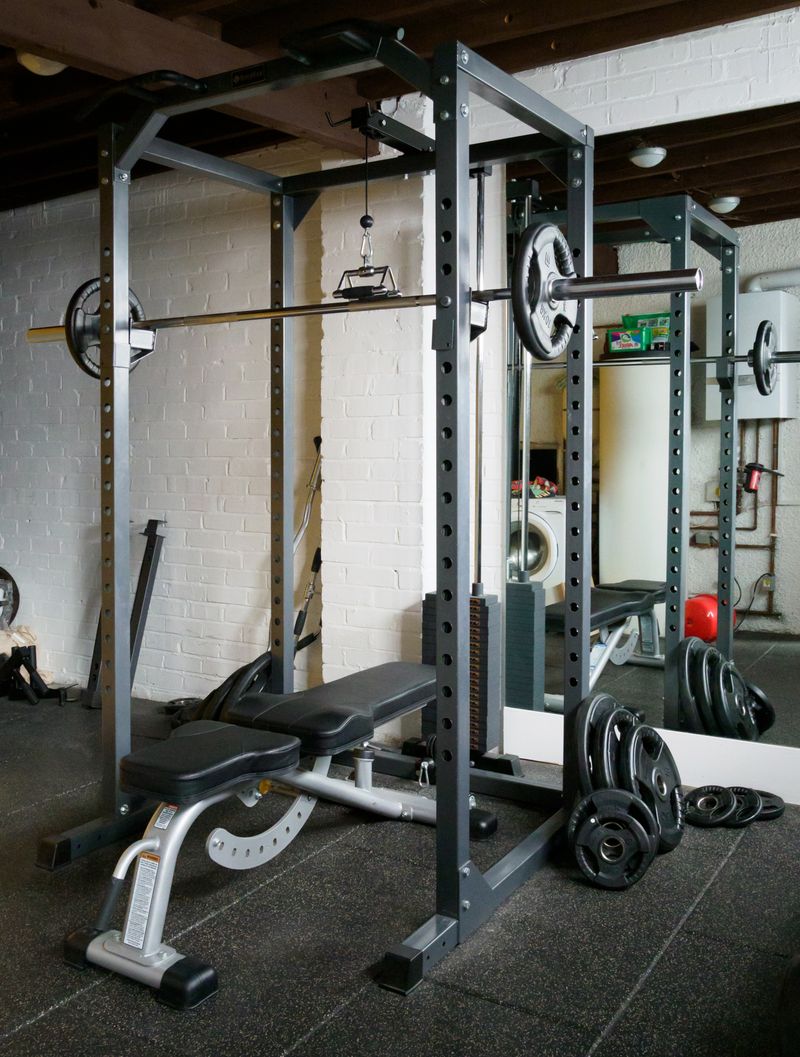
Dial-style dumbbells (the Bowflex SelectTech style) are the most compact and the fastest to change. You twist a dial at each end and lift only the plates you selected; the rest stay in the cradle. They are the easiest to live with in a small room because the docking base doubles as storage and the handle stays a consistent length whatever the weight.
Pin or slide-pin systems (PowerBlock style) pack a wide weight range into a square, brick-shaped unit. They are short front to back, which suits a low shelf, but the squared cage feels different in the hand than a round dumbbell. Spin-collar adjustable handles are the cheapest and the most space-hungry, because the loose plates need somewhere to sit and changing weight takes real time.
| Mechanism | Footprint | Change speed | Approx US price (pair) |
|---|---|---|---|
| Dial (SelectTech-style) | Small, base included | 2-3 seconds | $300-430 |
| Pin/slide (PowerBlock-style) | Smallest, brick shape | 3-5 seconds | $330-660 |
| Spin-collar handle | Largest, loose plates | 30-60 seconds | $80-160 |
Concrete models worth a look
The Bowflex SelectTech 552 covers 5 to 52.5 pounds per hand and runs about $400 retail. It is the default small-space pick because the cradle stores neatly and the dial is quick to use during a workout. The shape is a little long at the heavy end, so measure your shelf depth first.
PowerBlock Elite EXP starts around $340 for the 50-pound version and stays the most compact brick on the market, which helps if your only storage is a low cube shelf. The Yes4All or Amazon Basics spin-collar handle sets sit near $90-120 and make sense only if budget is the hard limit and you accept slower weight changes and loose plates to corral.
Floor protection and noise in an apartment
Adjustable dumbbells are heavier per unit than a single light fixed dumbbell, so a dropped one lands hard. On a wood floor over a downstairs neighbour, that matters. A pair of rubber stall mats or a dense gym tile under your training spot absorbs the thud and protects the floor for about $30-60 total.
Set the dumbbells down with control rather than dropping them, and the dial models stay quiet through a session. The plastic-shrouded dial types are quieter to handle than bare metal plates clanking on a spin-collar bar. If a quiet space is a hard requirement, the SelectTech-style shroud is the better neighbour.
Weight range, durability and grip
For most adults training at home for general strength, a top end of 50 to 52.5 pounds per hand covers years of progress on presses, rows and curls. Legs outgrow that range first, but goblet squats and split squats with a single 50-pound dumbbell still build strength, and you can add reps or slow the tempo when the weight maxes out.
If you already lift heavy and squat with a barbell, dumbbells are an accessory and 50 pounds is plenty. A lighter, cheaper 5-to-25-pound adjustable pair suits older beginners or anyone training mainly for mobility and tone, and it shrinks the footprint and the price at the same time.
| Goal | Weight range per hand | Suggested type |
|---|---|---|
| General strength, most adults | 5-52.5 lb | Dial or pin, full range |
| Mobility, tone, older beginner | 5-25 lb | Compact dial or spin-collar |
| Accessory to barbell work | 10-50 lb | Pin/brick for shelf storage |
The weak point on most adjustable dumbbells is the selection mechanism, not the plates. Dial models rely on a plastic dial and internal pins to grab the right number of plates, and that assembly takes the abuse. Treat it gently, never change weight off the base, and a quality dial unit lasts five to ten years of home use. Drop one repeatedly and the selector is what fails first.
Pin and brick systems have fewer moving parts and tend to survive rough handling better, which is one reason rougher home users lean toward them. Spin-collar handles barely break at all because they are just a bar and collars, but the trade is the slow weight change and the loose plates. When you compare warranties, the dial brands usually cover two to five years; read whether the warranty includes the mechanism or only the metal.
Two buying mistakes cost small-space owners the most. The first is buying a range you will never use the top of. A 90-pound-per-hand set sounds future-proof, but the heavy plates make the dumbbell physically longer and heavier to handle at every weight, so your everyday 25-pound reps feel clumsy. Match the top weight to a realistic two-year goal, not a fantasy one.
The second mistake is ignoring handle thickness and grip. Some budget adjustable handles are fat and slippery, which limits how much you can hold for rows and farmer carries. If you can, hold the dumbbell before buying, or read reviews specifically about grip. A good adjustable dumbbell disappears in the hand and feels like a fixed one; a bad one reminds you it is a gadget on every set.
Frequently asked questions
Do adjustable dumbbells feel as solid as fixed ones? Quality dial and pin models feel close to fixed once loaded, with a slight rattle some people notice on fast reps. Cheap sets feel looser. For controlled strength training the difference is minor; for explosive snatches or heavy swings, fixed weights still win.
Can I drop adjustable dumbbells? No. The selection mechanism is not built for drops, and dropping voids most warranties. Lower them under control. If you train to failure and may need to bail, work over a mat and set them down rather than letting them fall.
One pair or two? One pair covers nearly all home training. A second light fixed pair from 5 to 10 pounds is a cheap, useful add for warm-ups and shoulder work, so you are not constantly dialing down. It costs $20 to $30 and saves time between sets.
The recommendation
For a small space, the dial-style pair around 50 pounds is the one to buy. It changes fastest, stores in its own base, and stays quiet enough for an apartment. The Bowflex SelectTech 552 at roughly $400 is the safe default, with the PowerBlock Elite EXP as the pick if your storage is a narrow shelf where the brick shape wins.
Skip the cheap spin-collar sets unless budget rules everything, because the loose plates and slow changes undo most of the small-space advantage you bought them for. Add a $40 mat under your spot and a light fixed pair for warm-ups, and you have a complete strength station that vanishes under a desk between workouts.
🛠️ Free tools for this topic
No sign-up. They do the calculating and checking for you.
Published by the Gym4Home editorial team. Published August 20, 2026. Updated October 4, 2026.
Editorial responsibility: see Imprint.
Spotted an error or have something to add? corrections@gym4home.com
Home Gym Tips, Weekly
Equipment picks, workout ideas, and setup guides — for every space and every budget. No fluff, just useful.
🎁 Free bonus: The Home Gym Starter Checklist (PDF)
You might also like
Best Adjustable Dumbbells for Older Adults: A Practical Buying Guide
A practical guide to choosing adjustable dumbbells for older adults, comparing dial and pin systems, weight ranges and grip-friendly features with US prices.
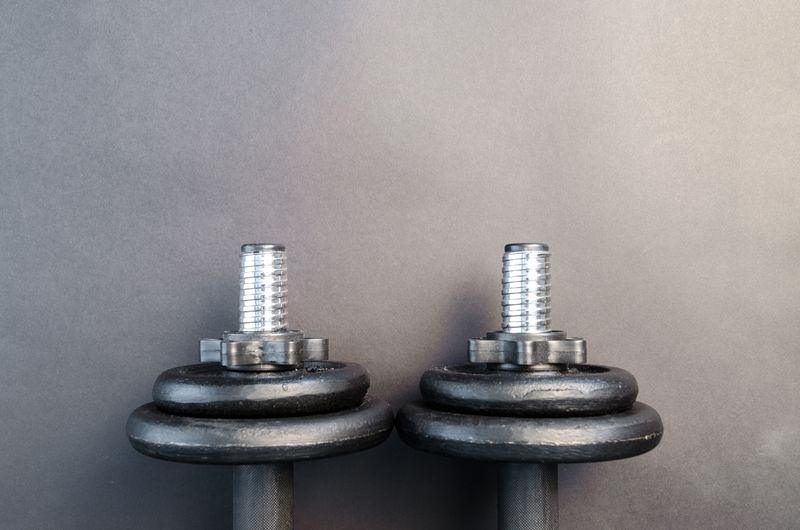
Adjustable vs Fixed Dumbbells: Which Belongs in Your Home Gym?
A full comparison of adjustable and fixed dumbbells for home gyms, covering cost per pound, footprint, durability and joint-friendly details, with concrete model picks.
Multifunctional Equipment for a Small Home Gym
The best multifunctional gym equipment for small spaces, ranked by footprint and movements covered, with a complete corner-gym build under $500.
📖 All articles on Gym4Home →
Browse our other articles