Building a Small-Space Home Gym for Under $500
This article may contain affiliate links. If you make a purchase through these links, we may earn a small commission at no extra cost to you. This helps us keep creating free content.
Hinweis: Dieser Artikel ersetzt keine ärztliche Beratung. Besprich Trainingsfragen im Zweifel mit Arzt oder Physiotherapie.
Five hundred dollars buys a complete strength setup that fits in a 6ft by 6ft corner and trains every major muscle group. The mistake most people make is spending that budget on one big machine. A single mid-range adjustable bench eats half the money and does one job. Spread across the right four or five tools, $500 covers flooring, resistance, a bench, and a pull-up solution with room to spare.
The constraint that matters in an apartment is not money first. It is square footage and noise. Every item below was chosen because it stores small, runs quiet, and earns its footprint. Nothing here is a fantasy rack-and-platform setup. This is the gear that actually fits a real corner and survives a lease.
The $500 priority order
Spend in the order that gives you the most training per dollar. Resistance comes first because it is what builds muscle. Adjustable dumbbells or a solid resistance band set do more for a beginner than any bench or bar. Flooring comes second because it protects your deposit. The bench, pull-up bar, and accessories fill in after that.
| Item | Rough US price | Footprint stored | Why it makes the list |
|---|---|---|---|
| Adjustable dumbbells (pair) | $200–280 | Two shoeboxes | Replaces a whole rack of fixed weights |
| Folding adjustable bench | $80–130 | Slides under a bed | Unlocks presses, rows, step-ups |
| Resistance band set | $25–40 | A drawer | Joint-friendly, fills weight gaps |
| Doorway pull-up bar | $25–35 | Hangs on a hook | Best back exercise, no floor space |
| Rubber flooring (36 sq ft) | $60–120 | Stays down | Protects floor, cuts drop noise |
That list runs roughly $390 to $605 depending on choices. Buy the dumbbells and flooring used to pull the total comfortably under $500 with budget to add a kettlebell or an ab wheel later.
Adjustable dumbbells: the anchor purchase
Fit Simplify Resistance Bands Set
Five resistance levels in a kit that fits in a drawer, gentle on the joints and ideal to start with.
As an Amazon Associate we earn from qualifying purchases.
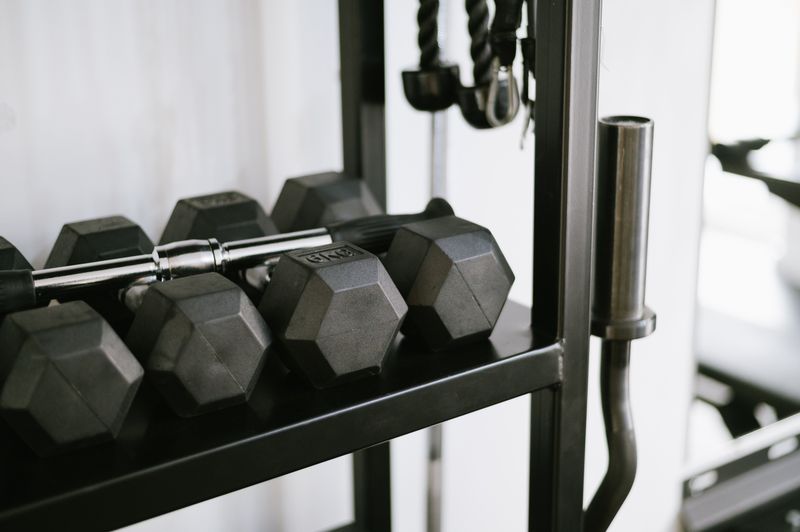
One pair of adjustable dumbbells replaces about fifteen pairs of fixed weights and the rack to hold them. A dial-style pair adjusting from 5lb to 50lb covers nearly every exercise a home lifter needs, from heavy goblet squats to light lateral raises. The selector mechanism lets you change weight in a couple of seconds, which keeps a workout flowing in a tight space.
Expect $200 to $280 for a quality pair new, often less on the used market where they show up constantly. The cheaper $120 sets exist but tend to rattle, jam, or cap out at 25lb per hand, which you outgrow fast. This is the one item worth stretching the budget for, because it is the centerpiece you will use in almost every session.
The bench and the pull-up bar
A folding adjustable bench at $80 to $130 turns your dumbbells into a real gym. Flat for presses and rows, inclined for upper chest and shoulders, it folds and slides under a bed or against a wall when you are done. Look for one rated to at least 600lb total and with an incline that locks at several angles. Skip flat-only benches. The incline option is what justifies the footprint.
A doorway pull-up bar costs $25 to $35 and gives you the best back and arm exercise available, using zero floor space. The leverage-mount style needs no drilling and wedges against the frame. It comes down in seconds and stores on a hook. Pull-ups are hard at first, so loop a resistance band over the bar and under your knee for assistance until you build up.
Flooring and the corner layout
Thirty-six square feet of 3/4-inch rubber, a 6ft by 6ft square, protects the floor and quiets dropped weights for $60 to $120 using horse stall mats or interlocking tiles. This is not optional in an apartment. Bare laminate under a dropped dumbbell is how noise complaints and damage charges start. The rubber also defines your training zone so the gear does not creep across the room.
Lay the bench against the wall under the pull-up bar, dumbbells in the corner, bands on a hook. The whole setup occupies one corner and clears in two minutes when you need the room back. That reversibility is the point. A small-space gym you can make disappear is one a partner or a landlord will tolerate long term.
What to add when you have more budget
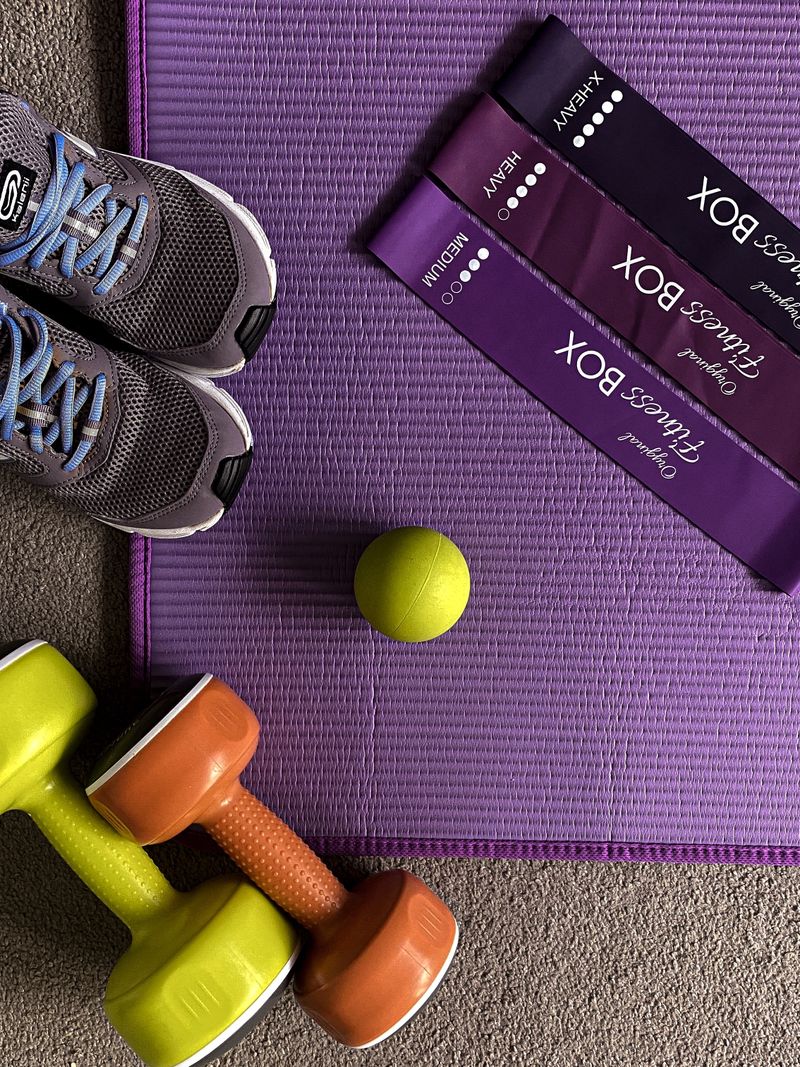
Once the core five are in place, the highest-value additions are a single adjustable kettlebell for swings and carries at $80 to $130, an ab wheel for $15, and a furniture-mover or sliders for $10 that turn any floor into a core and stability tool. Each of these stores in a drawer or hangs on a hook, so they do not cost you space.
The temptation later is a barbell and plates. In a small apartment, hold off. A barbell needs a rack, a platform, and clearance you probably do not have, and adjustable dumbbells already cover the same movements. Spend the next chunk of budget on better dumbbells reaching 70lb or 90lb before you go anywhere near a bar.
The realistic bottom line
Adjustable dumbbells, a folding bench, a band set, a doorway pull-up bar, and rubber flooring give you a complete strength gym for $400 to $550 that hides in a single corner. That covers pressing, pulling, squatting, hinging, and core work, which is everything a beginner or intermediate lifter needs for years. Buy two or three items used and you land safely under $500 with room for a kettlebell.
The setup that fails is the one built around a single large machine or a pile of cheap fixed weights with nowhere to store them. Pick versatile, foldable, quiet gear in the order above, and the budget stretches further than most commercial-gym shoppers would believe.
Where to save, where to spend, what to avoid
Buying used cuts the total dramatically on the two heaviest items. Adjustable dumbbells and benches turn up constantly on local marketplaces because people overestimate how much they will train at home and resell within a year. A barely-used dumbbell pair that retails at $280 often sells for $150 to $180, and a folding bench drops to $40 to $60. These are simple mechanical items with little to go wrong, so used is low risk here. Inspect the dumbbell selector dial in person, run it through the full weight range to confirm it locks cleanly, and check the bench frame for any wobble at its highest incline. Both faults are easy to spot in two minutes and are the only things worth worrying about on used gear.
Spend new money on the band set, the door anchor, and the pull-up bar, since these are cheap, hygienic concerns matter, and the difference between a good and bad set is small in dollars but large in durability. A $35 band set that does not snap is worth more than a $15 set you replace twice. The flooring can go either way: stall mats are usually bought new from a farm store, while interlocking tiles show up used at a steep discount.
The biggest waste is buying a treadmill or exercise bike as the first purchase. Cardio machines are large, hard to move, and a folding one still takes a permanent footprint. In a small space, a jump rope, a kettlebell for swings, or a brisk circuit of the strength moves above raises your heart rate without dedicating square footage to one machine you may stop using.
The second mistake is fixed-weight dumbbells. A set of fixed pairs from 10lb to 50lb covers the same range as one adjustable pair but needs a rack and ten times the floor space. They are cheaper per pound, which tempts budget shoppers, but the space cost in an apartment makes adjustables the clear winner. Buy the versatile, compact option even when the sticker price is higher.
A third trap is over-buying accessories. Gloves, fancy water bottles, branded apparel, and gadget trackers add up fast and contribute nothing to the actual training. Put every available dollar into the five core items first. The chalk, the wrist wraps, and the workout app subscription can wait until you have trained consistently for a couple of months and know what you actually reach for. Most of those extras turn out to be optional once the real gear is in place.
🛠️ Free tools for this topic
No sign-up. They do the calculating and checking for you.
Published by the Gym4Home editorial team. Published July 27, 2026. Updated October 4, 2026.
Editorial responsibility: see Imprint.
Spotted an error or have something to add? corrections@gym4home.com
Home Gym Tips, Weekly
Equipment picks, workout ideas, and setup guides — for every space and every budget. No fluff, just useful.
🎁 Free bonus: The Home Gym Starter Checklist (PDF)
You might also like
How to Set Up a Home Gym in a Corner
A step-by-step plan to build a complete home gym in one corner: measuring, flooring, the anchor bench, weights, wall storage and a movement-friendly layout, with US prices.
How to Build a Home Gym After 60 on a Budget
A practical, budget shopping list and starter routine for building a joint-friendly home gym after 60, with US prices and where to spend versus save.
How to Build a Home Gym in a Spare Bedroom
A step-by-step plan to build a strength gym in a spare bedroom, from floor protection and equipment buy order to layout and soundproofing.
📖 All articles on Gym4Home →
Browse our other articles