3-Day Full-Body Home Gym Workout (With Sets and Reps)
This article may contain affiliate links. If you make a purchase through these links, we may earn a small commission at no extra cost to you. This helps us keep creating free content.
Hinweis: Dieser Artikel ersetzt keine ärztliche Beratung. Besprich Trainingsfragen im Zweifel mit Arzt oder Physiotherapie.
Three full-body sessions a week build strength faster than the classic five-day body-part split for most people training at home. The reason is simple: each muscle gets trained roughly three times every seven days instead of once, and the recovery days in between are exactly when muscle actually grows. You do not need a commercial gym for this. A pair of adjustable dumbbells, a bench, and a doorway pull-up bar cover almost the entire programme below.
This plan is built around movement patterns, not body parts. Every session hits a squat, a hinge, a push, a pull, and some core work. That structure is what keeps a three-day week balanced, because nothing important gets skipped and nothing gets trained twice as hard as everything else. Train on Monday, Wednesday, and Friday, or any three days with a rest day between them.
What you need before you start
The kit for this programme is deliberately small. Adjustable dumbbells (roughly $200–400 for a pair that goes to 50 lb each) replace a whole rack of fixed weights and fit under a bed. A flat or adjustable bench runs about $80–200. A doorway pull-up bar is around $30 and clamps into the frame with no drilling. That is the full shopping list, and you can start with just the dumbbells if budget is tight.
Floor space matters more than people expect. You want enough clearance to lie on the bench with arms extended overhead and enough room beside it to lunge. A patch roughly 6 by 6 feet is plenty. A rubber mat or two interlocking foam tiles protect the floor and cut noise, which matters in an apartment or a room above a bedroom.
Warm up for five minutes before every session. Two minutes of marching or easy skipping raises your heart rate, then run through bodyweight squats, arm circles, and a few light reps of the first exercise. Cold muscles are where strains happen, and the warm-up costs you nothing but five minutes.
Day A: squat focus
Retrospec Solana Thick Exercise Mat (1/2 in)
A thick, non-slip mat makes floor work and stretching comfortable on the joints.
* Affiliate link. We may earn a commission at no extra cost to you.
Day A leads with the legs while you are freshest. The goblet squat is the anchor lift: hold one dumbbell vertically against your chest, sit down between your knees keeping your chest tall, and drive up through your heels. Go only as deep as you can without your lower back rounding. Depth comes with practice and mobility, so do not force it on week one.
The rest of Day A balances a push and a pull around that squat, plus a hinge for the back of your legs. Keep your rest periods to 60–90 seconds between sets. That is long enough to recover but short enough to keep the session under 45 minutes.
| Exercise | Sets | Reps | How to do it |
|---|---|---|---|
| Goblet squat | 3 | 8–12 | Dumbbell at chest, sit between knees, drive up through heels |
| Dumbbell Romanian deadlift | 3 | 8–12 | Soft knees, push hips back, feel the hamstrings stretch, stand tall |
| Floor or bench press | 3 | 8–12 | Lower dumbbells to chest, press straight up, keep wrists stacked |
| One-arm dumbbell row | 3 | 10–12 each | Hand on bench, pull dumbbell to hip, squeeze the shoulder blade |
| Plank | 3 | 20–40 sec | Forearms down, body in one line, brace the stomach hard |
Day B: hinge and pull focus
Day B shifts the emphasis to the back of the body and your pulling strength. The deadlift pattern leads, this time with both dumbbells, and the pull-up or row does the heavy lifting for your upper back. If you cannot do a strict pull-up yet, a band looped over the bar takes some of your bodyweight, or you can substitute extra row sets and build toward your first rep over the coming weeks.
Goblet squats appear again here but as a secondary lift with slightly higher reps, so your legs still get trained three times a week without two heavy squat days back to back. Keep the same 60–90 second rests.
| Exercise | Sets | Reps | How to do it |
|---|---|---|---|
| Dumbbell deadlift | 3 | 6–10 | Both dumbbells outside feet, flat back, stand up driving the floor away |
| Pull-up or band-assisted pull-up | 3 | 3–8 | Hang from the bar, pull chin over, lower under control |
| Dumbbell overhead press | 3 | 8–12 | Press from shoulders to overhead, ribs down, do not lean back |
| Goblet squat (lighter) | 3 | 12–15 | Same form as Day A, higher reps, controlled tempo |
| Dead bug | 3 | 8–10 each | On your back, lower opposite arm and leg, keep your lower back flat |
Day C: push and lunge focus
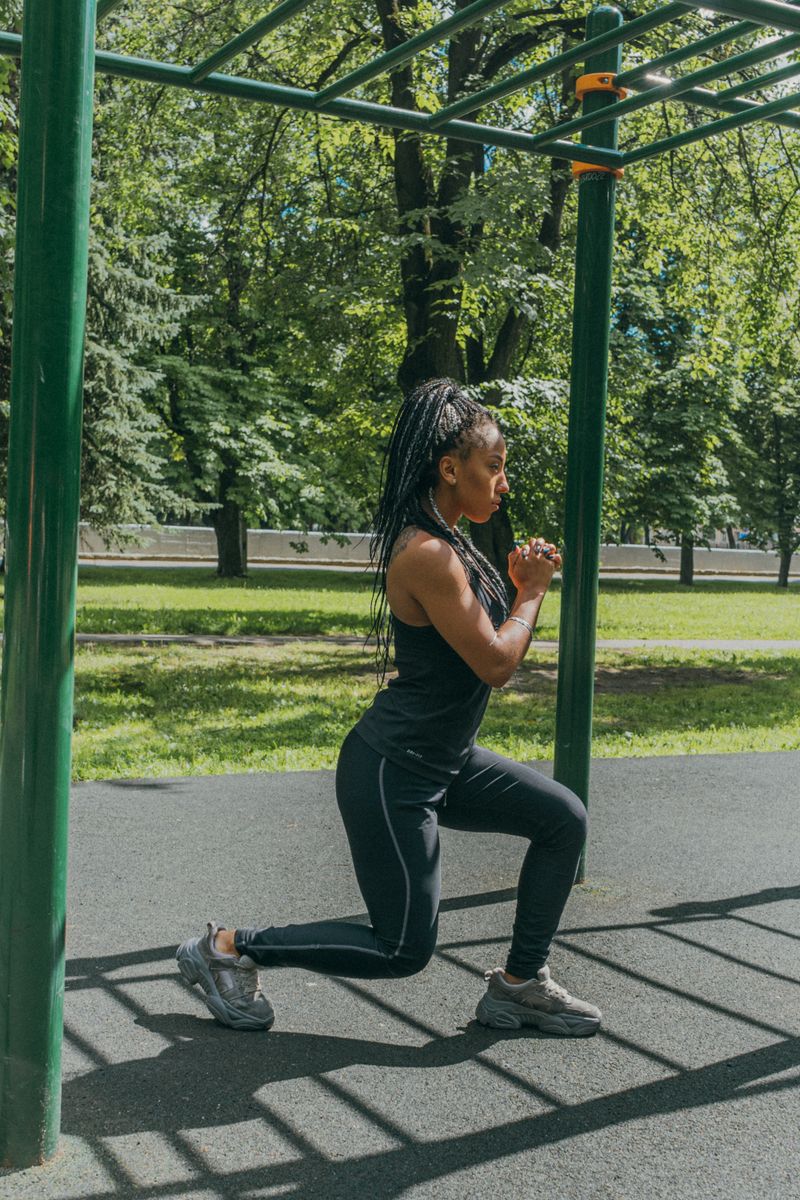
Day C rounds out the week with single-leg work and more pressing volume. The split squat (also called a static lunge) trains each leg on its own, which evens out the left-to-right strength differences almost everyone has. Set your back foot on the floor a stride behind you, lower your back knee toward the ground, and push up through the front heel.

The incline press hits the upper chest and shoulders from a different angle than the flat press on Day A, which is why a small adjustable bench earns its keep. Finish with a carry, which trains your grip, core, and posture in one go. Pick up a heavy dumbbell in each hand and walk.
| Exercise | Sets | Reps | How to do it |
|---|---|---|---|
| Dumbbell split squat | 3 | 8–12 each | Back foot behind, lower the back knee, drive up through front heel |
| Incline dumbbell press | 3 | 8–12 | Bench at 30–45°, press up and slightly back, squeeze at the top |
| Chest-supported or bent-over row | 3 | 10–12 | Pull both dumbbells to your ribs, lead with the elbows |
| Lateral raise | 3 | 12–15 | Raise dumbbells out to the side to shoulder height, slight bend in elbow |
| Farmer carry | 3 | 30–40 sec | Heavy dumbbell each hand, stand tall, walk with controlled steps |
How to progress week to week
Progress is the whole point, and the rule is boring but it works: when you hit the top of the rep range for every set of an exercise with good form, add weight or a rep next time. With adjustable dumbbells you bump up 5 lb. With fixed dumbbells you add a rep per set until you reach 15, then jump to the next weight and drop back to the bottom of the range. This slow climb is called progressive overload, and it is the one principle that separates training that works from going through the motions.
Keep a simple log. A note on your phone with the date, weight, and reps for each lift tells you exactly what to beat next session and stops you from guessing. After about eight to twelve weeks the linear jumps slow down, and that is normal. At that point you can swap in new exercise variations to keep the stimulus fresh, then start the climb again.
Recovery does the actual building. Sleep seven to nine hours, eat enough protein (a rough target is 0.7–1 g per pound of bodyweight per day), and take your rest days as rest. Training hard on a tired, underfed body is the fastest way to stall. The three-day structure exists precisely so you have those recovery days built in.
Common mistakes that stall home-gym progress
The biggest one is skipping legs because squats and deadlifts are hard. Your lower body is your largest muscle mass, and training it drives the most strength and the most calorie burn. If single-leg work bothers your knees, the goblet squat to a box and the Romanian deadlift are both joint-friendly options that keep leg day in the plan.
The second mistake is chasing soreness as proof a workout worked. Soreness mostly reflects novelty, not effectiveness. A session that left you sore is not automatically better than one that did not. Trust the logbook and your rising numbers, not how much you ache the next morning.
The third is changing the programme every week. A three-day full-body plan needs four to six weeks of consistent effort before you can judge it. Run it as written, add weight when you earn it, and let the boring repetition do its work. That patience is what most home setups are missing, far more than they are missing equipment.
Scaling the plan to the equipment you own
Not everyone starts with a full set of adjustable dumbbells, and the plan flexes to match what is on hand. With a single pair of fixed dumbbells, you run every exercise as written and create difficulty through reps and tempo rather than load. When a movement gets easy, slow the lowering phase to four seconds and add a rep before you worry about heavier weights. This keeps a modest pair of dumbbells useful far longer than most people expect.
If you also own resistance bands, they fill the gaps a light dumbbell leaves. A band looped under a closed door adds resistance to rows and presses, and a band over the pull-up bar assists your first chin-overs. Bands are cheap (about $15–30 for a set) and weigh almost nothing, which makes them the natural companion to dumbbells in a small home setup. They will not replace heavy loading forever, but they extend your runway considerably.
Kettlebells, if you have one, slot straight into the hinge and squat slots. A single moderate kettlebell handles goblet squats, swings, and single-arm work, and many people find the offset load comfortable on the wrists. The point is that the five movement patterns matter more than the exact tool. Squat, hinge, push, pull, and carry can all be loaded with whatever you own, and the programme structure stays identical.
| Equipment you own | How to run the plan | Main progression lever |
|---|---|---|
| One fixed dumbbell pair | All exercises as written | Reps and slow tempo |
| Adjustable dumbbells | All exercises as written | Add 5 lb when reps are met |
| Dumbbells plus bands | Bands assist pulls, add load to presses | Band tension plus reps |
| Single kettlebell | Use for squat, hinge and carry slots | Reps, then a heavier bell |
Adjusting the plan for your experience level
Beginners should start lighter than feels necessary and focus the first two weeks on learning the movement, not chasing weight. Do two sets of each exercise instead of three while your joints and connective tissue adapt, which lag behind muscle in getting stronger. Add the third set in week three once the patterns feel automatic. Rushing the early weeks is the most common cause of an early strain that derails the whole plan.
Intermediate trainees who have lifted before can run all three sets from day one and push closer to the harder end of each rep range. You can also add a fourth set to your weakest lift (often the overhead press or the pull-up) to bring it up to par. Keep the rest of the plan as written, because adding volume everywhere at once outpaces your ability to recover and stalls progress rather than speeding it.
Advanced home trainees usually need heavier dumbbells more than a different programme. If your adjustable dumbbells max out and your reps keep climbing past the top of the range, the limit is the equipment, not the plan. At that point, slowing tempo, adding pauses at the hardest point of each lift, and shortening rest periods all increase the demand without heavier weights. A single jump to a heavier dumbbell pair, when budget allows, restarts the simple climb.
Frequently asked questions
Can I build muscle with just dumbbells at home? Yes. A pair of adjustable dumbbells covers every movement pattern in this plan and is enough to build real strength and size for years, especially if you can load them to 50 lb or more per hand. Most people run out of consistency long before they run out of dumbbell.
How long should each session take? About 35–45 minutes including the warm-up. Five exercises at three sets each, with 60–90 second rests, fits comfortably in that window. If you are short on time, a circuit (one set of each exercise in a row, then repeat) cuts it to around 30 minutes.
Should I do cardio on this plan? Two or three short cardio sessions a week support your health and recovery without hurting strength gains. Slot them on your rest days or after lifting, not before, so cardio does not drain the legs you need for squats. A brisk 20–30 minute walk counts.
What if I miss a session? Just continue with the next day in the rotation rather than trying to cram two workouts together. Missing one session in a week barely registers over a training block. Consistency across months is what matters, not any single perfect week.
Is three days a week really enough? For building strength and muscle as a home trainee, three full-body days is plenty and arguably ideal. More frequency only helps once you are advanced and recovering well. Beginners and intermediates progress beautifully on three quality sessions while keeping the rest of life intact.
🛠️ Free tools for this topic
No sign-up. They do the calculating and checking for you.
Published by the Gym4Home editorial team. Published June 15, 2026. Updated August 19, 2026.
Editorial responsibility: see Imprint.
Spotted an error or have something to add? corrections@gym4home.com
Home Gym Tips, Weekly
Equipment picks, workout ideas, and setup guides — for every space and every budget. No fluff, just useful.
🎁 Free bonus: The Home Gym Starter Checklist (PDF)
You might also like
The Upper/Lower Split for a Home Gym (4-Day Plan)
A complete 4-day upper/lower split for a home gym, with sets-and-reps tables for upper and lower days and a plan to progress over time.

Home Gym Weight Loss Plan: Lose Fat in 30 Minutes a Day
A simple 4-day home gym weight loss plan that blends strength and cardio in 30 minutes a day, with diet basics, a starter equipment budget, and realistic progress tracking.
Dumbbell Upper-Body Workout at Home: A Full Routine
A complete upper-body dumbbell routine for home, with a sets-and-reps table, form cues for every lift, and a simple progression plan.
📖 All articles on Gym4Home →
Browse our other articles