How to Stay Consistent With a Home Gym (When Nobody's Watching)
This article may contain affiliate links. If you make a purchase through these links, we may earn a small commission at no extra cost to you. This helps us keep creating free content.
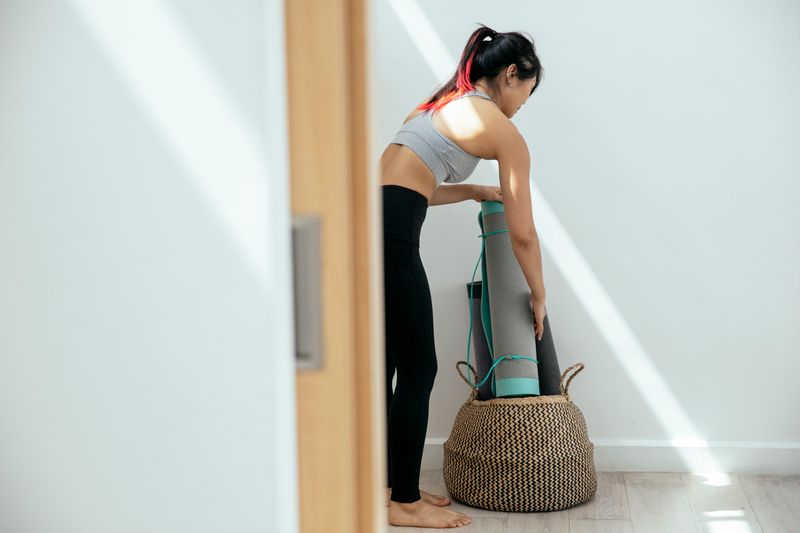
Hinweis: Dieser Artikel ersetzt keine ärztliche Beratung. Besprich Trainingsfragen im Zweifel mit Arzt oder Physiotherapie.
Roughly half of new gym habits fade within six months, and a home setup removes the two things that used to drag people through the door: the money already spent on a membership and the social pressure of a busy room. Training at home means the only thing standing between you and a skipped session is you. That is the whole challenge, and it is solvable with structure rather than willpower.
Consistency at home is an engineering problem, not a character flaw. The people who keep training for years are not more disciplined than everyone else. They have built an environment and a routine where doing the workout is easier than skipping it. Each tactic below lowers the friction or raises the cost of quitting, and you only need a few of them to hold.

Make starting the lowest-effort option
The biggest drop-off point is the moment before you start, not the workout itself. Once you are warmed up and into the first set, finishing is rarely the issue. So the whole game is removing obstacles between sitting down and starting. A gym that is set up, lit, and ready beats one you have to dig out of a closet every time.
Leave your gear in plain sight and ready to use. Keep your shoes and a water bottle by the equipment. Lay out the mat the night before. Every one of these removes a small decision, and decisions are where motivation leaks away. The goal is to make starting so frictionless that you are halfway through a warm-up before the part of you that wants to skip has woken up.
Anchor the workout to a fixed time
Fit Simplify Resistance Bands Set
Five resistance levels in a kit that fits in a drawer, gentle on the joints and ideal to start with.
As an Amazon Associate we earn from qualifying purchases.
A workout with no set time competes with everything else in your day and usually loses. "I'll train later" becomes 9pm, then tomorrow. Pinning the session to a specific slot, and ideally to an existing habit, turns it from a decision into a default. Right after the morning coffee, straight after work before you sit down, or the moment the kids are in bed all work because they attach the new habit to a cue that already fires every day.
Treat that slot like an appointment you would not cancel on someone else. Put it in the calendar, block it, and protect it. The advantage of a home gym is that the slot can be short and odd, since a 25-minute session before a shower needs no commute and no packing a bag. The flexibility that makes home training easy to skip is the same flexibility that lets you slot it into gaps a commercial gym never could.
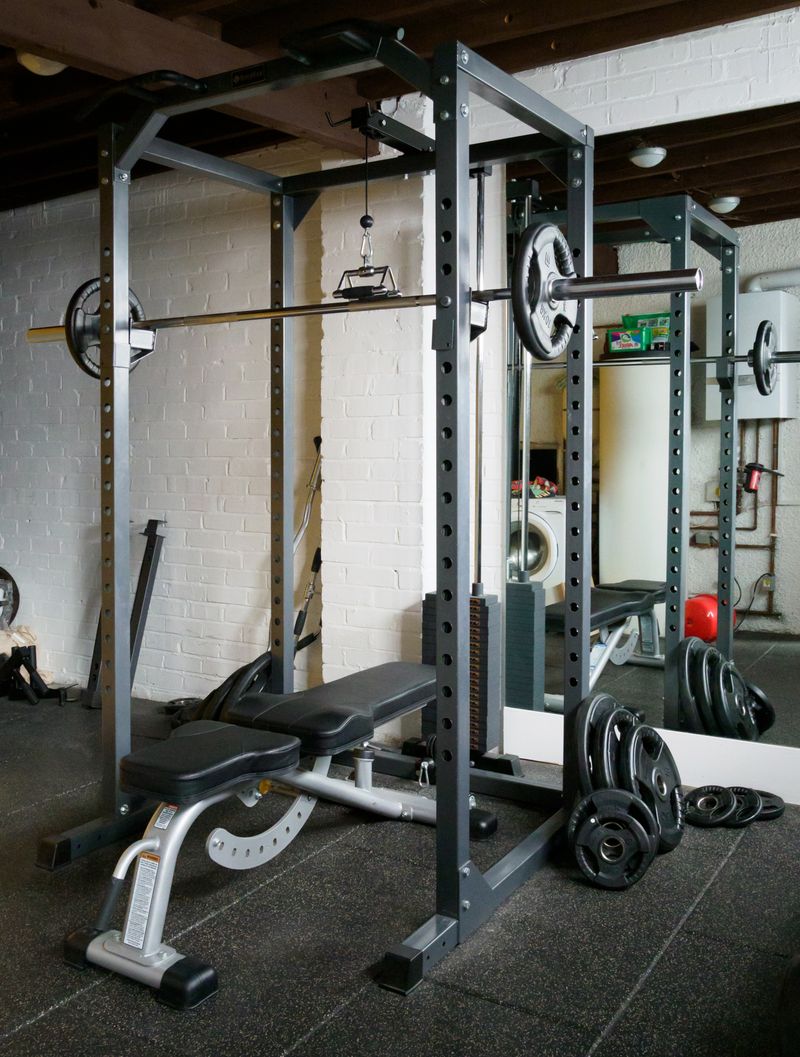
Track it so you can see the streak
A visible record of completed sessions becomes its own motivation, because nobody wants to break a chain they can see. Mark each workout on a wall calendar, tick a habit app, or jot the lifts in a notebook. The act of recording closes the loop on the session and the growing run of marks pulls you forward on the days you would rather not.
Tracking your numbers does double duty: it proves you are progressing. Adding five pounds to a lift or one more rep than last week is concrete evidence that the work is paying off, which feeds motivation far better than a vague sense of trying. On the days the scale or the mirror say nothing useful, a training log that shows you got stronger is the proof that keeps you going.
Set a floor, not just a ceiling
Ambition sets the ceiling; consistency needs a floor. On a good day you might train for an hour. On a bad day, with low energy and no time, the temptation is to skip entirely. A defined minimum session prevents that. Decide in advance that the worst-case workout is still ten minutes of a few key lifts, and that doing the floor counts as a win.
The floor matters more than the ceiling for one reason: it keeps the habit alive through the rough patches. A ten-minute session on a terrible day maintains the routine and the identity of someone who trains, where a skipped day chips both away. Most people who keep a home gym going for years are not heroic on bad days. They just refuse to drop to zero. The floor can be embarrassingly small and still count, because its only job is to keep the chain of training days unbroken when motivation runs dry.

Build in variety and small rewards
Boredom kills home routines as surely as injury does, because the same four walls and the same six exercises get stale. Rotating your exercises every few weeks, following a new programme, or adding a piece of equipment refreshes the stimulus and your interest at the same time. Variety here is a tool for engagement, not a reason to abandon a working plan after two weeks.
Pair the work with something you enjoy to make the slot inviting rather than a chore. Save a podcast or a show you like for training time only, so part of you looks forward to it. Set small milestones, like a first unassisted pull-up or a target weight, and mark them when you hit them. A routine that contains things you actually like is one you will keep showing up for.
| Obstacle | Why it derails you | The fix |
|---|---|---|
| "I'll do it later" | No fixed time, loses to everything | Anchor to a daily cue, block the slot |
| Gear is a hassle to set up | Friction before the first rep | Leave it out, ready to use |
| Low-energy days | All-or-nothing thinking | Set a 10-minute minimum floor |
| Boredom | Same routine goes stale | Rotate exercises, pair with media |
| No visible progress | Effort feels pointless | Track lifts to see the gains |
Use accountability even when you train alone
The lack of a workout partner is the hidden cost of training at home, and it is worth replacing on purpose. A commercial gym supplies accidental accountability through familiar faces and a paid membership you would feel bad wasting. At home, none of that exists, so you have to build it back. Telling a friend your training schedule, joining an online group that checks in, or posting your sessions somewhere gives the habit an external pull.
A simple commitment device works even without another person involved. Some people put a small stake on the line, like a payment to a cause they dislike if they miss a week, which sharpens the cost of skipping. Others schedule a standing video call to train alongside a friend remotely. The mechanism matters less than the principle: when only you are watching, you have to manufacture the outside pressure a gym used to provide for free.
Beat the seasonal and life-stage slumps
Motivation runs in cycles, and the lifters who last plan for the low points instead of being surprised by them. Winter darkness, a busy stretch at work, illness, or travel all break routines, and the break itself is normal. What separates people who keep their home gym from people who abandon it is having a smaller plan ready for the hard weeks rather than expecting to train at full tilt year-round.
During a slump, shrink the routine rather than dropping it. Cut to two short sessions a week, lower the intensity, and accept maintenance instead of progress for a while. Coming back from a reduced routine is easy because the habit never fully died. Coming back from total zero is where most people quit for good, because restarting from nothing feels like beginning all over again. Protect the thread, even a thin one, through the rough patches.
Forgive the misses and keep the identity
The people who train for decades miss workouts too. The difference is what they do next. A missed session is a missed session, not the end of the project, and the only dangerous response is to let it spiral into a missed week. Resume at the next scheduled slot without trying to make up the lost work or punish yourself for it.
Underneath all the tactics sits a quieter shift: you stop seeing exercise as something you are trying to do and start seeing it as something you are. Someone who trains at home does not negotiate with themselves every day about whether to bother. They train because that is who they are, the way they brush their teeth. Build the systems first, repeat them long enough, and the identity follows. That is what consistency actually looks like from the inside.
🛠️ Free tools for this topic
No sign-up. They do the calculating and checking for you.
Published by the Gym4Home editorial team. Published July 13, 2026. Updated October 4, 2026.
Editorial responsibility: see Imprint.
Spotted an error or have something to add? corrections@gym4home.com
Home Gym Tips, Weekly
Equipment picks, workout ideas, and setup guides — for every space and every budget. No fluff, just useful.
🎁 Free bonus: The Home Gym Starter Checklist (PDF)
You might also like
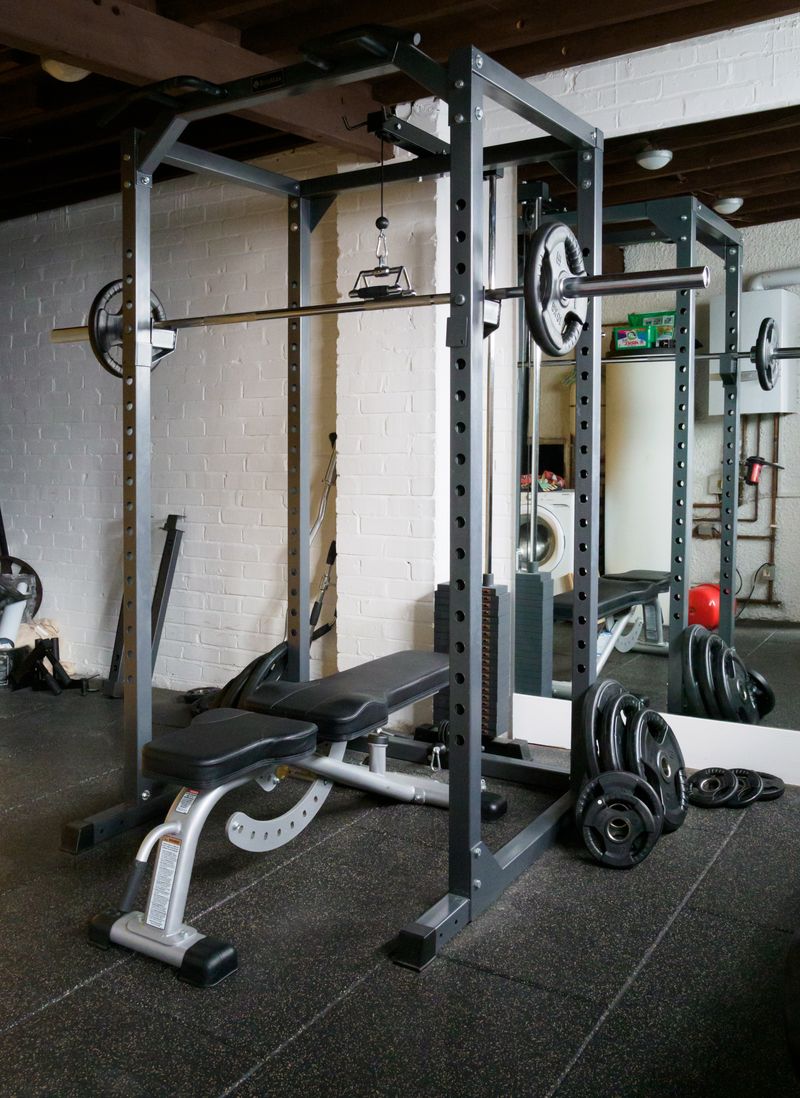
Soreness After a Workout: What Is Normal and What Isn't
How to tell normal post-workout muscle soreness (DOMS) from a real warning sign, plus what actually helps you recover.

Home Gym Equipment: What to Buy First (and What to Skip)
A step-by-step buying order for home gym equipment, starting with adjustable dumbbells and a bench, with price ranges and the pieces most people buy too early.
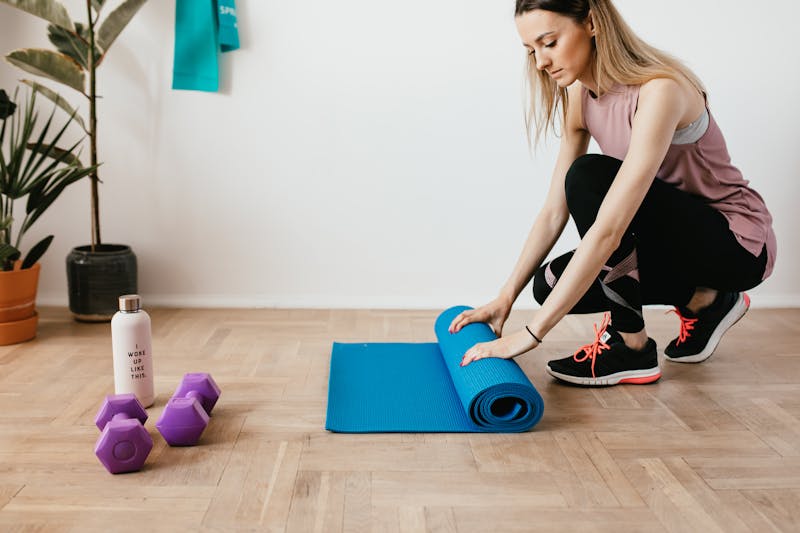
Beginner Strength Workout: A Simple 3-Day Home Plan
A beginner-friendly 3-day full-body strength plan for home, with complete sets and reps using only a pair of dumbbells.
📖 All articles on Gym4Home →
Browse our other articles