Dumbbell Upper-Body Workout at Home: A Full Routine
This article may contain affiliate links. If you make a purchase through these links, we may earn a small commission at no extra cost to you. This helps us keep creating free content.
Hinweis: Dieser Artikel ersetzt keine ärztliche Beratung. Besprich Trainingsfragen im Zweifel mit Arzt oder Physiotherapie.
A single pair of adjustable dumbbells can train every major muscle in your upper body, from chest to mid-back to arms. You don't need a bench press, a cable stack, or a wall of fixed weights. With one or two pairs and about 30 minutes, you can run a complete upper-body session in an apartment corner or a spare bedroom.
This routine is built around movements that hit pushing muscles (chest, shoulders, triceps) and pulling muscles (back, rear delts, biceps) in balance. That balance matters more at home than most people realize, because a chest-heavy routine pulls the shoulders forward and feeds the rounded posture that comes from sitting all day.
What you need before you start
Two things make or break a dumbbell upper-body day at home: enough weight, and a way to support your torso for rows and presses. A set of adjustable dumbbells running from about 5 to 50 pounds per hand covers most people for years and costs roughly $250 to $400 a pair. A flat or adjustable bench ($90 to $200) helps, but a sturdy ottoman or the edge of a bed works for incline and supported-row variations if you are starting out.
Warm up for five minutes first. Arm circles, band pull-aparts, and a light set of each lift at half your working weight wake up the shoulder and elbow joints. Skipping this is the fastest way to tweak a shoulder on your first press.
The routine: sets, reps and rest
PowerBlock Elite EXP Adjustable Dumbbells
One pair replaces a whole rack and stores in the space of a shoebox.
As an Amazon Associate we earn from qualifying purchases.
Run the exercises in the order below. The pushing and pulling lifts alternate, so one muscle group rests while the other works, and you move through the session faster without losing quality. Rest 60 to 90 seconds between sets of the bigger lifts and about 45 seconds on the arm work at the end.
| Exercise | Sets | Reps | Rest |
|---|---|---|---|
| Floor or bench dumbbell press | 4 | 8–10 | 90 sec |
| One-arm dumbbell row | 4 | 10–12 each side | 75 sec |
| Seated or standing shoulder press | 3 | 8–12 | 75 sec |
| Chest-supported reverse fly | 3 | 12–15 | 60 sec |
| Hammer curl | 3 | 10–12 | 45 sec |
| Overhead or kickback triceps | 3 | 10–12 | 45 sec |
That is six lifts and about 20 working sets. Done with focused rest periods, the whole thing runs 30 to 40 minutes. If you are short on time, drop the curls and kickbacks; the press, row, shoulder press, and reverse fly already cover every major muscle.
How to do the pressing movements
The dumbbell press is your main chest builder. Lie on a bench or flat on the floor with a dumbbell in each hand, elbows tucked to roughly 45 degrees from your sides rather than flared straight out. Press up until your arms are nearly straight, then lower under control until your upper arms touch the floor or reach a deep stretch on the bench. The floor version limits the stretch but protects the shoulder, which suits anyone with a cranky joint.
The shoulder press works the deltoids and triceps. Seated with back support is easier on the lower back; standing recruits more core but tempts you to lean back and turn it into an incline press. Press the dumbbells from shoulder height to overhead without banging them together at the top. Keep your ribs down so the movement comes from the shoulders, not an arched spine.
How to do the pulling movements
The one-arm row is the backbone of your back training at home. Plant one hand and knee on a bench (or hand on a chair, opposite foot back), let the dumbbell hang, then drive your elbow toward your hip and squeeze the shoulder blade. Pull to the hip, not the armpit, to bias the lats over the upper traps. Lower slowly. A common mistake is yanking with the arm and twisting the torso; keep the trunk still and let the back do the work.
The chest-supported reverse fly fixes the posture problem most home lifters create by pressing too much. Lie face-down on an incline bench or bend forward at the hips with a flat back, then raise the dumbbells out to the sides with a soft elbow bend, leading with the pinkies. Use a light weight here. This is the small rear-delt and mid-back muscle, and it responds to clean reps, not heavy ones.
Adding the arm work without wasting time
Direct arm work goes last because the press, row, and shoulder press already gave the biceps and triceps a lot of indirect work. The hammer curl is the pick for biceps at home: holding the dumbbells with palms facing each other (neutral grip) is easier on the elbows and wrists than a flat barbell curl, and it builds the brachialis muscle underneath the biceps that adds visible thickness to the upper arm. Curl without swinging your torso. If you have to heave the weight up with your back, it is too heavy.
For triceps, the overhead extension stretches the long head of the muscle, which the press does not fully reach, and that stretch is where a lot of growth happens. Hold one dumbbell with both hands behind your head, elbows pointing forward, and straighten your arms toward the ceiling. The kickback is the lighter alternative: hinge forward, upper arm parallel to the floor, and extend the forearm back. Both work; pick whichever lets you keep the elbow still and feel the triceps, not the shoulder.
Progression and a sample week
Add weight when you can hit the top of the rep range on every set with good form. On the press and row, that often means jumping 5 pounds; on the smaller lifts, 2.5 pounds. If a jump drops you below the bottom of the range, that is normal. Build back up over a few sessions, then it becomes your new baseline.
Two upper-body sessions a week is plenty for most people, ideally spaced 72 hours apart so the muscles recover. Pair them with one or two lower-body or full-body days and you have a balanced home programme. A simple weekly layout is upper body on Monday and Thursday, lower body on Tuesday, and a rest or light walk on the other days, which gives every muscle group two stimuli a week with full recovery between them.
If you only train twice a week total, run a full-body session each time instead and pull two pressing lifts plus two pulling lifts from this list. Consistency over months beats a perfect split you abandon after two weeks. The body responds to what you actually show up and do, not to the routine on paper.
Frequently asked questions
Can I build muscle with just dumbbells at home? Yes. Hypertrophy depends on hard sets near failure, progressive overload, and recovery, none of which require machines. Dumbbells deliver all three. The main limit is very heavy lower-body work, which matters less for an upper-body day.
How heavy should my dumbbells go? For pressing and rowing, most people eventually want 40 to 50 pounds per hand. Shoulder presses and curls use less. Adjustable dumbbells that top out around 50 pounds cover the vast majority of home lifters for the long haul.
Is the floor press as good as a bench press? For chest size it is close, with a slightly shorter range. For anyone with shoulder issues it is often better, because the floor stops the elbows before the joint reaches an aggravating stretch. A bench adds range and incline options, so it is the upgrade once you have the basics.
How long until I see results? Strength gains show up within three to four weeks as your nervous system learns the lifts, even before the muscle grows much. Visible size changes take roughly eight to twelve weeks of consistent training and adequate protein. The earliest and most reliable sign is the weight on the bar going up week over week.
🛠️ Free tools for this topic
No sign-up. They do the calculating and checking for you.
Published by the Gym4Home editorial team. Published July 20, 2026. Updated October 4, 2026.
Editorial responsibility: see Imprint.
Spotted an error or have something to add? corrections@gym4home.com
Home Gym Tips, Weekly
Equipment picks, workout ideas, and setup guides — for every space and every budget. No fluff, just useful.
🎁 Free bonus: The Home Gym Starter Checklist (PDF)
You might also like
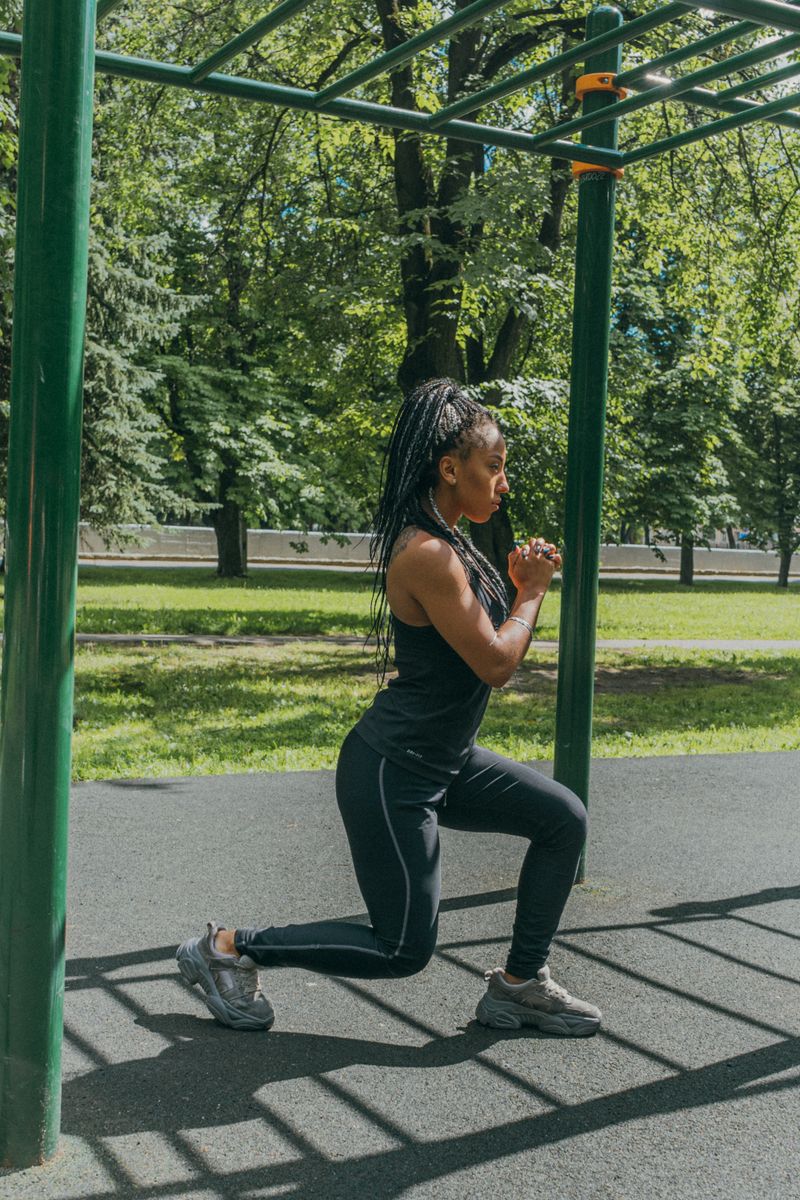
Leg Day at Home With No Machines: A Complete Routine
A complete leg workout you can do at home with no machines, using dumbbells and bodyweight. Sets-and-reps table, form cues and progression.
Kettlebell-Only Workout Plan: A Complete Full-Body Program
A complete full-body workout plan using a single kettlebell, with exercises, sets and reps tables, a weekly schedule and clear progression rules.
3-Day Full-Body Home Gym Workout (With Sets and Reps)
A complete 3-day full-body home gym workout with sets, reps and form cues for every lift, built around dumbbells, a bench and a doorway pull-up bar.
📖 All articles on Gym4Home →
Browse our other articles