A No-Equipment Ab Workout You Can Do in Any Living Room
This article may contain affiliate links. If you make a purchase through these links, we may earn a small commission at no extra cost to you. This helps us keep creating free content.
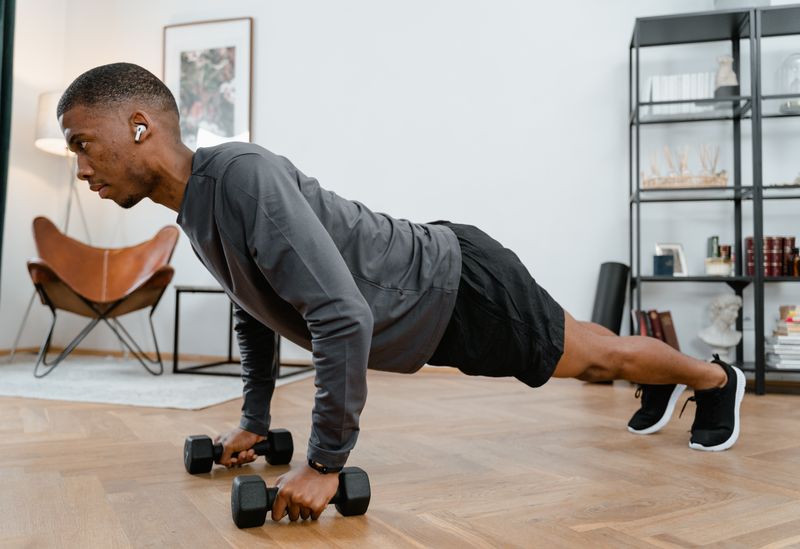
You can train your entire core with nothing but a small patch of floor and 15 minutes. Visible abs come mostly from diet, but a strong core protects your lower back, improves posture, and steadies every other lift you do. The workout below hits all four functions of the core: flexion, anti-extension, rotation, and anti-rotation. No mat is required, though a towel helps on hard floors.
Do this routine two to three times a week on non-consecutive days. The core recovers fast but still needs rest to adapt. Move through the exercises as a circuit, rest 30 to 45 seconds between them, and repeat the circuit two to three times depending on your level.
The 6-exercise core circuit
Each exercise targets a different demand on the trunk, so the set works the whole core rather than just the front of the abs. Start at the beginner numbers and add reps or seconds before you add rounds.
| Exercise | Beginner | Intermediate | Targets |
|---|---|---|---|
| Dead bug | 8 per side | 12 per side | Anti-extension |
| Forearm plank | 20 sec | 45 sec | Whole core |
| Bicycle crunch | 10 per side | 20 per side | Flexion, rotation |
| Side plank | 15 sec per side | 40 sec per side | Obliques |
| Leg raise | 8 reps | 15 reps | Lower-ab flexion |
| Bird dog | 8 per side | 12 per side | Anti-rotation |
How to do each exercise correctly
Retrospec Solana Thick Exercise Mat (1/2 in)
A thick, non-slip mat makes floor work and stretching comfortable on the joints.
* Affiliate link. We may earn a commission at no extra cost to you.
Form decides whether you train your core or strain your lower back. Read the cues once, then keep your spine in a neutral position throughout each movement.
- Dead bug. Lie on your back, arms pointed at the ceiling, knees bent over hips. Press your lower back into the floor. Slowly extend the opposite arm and leg, then return. The lower back must stay flat the entire time.
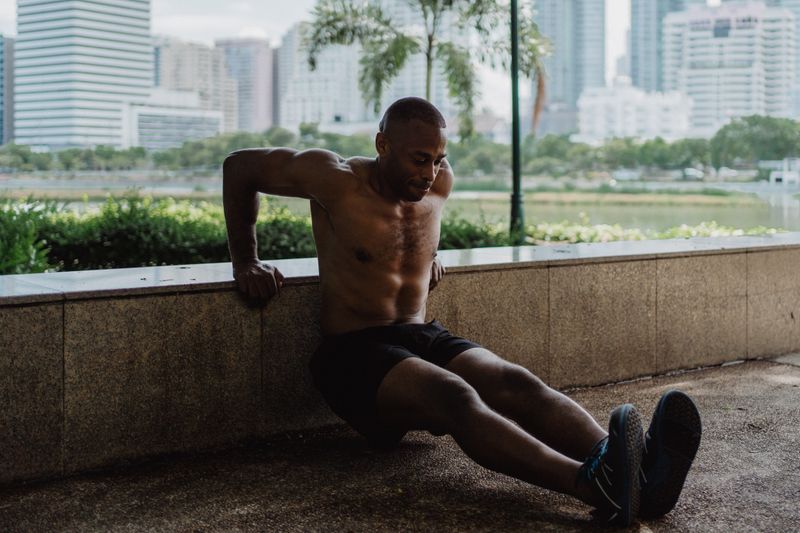
- Forearm plank. Forearms and toes on the floor, body in one straight line from head to heels. Squeeze your glutes and brace your stomach. Do not let your hips sag or pike up.
- Bicycle crunch. On your back, bring one knee toward your chest while rotating the opposite elbow toward it. Alternate slowly. Speed turns this into a momentum swing that does little.
- Side plank. On one forearm, body stacked and straight, hips lifted off the floor. Drop to the top knee if the full version is too hard at first.
- Leg raise. On your back, hands under your hips for support. Raise straight legs to vertical, then lower slowly. Stop lowering the moment your lower back lifts off the floor.
- Bird dog. On hands and knees, extend the opposite arm and leg until they are level with your torso. Hold for a second without twisting your hips, then return.
How to make it harder without buying anything
The fastest way to progress at home is not more reps, it is slower and longer holds. Once the intermediate column feels easy, you have several free ways to raise the demand without adding load.
Add a three-second pause at the hardest point of each rep. Extend plank holds in 10-second jumps. Slow the lowering phase of leg raises to four seconds. For dead bugs and bird dogs, hold the fully extended position for two full seconds before returning. These tweaks add weeks of progression before you ever need equipment.
A 15-minute and a 25-minute version
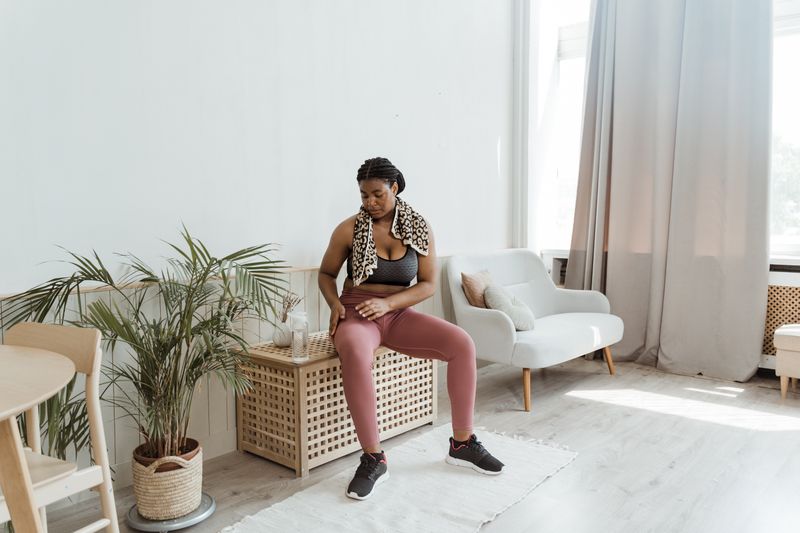
Match the length to your day. The short version is enough to maintain a strong core, and the longer one adds volume when you want it. Both use the same six exercises.
For 15 minutes, run the circuit twice with 30 seconds of rest between exercises. For 25 minutes, run it three times and add 10 seconds or two reps to each movement. Finish either version with a 60-second slow breathing hold in a hollow position to teach your core to brace under steady tension.
Why diet, not crunches, reveals abs
Ab exercises build the muscle, but they do not burn the fat that sits over it. Visible abs appear when body fat drops low enough for the muscle to show, which for most people means a calorie deficit and a solid protein intake, not a higher rep count on crunches.
Train the core for strength and back health, and handle fat loss through diet and overall activity. Spot reduction is a myth: you cannot crunch fat off your stomach specifically. The core work makes the abs strong and dense, and your kitchen decides whether anyone sees them.
Warm-up and the mistakes to avoid
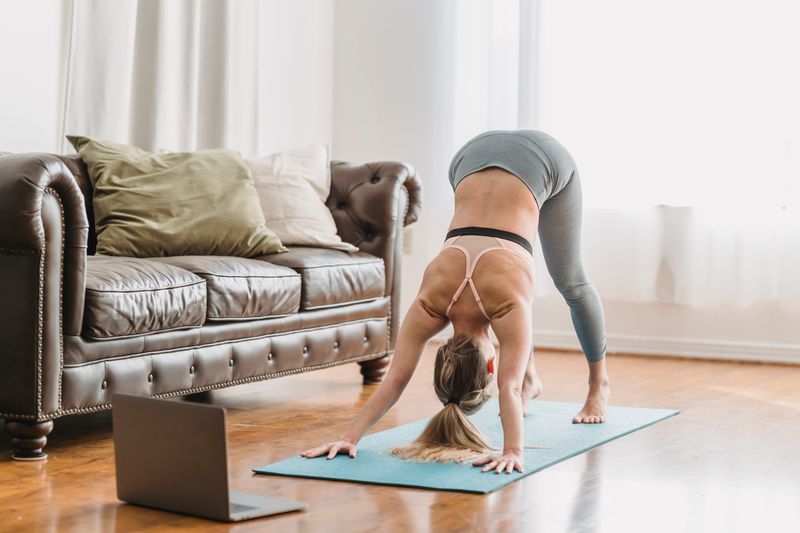
Cold core muscles and a stiff lower back raise the risk of tweaking something during leg raises or planks. A short warm-up wakes up the trunk and grooves the bracing pattern you will use throughout the circuit. It takes under two minutes and pays off in cleaner reps.
Do 10 cat-cow movements on hands and knees to mobilize the spine, then a 20-second easy plank to switch on the deep core, then 10 slow standing torso rotations to each side. That is enough to prepare the muscles without tiring them. Skip it only if you have already trained something else and your body is warm.
Holding your breath is the most common error and the easiest to fix. Brace your stomach as if expecting a light punch, then keep breathing in short, controlled breaths through every rep. A braced core that still breathes protects the spine far better than a held breath that spikes pressure.
Rushing the reps is the other big one. Momentum lets your hip flexors and lower back take over from the abs, which is why fast bicycle crunches and swung leg raises feel easy but build little. Slow every rep down until you feel the target muscle working, and cut the rep count rather than sacrifice control. Quality reps beat a higher number every time. A useful test is to pause for a full second at the hardest point of each rep. If you cannot pause without losing position, you are moving too fast or the variation is too hard for now, so scale back and rebuild the control first.
Frequently asked questions
How often should I do this ab workout?
Two to three times a week on non-consecutive days is plenty. The core recovers quickly but still adapts better with a rest day between sessions, especially when you progress the holds.
Can I get visible abs with bodyweight only?
Yes. The muscle responds to bodyweight tension and tempo work. Whether the abs show depends on your body-fat level, which is set mostly by diet rather than by the exercises themselves.
What if my neck hurts during crunches?
Stop pulling on your head. Rest your fingertips lightly behind your ears and lead with your chest, not your chin. Swapping bicycle crunches for dead bugs also removes neck strain while still training the core hard.
🛠️ Free tools for this topic
No sign-up. They do the calculating and checking for you.
Published by the Gym4Home editorial team. Published September 17, 2026.
Editorial responsibility: see Imprint.
Spotted an error or have something to add? corrections@gym4home.com
Home Gym Tips, Weekly
Equipment picks, workout ideas, and setup guides — for every space and every budget. No fluff, just useful.
🎁 Free bonus: The Home Gym Starter Checklist (PDF)
You might also like
A 4-Week Bodyweight Workout Plan for Total Beginners
A four-week, no-equipment bodyweight plan with sets and reps that ramps from total beginner to harder variations in five simple movements.
Leg Day at Home With No Machines: A Complete Routine
A complete leg workout you can do at home with no machines, using dumbbells and bodyweight. Sets-and-reps table, form cues and progression.

Home Gym Weight Loss Plan: Lose Fat in 30 Minutes a Day
A simple 4-day home gym weight loss plan that blends strength and cardio in 30 minutes a day, with diet basics, a starter equipment budget, and realistic progress tracking.
📖 All articles on Gym4Home →
Browse our other articles