A 4-Week Bodyweight Workout Plan for Total Beginners
This article may contain affiliate links. If you make a purchase through these links, we may earn a small commission at no extra cost to you. This helps us keep creating free content.
Hinweis: Dieser Artikel ersetzt keine ärztliche Beratung. Besprich Trainingsfragen im Zweifel mit Arzt oder Physiotherapie.
A structured bodyweight plan builds real strength in four weeks using nothing but the floor, a wall and a sturdy chair. You train three days a week, with the same handful of movements progressing in difficulty as you get stronger. No equipment, no gym, and no excuse about space, since the whole routine fits in the area of a yoga mat.
The plan covers the four patterns every strength routine needs: a squat, a push, a hinge and a core hold. Each week the reps or the leverage get a little harder. By week four you are doing more total work than you could manage on day one, which is exactly how strength is supposed to build.
Each week keeps the same five exercises but raises the demand. In week one you build the habit and learn the movements with moderate reps. Week two adds a set. Week three increases the reps per set. Week four swaps in harder variations, such as moving from knee push-ups to full push-ups, or from a wall sit to a longer hold.
This slow ramp matters more than it looks. Starting too hard leaves you so sore you skip the next session, which kills the whole plan. Starting at a manageable level and adding a little each week keeps you consistent, and consistency is what actually changes your body over a month.
The five exercises
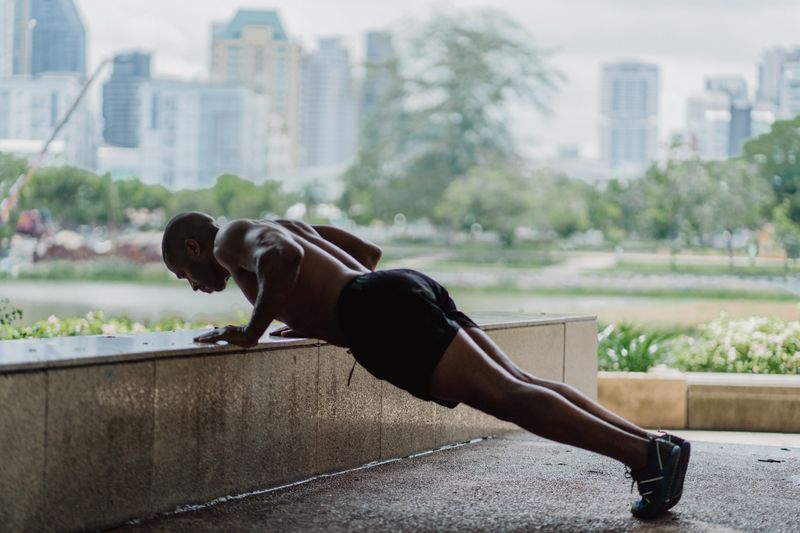
Bodyweight squats train your legs and glutes. Stand with feet shoulder-width apart, sit back as if lowering into a chair, and stand tall again. Push-ups train the chest, shoulders and triceps; start on your knees if a full push-up is out of reach. The glute bridge trains the back of your hips: lie on your back, plant your feet, and drive your hips up.

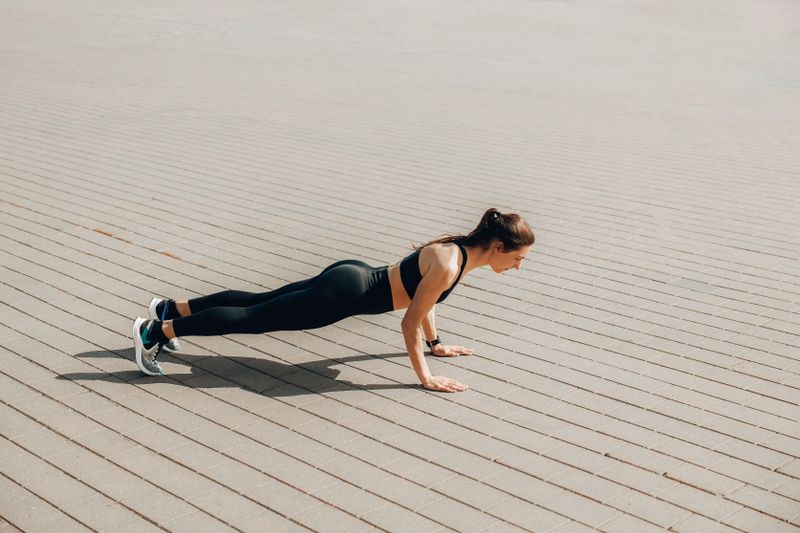
The plank trains your whole midsection as an anti-collapse hold. Rest on your forearms and toes with a straight line from head to heels. Finally, the wall sit builds leg endurance: slide down a wall until your thighs are parallel to the floor and hold. Five movements, four patterns, zero equipment.
| Exercise | Trains | Beginner regression |
|---|---|---|
| Bodyweight squat | Legs, glutes | Sit to a chair and stand |
| Push-up | Chest, shoulders, triceps | Knee push-up or wall push-up |
| Glute bridge | Glutes, hamstrings | Shorter range, pause at top |
| Plank | Core | Hold on knees |
| Wall sit | Quads, endurance | Higher position, shorter hold |
Week 1: build the habit
Retrospec Solana Thick Exercise Mat (1/2 in)
A thick, non-slip mat makes floor work and stretching comfortable on the joints.
As an Amazon Associate we earn from qualifying purchases.
The first week is about showing up and grooving the movements, not about pushing hard. Do two sets of each exercise with easy form and plenty of rest. If a push-up from the floor is too much, do them against a wall or on your knees. The goal is to finish every session feeling like you could have done a little more.
Rest about 60 to 90 seconds between sets. Move through the five exercises in order, complete your sets, then repeat the circuit. A full session should take around 20 minutes once you know the order.
| Exercise | Sets | Reps / time |
|---|---|---|
| Bodyweight squat | 2 | 10 |
| Push-up (any version) | 2 | 6–8 |
| Glute bridge | 2 | 12 |
| Plank | 2 | 20 seconds |
| Wall sit | 2 | 20 seconds |
Weeks 2 and 3: add volume
Week two adds a third set to every exercise while keeping the same reps. That single extra set raises your weekly training volume by 50 percent, which is a large jump for a beginner and plenty to drive new strength. Keep the rest periods the same and focus on clean form on the added set, where fatigue makes sloppiness creep in.
Week three keeps three sets but raises the reps: squats to 15, push-ups to 10 to 12, glute bridges to 15, planks to 35 seconds, wall sits to 40 seconds. By now the early version should feel easy, which is the signal that you are ready for the harder targets. If a number feels impossible, do as many clean reps as you can and stop there.
Week 4: harder variations
The final week swaps in tougher versions of each movement so your body keeps adapting. Move from knee push-ups to full push-ups, or from full push-ups to a slower three-second lowering phase. Try a single-leg glute bridge instead of two legs. Hold the plank for 45 seconds. Add a few seconds to the wall sit. Where a harder version is out of reach, simply add reps to the standard one.
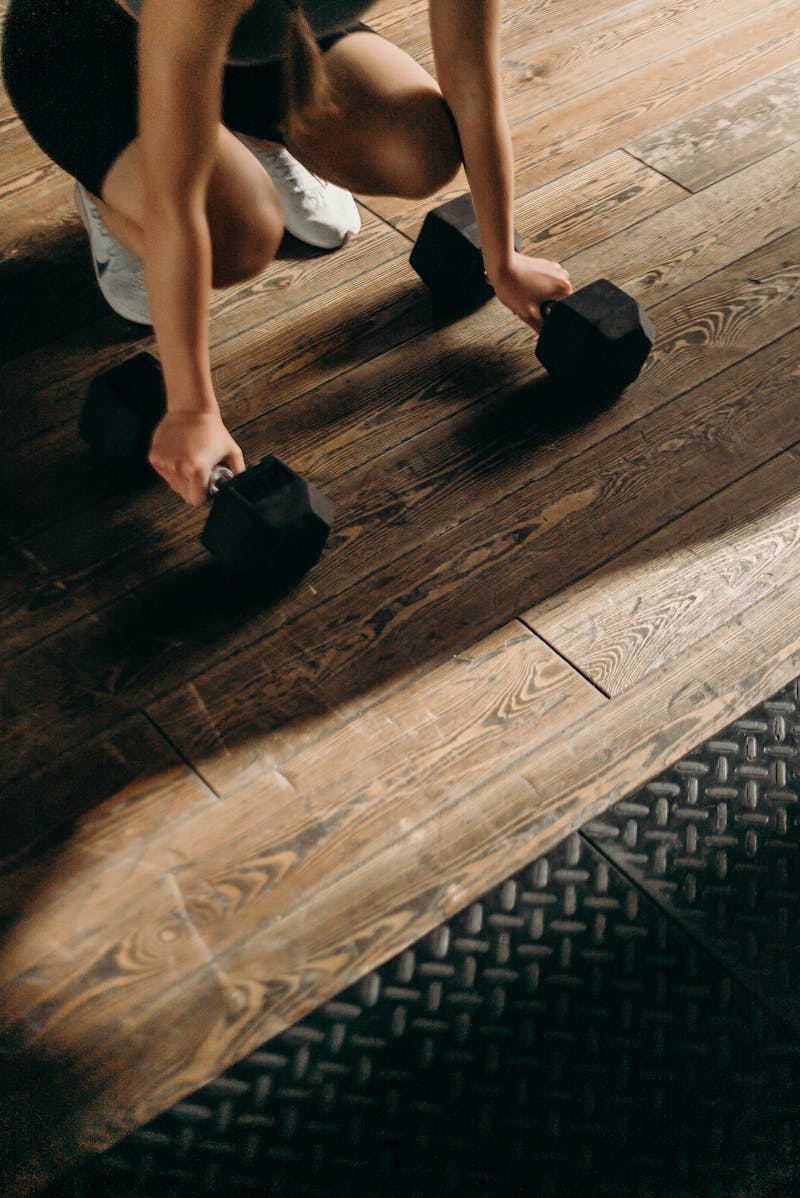
At the end of four weeks you have a base of strength and a consistent training habit. From here you can repeat the cycle with harder progressions, or add a pair of adjustable dumbbells and move into a loaded program. Either way the foundation holds, because you built it by adding small, repeatable steps rather than by going all-out on day one.
Form cues that keep you safe
Most beginner injuries come from a handful of form faults that are easy to fix once you know them. In the squat, the common mistake is letting the knees cave inward and the lower back round at the bottom. Push your knees out in line with your toes and keep your chest up. If you cannot reach a parallel depth without rounding, squat to a chair and stand back up until your hips loosen.
In the push-up, the hips often sag or pike up instead of holding a straight line. Squeeze your glutes and brace your stomach as if bracing for a light punch, and the body stays rigid. In the plank, the same brace applies, and you should breathe normally rather than holding your breath. Clean form on these basics matters far more than the number of reps, because it is what lets you train the next session pain-free.
Tempo is the cue most beginners ignore, and it changes everything. Lower under control over two or three seconds rather than dropping fast, pause briefly at the hardest point, then move back up with intent. Slow, controlled reps build more strength than fast sloppy ones and are far safer on the joints. They also make a bodyweight exercise much harder without any added equipment, which is why tempo is one of your best progression tools across all four weeks.
What to eat and how to recover
Training breaks muscle down; food and sleep build it back stronger. You do not need a complicated diet to support a beginner bodyweight plan, but protein matters. Aim to include a protein source at each meal, such as eggs, yoghurt, chicken, fish, beans or a protein shake. A rough daily target many people use is around 0.7 grams of protein per pound of bodyweight, spread across the day.
Sleep is the other half of recovery and the one most people shortchange. The strength gains you build in a session are consolidated during deep sleep, so seven to nine hours does more for your progress than any supplement. On rest days, light movement like a walk helps blood flow and reduces soreness. Treat the rest days as part of the plan, not time off from it, and the four weeks deliver the strength they promise.
Soreness in the first week or two is normal and not a sign of damage. Known as delayed-onset muscle soreness, it usually peaks a day or two after a session and fades as your body adapts to the new movements. Gentle movement, staying hydrated and getting enough sleep all help it pass faster. If a muscle is so sore that your form breaks down, take an extra rest day rather than pushing through, since training hard through heavy soreness raises your injury risk without speeding progress. By the third and fourth weeks the soreness usually settles, because your body has adapted to the workload.
Frequently asked questions
Can you really build muscle with no equipment? Beginners build noticeable strength and some size with bodyweight work alone, because the movements are still resistance training. Once the exercises become easy at high reps, adding load through dumbbells or bands speeds further progress.
What if I can't do a single push-up? Start with wall push-ups, then progress to push-ups with your hands on a counter or chair, then to knee push-ups, and finally to the floor. Each step lowers the resistance, so almost everyone finds a version they can do.
How long should each session take? Around 20 to 30 minutes including rest. The plan is short on purpose. A workout you finish three times a week beats an hour-long routine you abandon after the first week.
🛠️ Free tools for this topic
No sign-up. They do the calculating and checking for you.
Published by the Gym4Home editorial team. Published August 13, 2026. Updated October 4, 2026.
Editorial responsibility: see Imprint.
Spotted an error or have something to add? corrections@gym4home.com
Home Gym Tips, Weekly
Equipment picks, workout ideas, and setup guides — for every space and every budget. No fluff, just useful.
🎁 Free bonus: The Home Gym Starter Checklist (PDF)
You might also like
A Home Core Workout With No Crunches (and Why That's Better)
A no-crunch core circuit you can do at home in 20 minutes, built on planks and carries that train real spinal stability.

How Many Sets and Reps Should You Do in a Home Gym?
How many sets and reps to do at home for strength, muscle, or endurance, with rest times, loading tips, and a sample beginner week.
Dumbbell Upper-Body Workout at Home: A Full Routine
A complete upper-body dumbbell routine for home, with a sets-and-reps table, form cues for every lift, and a simple progression plan.
📖 All articles on Gym4Home →
Browse our other articles