Beginner Strength Workout: A Simple 3-Day Home Plan
This article may contain affiliate links. If you make a purchase through these links, we may earn a small commission at no extra cost to you. This helps us keep creating free content.
Hinweis: Dieser Artikel ersetzt keine ärztliche Beratung. Besprich Trainingsfragen im Zweifel mit Arzt oder Physiotherapie.
Three short strength sessions a week build muscle faster for a beginner than six rushed ones. Your body adds strength during the rest days, not during the lifting, so a 3-day plan with a day off between sessions gives you the recovery that actually drives progress. This plan needs about 35 minutes per session and a small set of home equipment that fits in a closet.
The structure below uses a full-body approach on each day rather than splitting muscles across the week. Full-body suits beginners because you practice the main movement patterns more often, and missing one session does less damage to your progress. You hit the same big lifts three times a week with light variations, so the patterns become automatic.
What you need before you start
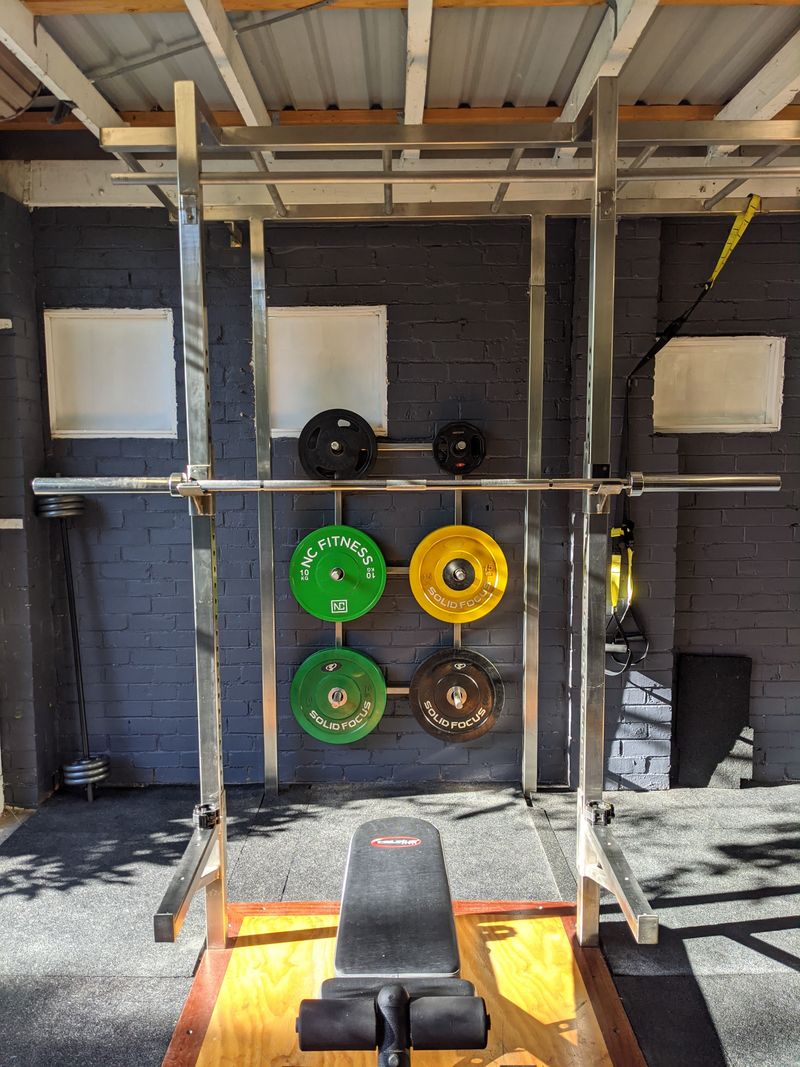
A pair of adjustable dumbbells covers almost everything in this plan. A set that runs from 5 to 25 pounds per hand costs roughly $80 to $150 and replaces a whole rack of fixed weights. If you only have fixed dumbbells, two pairs work for the first month: a lighter pair around 10 pounds and a heavier pair around 20 pounds.
An exercise mat protects your floor and your spine on the ground work, and a sturdy chair or low bench gives you something to press from and step onto. That is the whole shopping list. You do not need a bench press, a power rack or a cable machine to get strong in your first six months.
The weekly layout
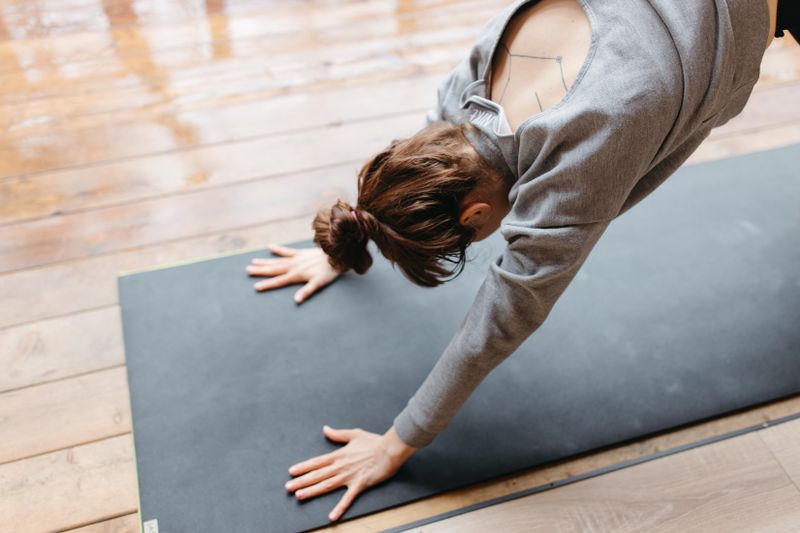
Retrospec Solana Thick Exercise Mat (1/2 in)
A thick, non-slip mat makes floor work and stretching comfortable on the joints.
* Affiliate link. We may earn a commission at no extra cost to you.
Train on three non-consecutive days so each session gets a full recovery day after it. A Monday, Wednesday, Friday rhythm works for most people, but any spacing with a gap between sessions is fine. Keep the weekend free or use it for a walk.
Each day shares the same five movement patterns: a squat, a hinge, a push, a pull and a carry or core hold. The exercises rotate slightly so your joints move through different angles across the week, which keeps shoulders and knees happier than grinding the identical movement every session.
| Day | Focus | Main lifts |
|---|---|---|
| Day 1 (Mon) | Squat + push | Goblet squat, floor press, one-arm row |
| Day 2 (Wed) | Hinge + pull | Romanian deadlift, bent-over row, shoulder press |
| Day 3 (Fri) | Full body | Split squat, push-up, suitcase carry |
Day 1: squat and push
Start every session with two minutes of easy movement: arm circles, bodyweight squats and a few hip swings. This raises your temperature and wakes up the joints you are about to load. Skipping the warm-up is the fastest way to tweak a shoulder on your first heavy set.
The numbers below give you sets and reps. Rest 90 seconds between sets so your strength recovers before the next one. If a set feels easy across the board, add a small amount of weight next session.
| Exercise | Sets | Reps |
|---|---|---|
| Goblet squat | 3 | 8–10 |
| Dumbbell floor press | 3 | 8–10 |
| One-arm dumbbell row | 3 | 10 each side |
| Dead bug (core) | 2 | 8 each side |
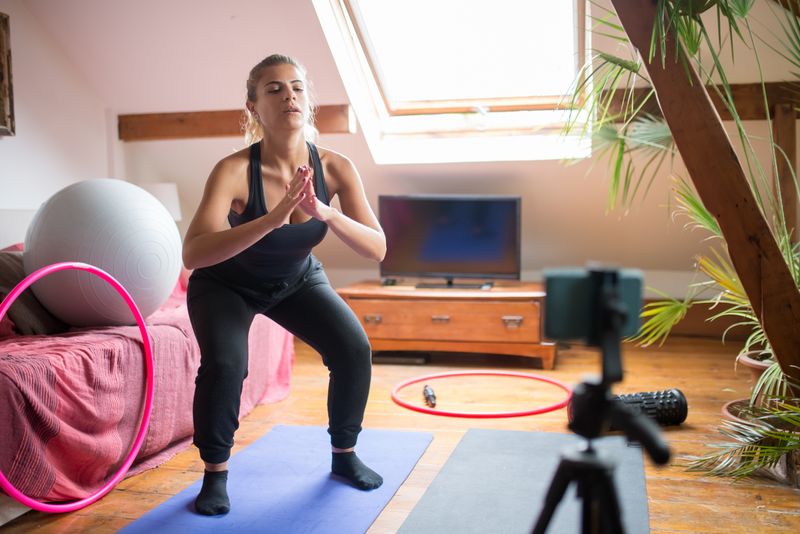
For the goblet squat, hold one dumbbell vertically against your chest, sit your hips down between your knees and drive back up through your heels. Keep your chest tall and your weight over your mid-foot so your knees track in line with your toes. For the floor press, lie on your mat with knees bent and press both dumbbells straight up from your chest. The floor limits how far your elbows drop, which protects beginner shoulders that are not ready for a full bench press range.
The one-arm row builds the upper back that all your pressing relies on. Plant one hand and the same-side knee on a chair or bench, let the dumbbell hang from your free hand, then pull it toward your hip while keeping your back flat. Finish with the dead bug, lying on your back and lowering one arm and the opposite leg toward the floor while your lower back stays pressed into the mat. That last move teaches the bracing you will need for every heavier lift.
Day 2: hinge and pull
The hip hinge is the movement most beginners get wrong, so day two builds it carefully. The Romanian deadlift teaches you to push your hips back and load your hamstrings instead of rounding your lower back. Keep the dumbbells close to your legs and stop the descent when you feel a stretch behind your thighs.
| Exercise | Sets | Reps |
|---|---|---|
| Romanian deadlift | 3 | 10–12 |
| Bent-over row | 3 | 10 |
| Standing shoulder press | 3 | 8–10 |
| Plank hold | 2 | 20–30 sec |
The bent-over row hits your upper back, which balances all the pressing and keeps your posture upright. Hinge forward at the hips, let the dumbbells hang, then pull them toward your ribs and squeeze your shoulder blades together. The shoulder press finishes the day: press both dumbbells overhead without leaning back, and lower them under control to the tops of your shoulders.
Day 3: full body
The third day mixes single-leg work with carries to round out your week. The split squat trains each leg on its own, which exposes and fixes the strength gap most people have between their dominant and weaker side. Set up in a staggered stance, lower your back knee toward the floor, and press up through the front heel.
| Exercise | Sets | Reps |
|---|---|---|
| Dumbbell split squat | 3 | 8 each leg |
| Push-up (or knee push-up) | 3 | As many as clean |
| Suitcase carry | 3 | 30 steps each side |
| Glute bridge | 2 | 12–15 |
The suitcase carry looks simple and trains more than it seems. Hold one dumbbell at your side and walk slowly without letting your torso tip toward the weight. Your core and obliques fight to keep you upright, which builds the stability that protects your spine in everyday lifting. Switch sides and repeat. Finish the session with glute bridges to wake up the muscles that long hours of sitting tend to shut off.
Common beginner mistakes to avoid
Adding weight too fast is the error that derails most beginners. Your muscles adapt quickly, but your tendons and joints need longer, so a jump that feels fine on day one can leave a tendon cranky a week later. Climb in small steps and let the lighter early sessions build a foundation. There is no prize for the heaviest first month, only for the consistent sixth one.
Cutting the rest periods short is the second trap. Rushing from set to set turns a strength workout into a breathless conditioning session, and your weights drop because your muscles never recovered. Use the full 90 seconds between sets even if you feel ready sooner. The third mistake is skipping the pulling exercises because the pressing feels more satisfying; that imbalance pulls your shoulders forward and leads to nagging aches within weeks.
How to progress week to week
Add load before you add reps. When you can complete every set at the top of the rep range with clean form, bump the weight up by the smallest increment your dumbbells allow, usually 2.5 or 5 pounds per hand. Your reps will drop back down at the heavier weight, and you climb the range again over the next two or three sessions.
Expect noticeable strength gains in four to six weeks if you train consistently and eat enough protein. A good target is roughly 0.7 grams of protein per pound of body weight per day, spread across your meals. Sleep matters as much as the lifting, since that is when your muscle actually rebuilds.
Some sessions will feel weaker than the last, and that is normal. A bad night of sleep, a stressful week or a missed meal all show up as lighter weights on the bar. When that happens, repeat the previous weight rather than forcing a jump, and trust that the trend over a month points upward even when individual days dip. Progress in strength training is rarely a straight line.
Stay on this plan for two to three months before you consider a more advanced split. Beginners make their fastest progress on simple full-body training, and there is no reason to complicate it while it is still working. When the dumbbells start to feel limiting, that is the signal to add a pull-up bar or heavier weights, not to redesign the whole program. The plan that you keep showing up for beats the perfect plan you abandon after three weeks.
🛠️ Free tools for this topic
No sign-up. They do the calculating and checking for you.
Published by the Gym4Home editorial team. Published June 16, 2026. Updated August 11, 2026.
Editorial responsibility: see Imprint.
Spotted an error or have something to add? corrections@gym4home.com
Home Gym Tips, Weekly
Equipment picks, workout ideas, and setup guides — for every space and every budget. No fluff, just useful.
🎁 Free bonus: The Home Gym Starter Checklist (PDF)
You might also like
Progressive Overload Explained: The One Rule That Builds Strength
Progressive overload is the single mechanism behind strength and muscle growth. Here is what it means and six practical ways to apply it at home.

3-Day Full-Body Home Gym Workout (With Sets and Reps)
A complete 3-day full-body home gym workout with sets, reps and form cues for every lift, built around dumbbells, a bench and a doorway pull-up bar.

The Upper/Lower Split for a Home Gym (4-Day Plan)
A complete 4-day upper/lower split for a home gym, with sets-and-reps tables for upper and lower days and a plan to progress over time.
📖 All articles on Gym4Home →
Browse our other articles