A Home Core Workout With No Crunches (and Why That's Better)
This article may contain affiliate links. If you make a purchase through these links, we may earn a small commission at no extra cost to you. This helps us keep creating free content.
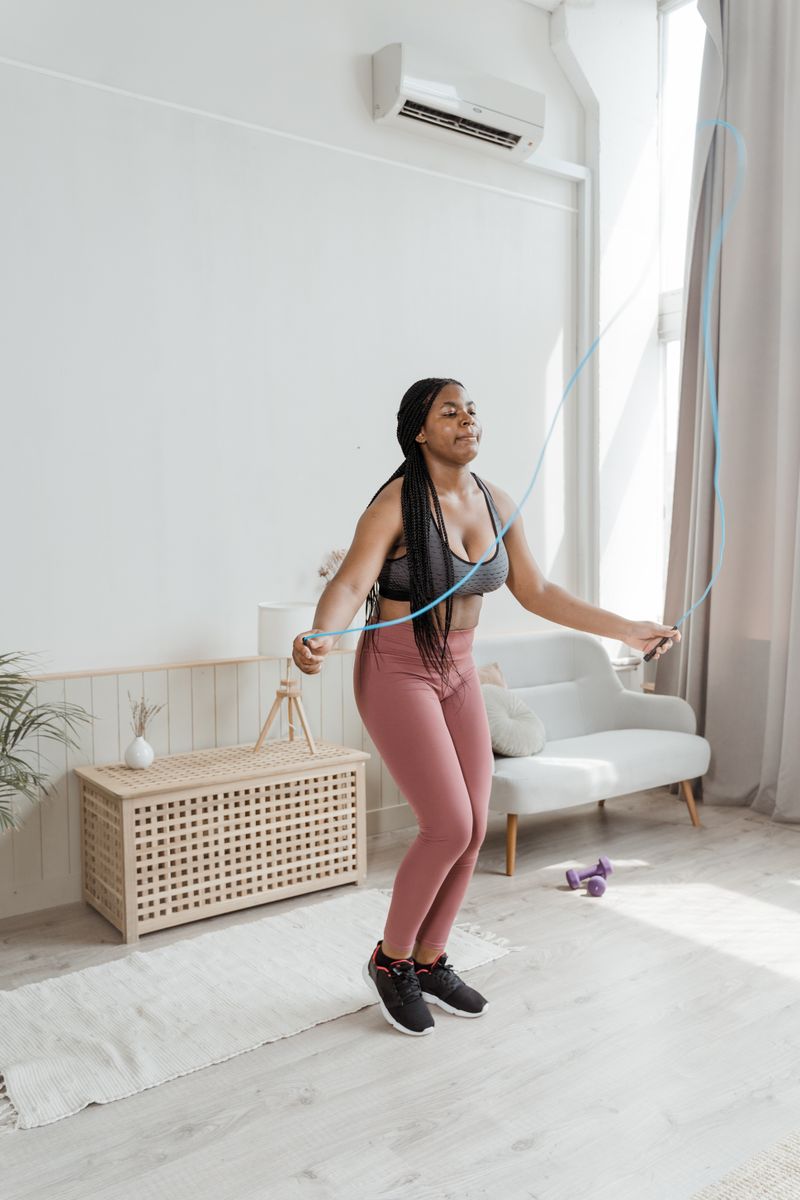
Crunches train your abs to flex your spine forward, but the core's real job in daily life is to resist movement and keep your spine stable. That mismatch is why a crunch-heavy routine can leave you with a sore neck and no improvement in how your back feels when you lift a suitcase or carry groceries. The workout below trains your core the way it actually works, with no crunches and nothing that strains your neck.
Every exercise here can be done on a mat with no equipment, or with a single dumbbell for the loaded versions. The plan takes about 20 minutes and fits at the end of a strength session or as a standalone session two or three times a week.
Why anti-movement beats crunches
Your deep core muscles fire hardest when they stop your torso from bending, twisting or extending under load. Trainers group these into three jobs: anti-extension (stopping your lower back from arching), anti-rotation (stopping your torso from twisting) and anti-lateral-flexion (stopping you from tipping sideways). Train all three and you build a core that protects your spine during real tasks.
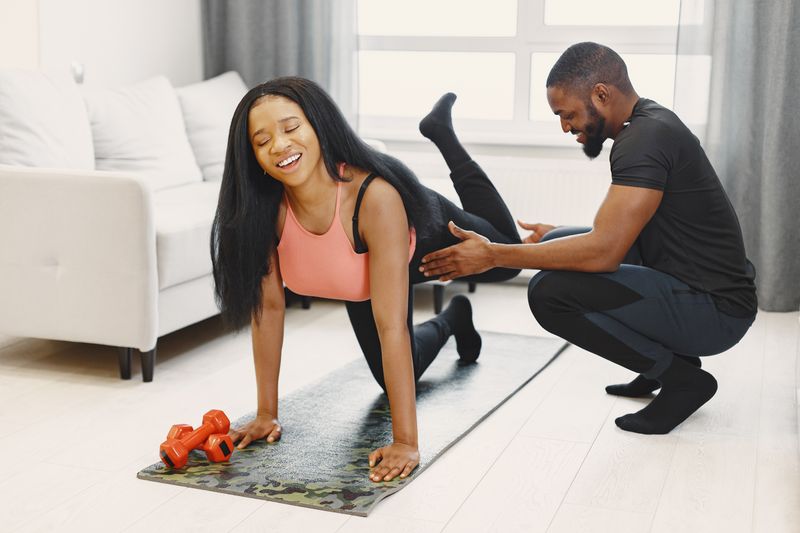
Crunches hit none of these well, and the repeated spinal flexion can aggravate an already cranky lower back. Planks and carries, by contrast, teach your core to hold firm while your limbs move, which is exactly the demand of lifting a child or steadying a heavy box. The carryover to everyday strength is far higher.
There is also a visible payoff. The flat, controlled midsection most people want comes from a core that stays braced and from a lower body-fat level, not from grinding out crunches. Anti-movement training builds the bracing strength, while your overall workout and diet handle the rest. Chasing a high crunch count delivers neither.
The no-crunch core circuit
Retrospec Solana Thick Exercise Mat (1/2 in)
A thick, non-slip mat makes floor work and stretching comfortable on the joints.
* Affiliate link. We may earn a commission at no extra cost to you.
Run these as a circuit: do one set of each exercise in order, rest a minute, then repeat for three rounds. Each move targets a different anti-movement job, so the circuit covers your whole core in one pass. Keep your breathing steady and your ribs pulled down toward your hips throughout.
| Exercise | Sets | Reps / time |
|---|---|---|
| Front plank | 3 | 30–45 sec |
| Side plank | 3 | 20–30 sec each side |
| Bird dog | 3 | 8 each side |
| Dead bug | 3 | 10 each side |
| Suitcase carry | 3 | 30 steps each side |
How to do each exercise
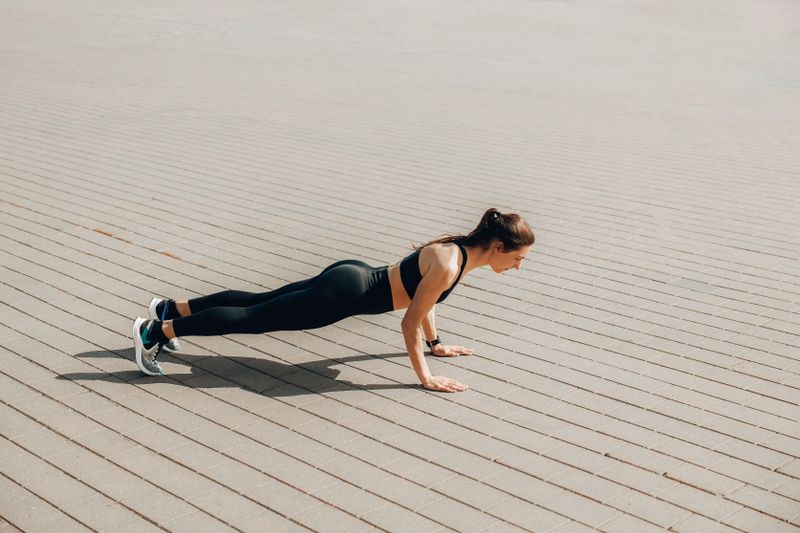
The front plank is the anti-extension foundation. Set your forearms on the mat under your shoulders, squeeze your glutes, and hold a straight line from heels to head without letting your hips sag. The moment your lower back starts to dip, the set is over, even if you have not hit the time. A clean 30-second plank beats a sagging 60-second one.
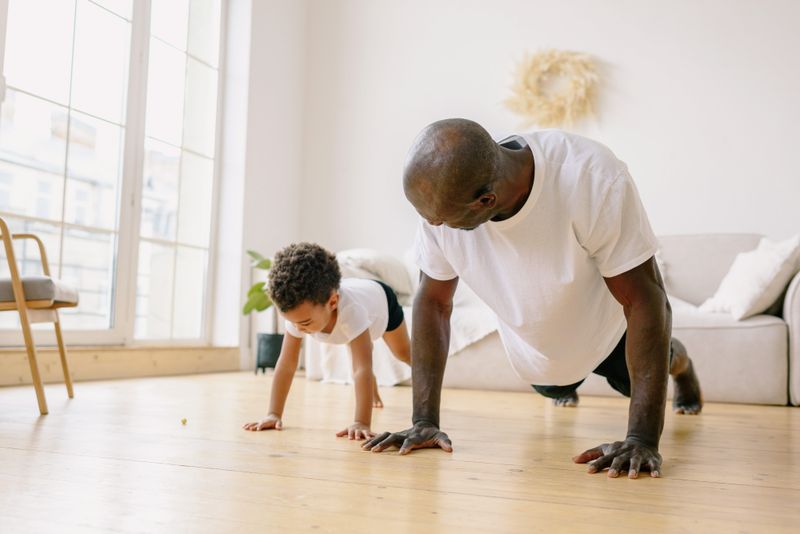
The side plank covers anti-lateral-flexion. Stack your feet, prop on one forearm, and lift your hips so your body forms a straight diagonal line. Hold without letting the bottom hip drop toward the floor. The bird dog and dead bug both train anti-rotation and anti-extension while your limbs move: extend opposite arm and leg slowly, keeping your spine still as if a glass of water sat on your lower back.
Breathing is the skill that ties all of these together. The instinct is to hold your breath and clench, but that leaves you gasping and limits how long you can hold a brace. Instead, breathe shallowly through the hold while keeping your midsection firm, as if you were about to be lightly poked in the stomach. On the carries and Pallof presses, exhale slowly at the hardest point of the movement to lock the brace in. Learning to breathe and brace at the same time is what lets your core protect your spine when you are also lifting something heavy.
Loading it as you get stronger
Bodyweight holds get easy faster than you expect, so add load to keep progressing. The suitcase carry is the easiest to load: hold a single dumbbell at one side and walk without tipping toward it. Start light, around 15 to 25 pounds, and add weight when you can walk 30 steps with a stable, upright torso.
For planks, you can extend the hold time, lift one foot off the floor, or have someone place a light plate on your upper back. For the side plank, raising the top leg or adding a small reach under your body increases the demand. Progress one variable at a time so you can tell what is working.
One useful loaded move to add later is the Pallof press, the cleanest anti-rotation exercise there is. Anchor a band at chest height to one side, hold the end with both hands at your sternum, and press your arms straight out in front of you. The band tries to twist you toward the anchor, and your core resists. Hold for a breath, return, and repeat for 10 reps each side before switching directions.
Fitting it into your week
Two or three core sessions a week is plenty, and you do not need a separate day for it. Tack the circuit onto the end of a strength workout, or run it on an off day when you want light movement without taxing your big lifts. Your core also works hard during squats, deadlifts and carries, so dedicated core training is a supplement, not the main event.
Skip the daily hundred-crunch habit and you lose nothing your spine values. A braced, stable core built from planks, carries and anti-rotation work transfers to lifting, posture and back comfort in a way that endless crunches never delivered. Give this circuit six weeks of consistent work and the difference shows up in how steady you feel under any load.
Common questions
People often ask whether you can get visible abs without crunches, and the answer is yes. Ab definition is mostly a matter of body-fat level, which your diet and overall activity control, not a specific ab exercise. The anti-movement work here builds the underlying muscle and the bracing strength; lowering body fat is what makes that muscle visible.
Another frequent question is whether planks alone are enough. They cover anti-extension well, but a complete core needs the rotation and side-bending resistance that the side plank, bird dog and carries add. Doing the full circuit rather than just planks gives you a balanced midsection that handles everyday twisting and side loads, not only straight-ahead bracing.
If your lower back still bothers you during any of these moves, scale back the range and the load before pushing through. A core program should leave your back feeling steadier, not sorer. Persistent pain is a signal to check your form or to have a professional look at it, not to grind harder. Done right, this circuit builds the kind of quiet, reliable midsection strength you stop thinking about because it simply holds.
🛠️ Free tools for this topic
No sign-up. They do the calculating and checking for you.
Published by the Gym4Home editorial team. Published September 28, 2026.
Editorial responsibility: see Imprint.
Spotted an error or have something to add? corrections@gym4home.com
Home Gym Tips, Weekly
Equipment picks, workout ideas, and setup guides — for every space and every budget. No fluff, just useful.
🎁 Free bonus: The Home Gym Starter Checklist (PDF)
You might also like
Home Cardio Without a Treadmill: 6 Options That Work
Six treadmill alternatives for home cardio, compared on price, noise and joint impact, from free stair intervals to a quiet foldable rowing machine.

Home Gym Weight Loss Plan: Lose Fat in 30 Minutes a Day
A simple 4-day home gym weight loss plan that blends strength and cardio in 30 minutes a day, with diet basics, a starter equipment budget, and realistic progress tracking.
How Many Sets and Reps Should You Do in a Home Gym?
How many sets and reps to do at home for strength, muscle, or endurance, with rest times, loading tips, and a sample beginner week.
📖 All articles on Gym4Home →
Browse our other articles