Arthritis-Friendly Home Exercises (Gentle, Joint-Safe Routines)
This article may contain affiliate links. If you make a purchase through these links, we may earn a small commission at no extra cost to you. This helps us keep creating free content.
Health note: This article is for general information only and is not a substitute for medical advice. Talk to your doctor before starting a new exercise programme, especially if you have an existing health condition or injury.
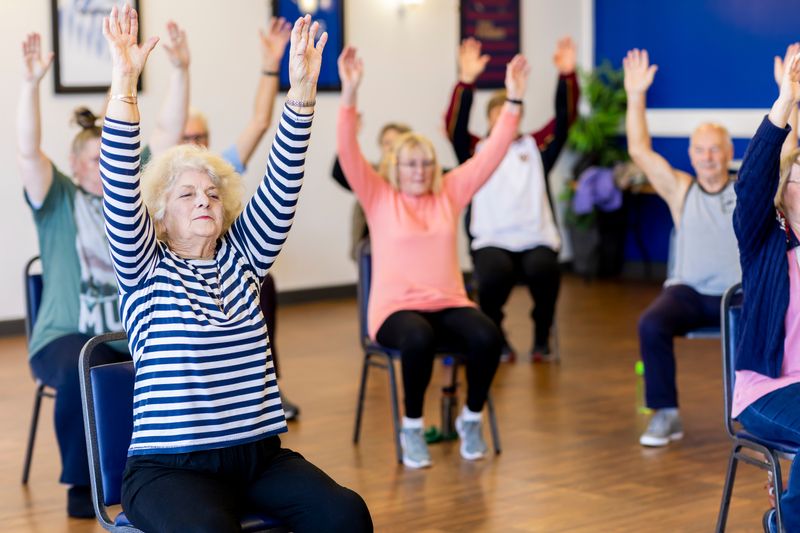
Gentle movement often helps stiff, achy joints more than rest does, because motion brings fluid and blood to the joint and keeps the surrounding muscles strong enough to take pressure off it. Many people with joint stiffness find that low-impact exercise eases morning stiffness and improves how far they can move without discomfort. The exercises below avoid pounding, heavy loading, and deep end-range strain, which are the parts of training that tend to aggravate sensitive joints.
None of this replaces guidance from your doctor or a physiotherapist, who can tell you which movements suit your specific joints. Use these as general, low-risk options and stop any exercise that causes sharp or lasting pain. Mild muscle fatigue is fine. Sharp joint pain is a signal to back off.
Why gentle movement helps stiff joints
Joints are not hinges that wear out faster the more you use them sensibly. Cartilage has no direct blood supply and relies on movement to pump nutrient-rich fluid in and waste out, so regular gentle motion actually nourishes the joint. Strong muscles around a knee, hip, or shoulder share the load that the joint would otherwise carry alone, which is why building strength is one of the most reliable ways to reduce day-to-day ache.
The goal at home is frequent, low-load movement rather than hard, occasional sessions. Short daily routines of 10 to 20 minutes tend to suit sensitive joints better than one long, intense workout that leaves you flared up for two days. Warmth helps too, so many people prefer to move later in the morning once stiffness has eased, or after a warm shower.
Warm up before you load anything
Retrospec Solana Thick Exercise Mat (1/2 in)
A thick, non-slip mat makes floor work and stretching comfortable on the joints.
* Affiliate link. We may earn a commission at no extra cost to you.
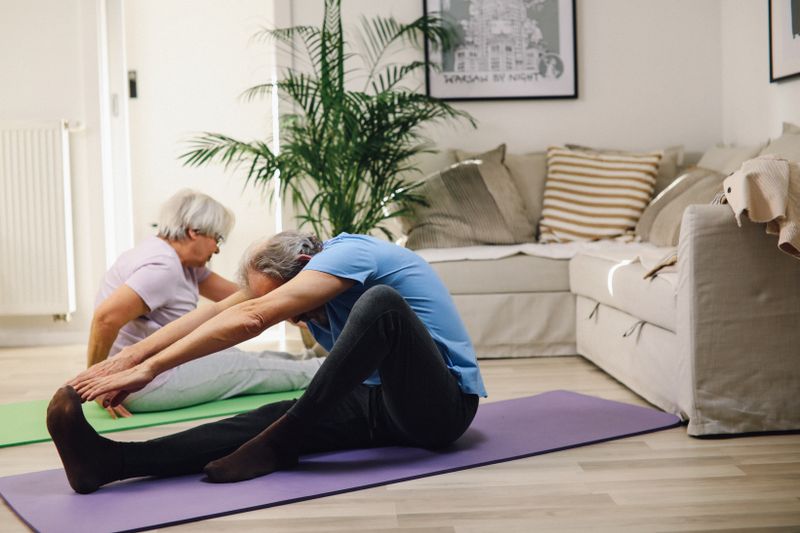
Cold, stiff joints do not respond well to being loaded straight away, so spend five minutes warming up first. Gentle, unloaded range-of-motion work raises the temperature inside the joint and gets the fluid moving before you add any resistance. Keep the movements small at first and let the range grow as the joint loosens.
- Ankle circles: seated, lift one foot and draw slow circles each way. 10 each direction.
- Knee extensions (seated): straighten one leg out slowly, lower it back. 10 per side.
- Shoulder rolls: roll the shoulders back in big slow circles. 10 forward, 10 back.
- Wrist and finger spreads: open and close the hands, then spread the fingers wide. 10 reps.
- Gentle marching: march on the spot, knees low, for 60 to 90 seconds.
Joint-friendly strength moves
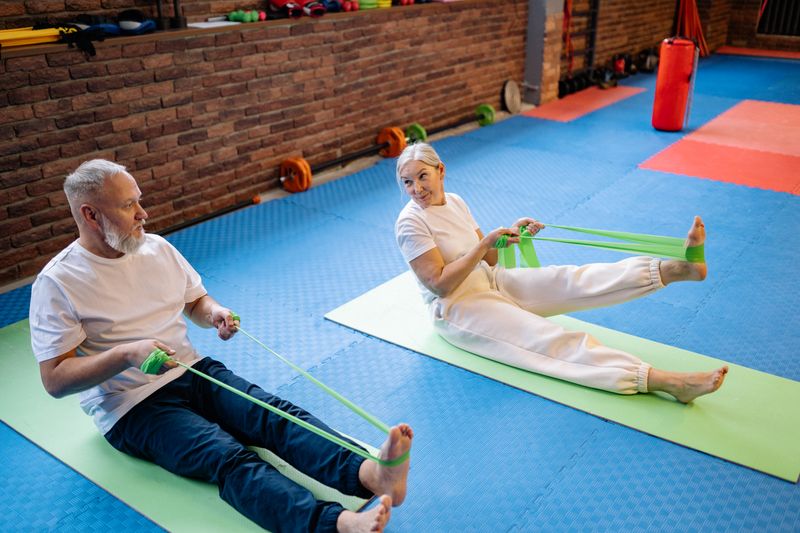
Resistance bands and light dumbbells let older adults build strength with almost no impact on the joints, because you control the load and there is no jarring. Keep the weight light enough that the last rep of a set still feels controlled, never grinding. Move slowly, especially on the lowering phase, and stop short of the point where the joint complains.
| Exercise | How to do it | Sets / reps |
|---|---|---|
| Sit-to-stand | From a sturdy chair, stand up without using your hands, sit back down with control | 2-3 × 8-10 |
| Band row | Anchor a band, pull the handles to your ribs, keep shoulders relaxed | 2-3 × 10-12 |
| Wall push-up | Hands on a wall, lower your chest toward it, press back, stand tall | 2-3 × 8-10 |
| Seated leg extension | Light ankle weight, straighten the knee slowly, lower under control | 2 × 10 per leg |
| Band pull-apart | Hold a band at chest height, pull it apart, squeeze the shoulder blades | 2 × 12 |
Sit-to-stands are the single most useful move on this list because they build the leg and hip strength that keeps you steady, independent, and able to get up from a low chair or the floor. Start with a higher chair if a standard one is hard, and progress to a lower seat as you get stronger. Two or three short strength sessions a week is plenty.
Low-impact cardio that spares the joints
Walking, stationary cycling, and pool work give your heart a workout without the pounding that running puts through the knees and hips. A recumbent or upright exercise bike is the most joint-friendly cardio machine for home use because your body weight rests on the seat instead of your joints. Budget upright bikes run about $150 to $300, and recumbent models about $250 to $500.
If a machine is not in the budget, a daily walk is hard to beat and free. Break it into shorter stretches if a single long walk is too much, since three 10-minute walks count the same as one 30-minute walk. Many people with joint stiffness also find that warm-water pool exercise lets them move further with less ache, because the water supports much of their weight.
Improve balance and stay steady on your feet
Balance is a skill that fades without practice, and losing it is one of the biggest risks for older adults, so a few minutes of balance work each day pays off. The good news is that it loads the joints very little while building the stability that prevents stumbles. Stand near a kitchen counter or sturdy chair you can grab if needed, and never train balance where a fall would be dangerous.
Start with a simple progression and only move on when each step feels secure. Stand with your feet together for 30 seconds, then try standing on one foot with a fingertip on the counter, then with no hands. Heel-to-toe walking along a line, like a slow tightrope, trains the same skill. Many people find that two or three short balance sessions a week noticeably steadies their walking within a month. Keep a hand near support the whole time, and stop if you feel dizzy.
Listen to the joint and recover well
Pain that is sharp, sudden, or lasts well after exercise means stop and reassess, not push through. Sensible muscle soreness a day later is normal and fades. A hot, swollen, or sharply painful joint is not something to train through, and it is worth a call to your doctor if it persists or keeps returning.
Recovery is part of the programme, not time off from it. Gentle stretching, heat for stiffness, and a rest day between strength sessions all help the joints settle. Consistency over months matters far more than intensity in any single session, so aim for short, regular movement you can keep up rather than hard efforts you dread.
Frequently asked questions
How often should I exercise with stiff joints?
Most people do well with daily gentle movement plus two or three light strength sessions a week. Short, frequent sessions of 10 to 20 minutes usually suit sensitive joints better than long, intense workouts. Your doctor or physiotherapist can tailor this to you.
Is it safe to exercise when a joint already hurts?
Gentle movement is often fine and may help with mild, stiff ache, but a hot, swollen, or sharply painful joint should rest, and you should check with your doctor. Use the two-hour test: more pain two hours later means the session was too much.
Which exercises should I avoid?
Generally avoid deep squats, heavy overhead pressing, and high-impact moves like running or jumping on hard floors if your joints are sensitive. Favour controlled, light-load strength work, band exercises, and low-impact cardio such as cycling or walking.
Do resistance bands really build strength for older adults?
Yes. Bands provide adjustable resistance with no jarring impact, so many older adults gain real strength with them while keeping load off the joints. They are inexpensive, store in a drawer, and let you control the difficulty precisely.
What equipment do I need to start at home?
Very little. A sturdy chair for sit-to-stands, a set of light resistance bands, and a clear bit of wall for wall push-ups cover most of the moves here. A light pair of dumbbells or ankle weights and a mat for floor comfort are useful additions, but none of it is expensive or bulky.
Will exercise make my joint problems worse?
Done sensibly, regular gentle movement more often helps than harms, because it nourishes the joint and strengthens the muscles around it. The risk comes from heavy loading, high impact, and pushing through sharp pain. Keep the load light and controlled, and check with your doctor about your specific situation.
🛠️ Free tools for this topic
No sign-up. They do the calculating and checking for you.
Published by the Gym4Home editorial team. Published September 15, 2026.
Editorial responsibility: see Imprint.
Spotted an error or have something to add? corrections@gym4home.com
Home Gym Tips, Weekly
Equipment picks, workout ideas, and setup guides — for every space and every budget. No fluff, just useful.
🎁 Free bonus: The Home Gym Starter Checklist (PDF)
You might also like
Best Adjustable Dumbbells for Older Adults: A Practical Buying Guide
A practical guide to choosing adjustable dumbbells for older adults, comparing dial and pin systems, weight ranges and grip-friendly features with US prices.
How to Build a Home Gym After 60 on a Budget
A practical, budget shopping list and starter routine for building a joint-friendly home gym after 60, with US prices and where to spend versus save.
Chair Exercises for Seniors: A Full Seated Strength Workout at Home
A full seated strength workout for older adults using one sturdy chair. Seven exercises with sets and reps, a warm-up, a cool-down and progression tips.
📖 All articles on Gym4Home →
Browse our other articles