Home Cardio Without a Treadmill: 6 Options That Work
This article may contain affiliate links. If you make a purchase through these links, we may earn a small commission at no extra cost to you. This helps us keep creating free content.
Hinweis: Dieser Artikel ersetzt keine ärztliche Beratung. Besprich Trainingsfragen im Zweifel mit Arzt oder Physiotherapie.
A treadmill is the bulkiest, most expensive way to get cardio at home, and the easiest to replace. A jump rope costs $10, a kettlebell costs $40, and a flight of stairs costs nothing, yet each raises your heart rate as effectively as a treadmill jog. The six options below cover every budget, every ceiling height, and most joint situations, without a 250-pound machine taking over a room.
Cardio is about sustaining an elevated heart rate, not about running specifically. Anything that keeps your pulse up for 20 to 40 minutes builds the same aerobic base. That opens the door to quiet, foldable, and cheap alternatives that suit apartments and small homes far better than a treadmill does.

The picks are ranked by how little space and money they need against how much cardio they deliver. Noise and joint impact are flagged for each, since those are what usually rule a treadmill out in the first place.
Before the list, one reassurance: you do not need to match a treadmill's exact motion to get the same fitness. Your heart and lungs respond to effort and duration, not to the specific machine producing them. Twenty minutes of hard stair intervals, brisk rowing, or fast skipping improves your cardiovascular health just as a jog would, and several of these options ask far less of your knees while doing it.
Why skip the treadmill at all
Treadmills lose on three fronts at home. They are heavy and large, often needing a permanent 6-by-3-foot spot that few rooms can spare. They are loud, with a motor and footfall that carry through floors in an apartment. And a decent one costs $600 to $1,500 (approximate retail), many times what the alternatives below run.
None of that means a treadmill is bad. It means it is overkill for most people who just want to get their heart rate up at home. The options here match or beat it on cost, noise and storage, and several are kinder to the knees.
There is a maintenance cost too. A treadmill belt needs lubricating, the motor can fail out of warranty, and a repair call costs real money. None of the alternatives below has a motor to break. A kettlebell, a rope or a flight of stairs will outlive several treadmills and never need a service visit, which is part of why the simpler tools win for most home setups.
The six options, compared
Retrospec Solana Thick Exercise Mat (1/2 in)
A thick, non-slip mat makes floor work and stretching comfortable on the joints.
As an Amazon Associate we earn from qualifying purchases.
Each option below hits cardio differently: some are impact-free, some are loud, some pack away to nothing. The table sorts them so the cheapest, smallest choices sit at the top. Read the impact column if your knees or back are a concern.
| Option | Approx. US price | Noise / impact | Best for |
|---|---|---|---|
| Stairs (yours or a step) | $0–60 | Low noise, moderate impact | Free interval cardio, leg strength |
| Jump rope | $10–25 | Loud-ish, high impact | Fast, intense cardio in a corner |
| Kettlebell swings | $30–60 | Quiet, low impact | Cardio plus posterior-chain strength |
| Bodyweight circuits | $0 | Quiet, scalable impact | No-equipment cardio anywhere |
| Mini exercise bike / under-desk pedals | $40–120 | Very quiet, no impact | Knee-friendly steady cardio |
| Rowing machine (compact/foldable) | $150–400 | Quiet, very low impact | Full-body, joint-friendly endurance |
The free and near-free options
Stairs are the best-value cardio in most homes. Walking or jogging a flight repeatedly, or doing timed intervals up and down, spikes the heart rate fast and builds the legs at the same time. A single aerobic step ($30 to $60 approximate retail) brings the same effect to a single-storey home.
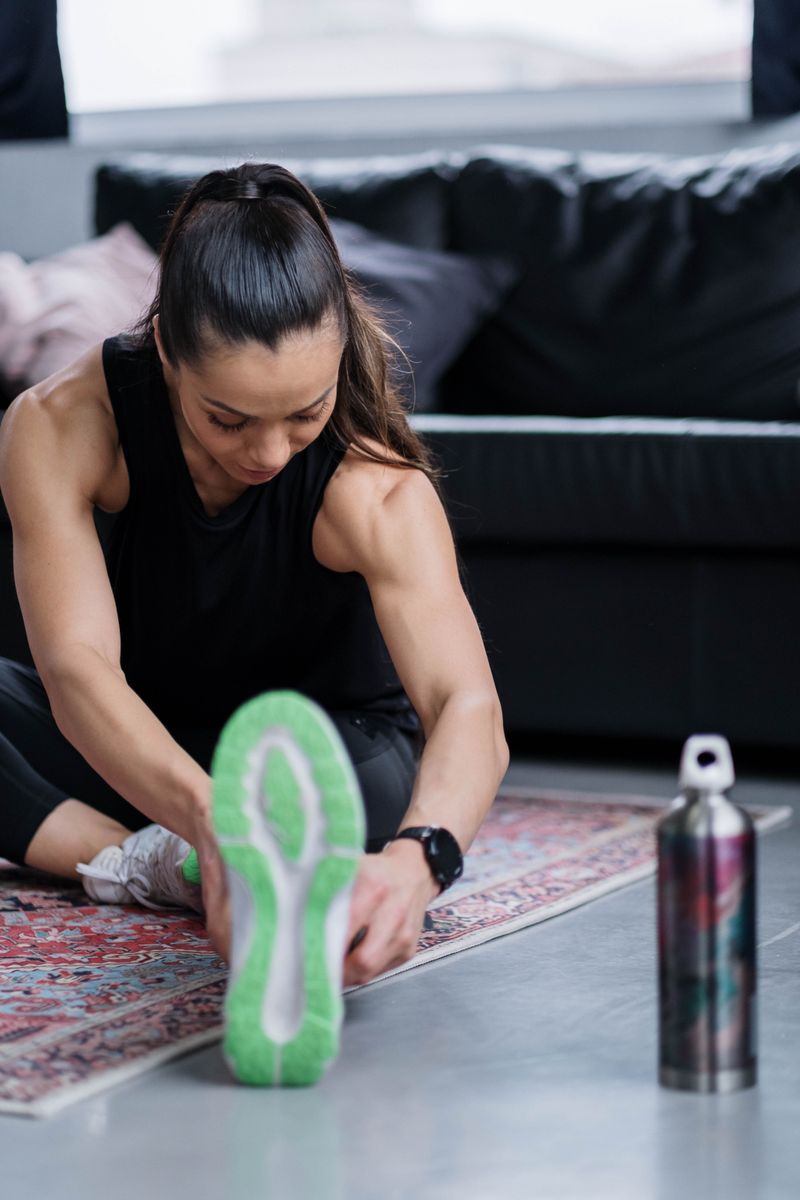
Bodyweight circuits cost nothing and adapt to any fitness level. Cycle through squats, marching in place, mountain climbers and step-backs for 30 seconds each with short rests, and you have a cardio session in a square of floor. Drop the jumping versions and it stays low-impact for sensitive knees.

The hidden strength of both free options is that they scale with no new purchase. On stairs you go faster, take them two at a time, or add a backpack with a few books for resistance. In a bodyweight circuit you shorten the rests, slow the tempo, or swap in harder variations. You will never outgrow either, which is more than can be said for a single-speed treadmill.
The quiet, joint-friendly choices
A mini exercise bike or under-desk pedal unit is the gentlest option here. It puts zero impact through the joints, makes almost no noise, and at $40 to $120 (approximate retail) it tucks under a desk or sofa. For anyone with knee or hip issues who still wants steady cardio, it is the easiest entry point.
A compact rowing machine is the upgrade pick. Rowing is low-impact, works the whole body, and a foldable model runs $150 to $400 (approximate retail), a fraction of a treadmill. It stands on end against a wall when folded, so it suits small rooms despite training more muscle than any other option on the list.
Rowing also doubles as strength work in a way the bike and the treadmill do not. Each stroke drives the legs, hinges the hips, and pulls with the back and arms, so a rowing session builds the posterior chain while it trains your heart and lungs. For someone who wants one machine to cover both jobs in a small home, the rower is the strongest single buy on this list, and the magnetic-resistance models run almost silent.
The intense, small-footprint pick
A jump rope delivers the most cardio per dollar and per square foot, full stop. At $10 to $25 (approximate retail) it fits in a pocket, and ten minutes of intervals leaves most people breathing hard. The catch is impact and noise: it is high-impact on the ankles and knees, and the footfall carries, so it suits a ground floor, a garage, or a patio more than an upstairs apartment.
Kettlebell swings give you a quieter, lower-impact high-intensity option. One bell ($30 to $60 approximate retail) swung in sets of 15 to 20 with short rests drives the heart rate up while building the hips and back. It is the better choice than a rope for upstairs flats and for knees that dislike pounding.
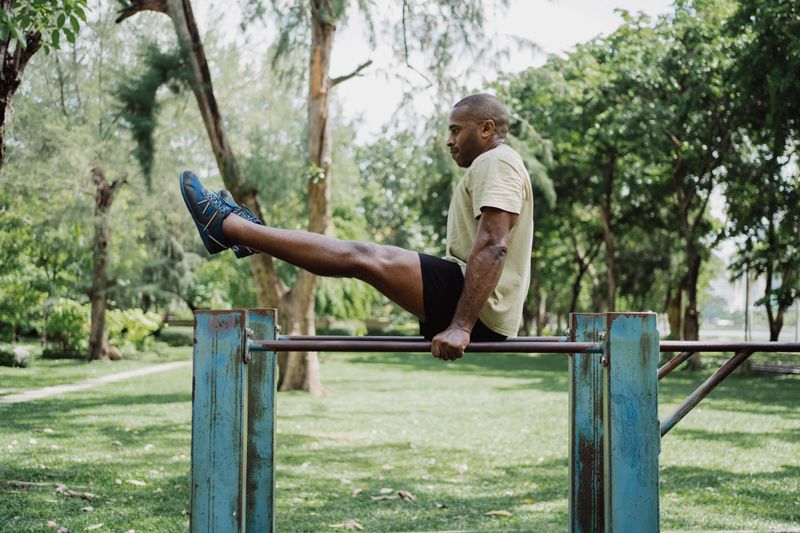
The swing does need to be learned properly to be safe, because it is a hip-hinge movement and not a squat or an arm lift. The power comes from snapping the hips forward, while the arms just guide the bell. Start with a lighter bell, around 18 to 26 pounds for most beginners, master the hinge, and only then add weight. Done right it is one of the most time-efficient cardio-and-strength moves you can do in a small space.
How to pick in one minute
Choose by your biggest constraint. If money is tight, take stairs or bodyweight circuits, both free. If noise rules everything, take a mini bike or kettlebell. If your knees object, take the bike or a rowing machine. If you have ten minutes and a hard floor, a jump rope beats them all on intensity.
- Tightest budget: stairs or bodyweight circuits ($0).
- Quietest for apartments: mini bike or kettlebell swings.
- Kindest to joints: mini bike, then rowing machine.
- Most intense, smallest: jump rope, on a ground floor.
Whatever you pick, aim for 20 to 40 minutes three to five times a week, mixing harder interval days with easier steady ones. The best home cardio is the one that fits your room and your joints well enough that you actually keep doing it.
You can also stack two cheap options to cover all bases. A jump rope for hard interval days on a ground floor, plus a mini bike for quiet recovery sessions and bad knees, costs well under $100 together and replaces a treadmill outright. Mixing the tools also keeps the routine fresh, which does more for long-term consistency than any single machine ever does.
If you do decide a machine earns its keep, the rowing machine is the one worth the money for most homes. It is quiet, low-impact, full-body, foldable, and a fraction of a treadmill's price. Start with the free and cheap options to build the habit, then upgrade to a rower only once you know you will use it.
🛠️ Free tools for this topic
No sign-up. They do the calculating and checking for you.
Published by the Gym4Home editorial team. Published July 1, 2026. Updated October 4, 2026.
Editorial responsibility: see Imprint.
Spotted an error or have something to add? corrections@gym4home.com
Home Gym Tips, Weekly
Equipment picks, workout ideas, and setup guides — for every space and every budget. No fluff, just useful.
🎁 Free bonus: The Home Gym Starter Checklist (PDF)
You might also like
A Home Core Workout With No Crunches (and Why That's Better)
A no-crunch core circuit you can do at home in 20 minutes, built on planks and carries that train real spinal stability.
Pull-Up Bar Alternatives for a Low Ceiling
A 7-foot ceiling rules out a standard pull-up bar. Here are the alternatives that train the same pull with little or no overhead clearance.
Jumping Rope in an Apartment Without Annoying the Neighbors
Jump rope in an apartment without complaints. Why impact noise travels through the floor, how to build a quiet stacked surface, and the technique that keeps you silent.
📖 All articles on Gym4Home →
Browse our other articles