The Upper/Lower Split for a Home Gym (4-Day Plan)
This article may contain affiliate links. If you make a purchase through these links, we may earn a small commission at no extra cost to you. This helps us keep creating free content.
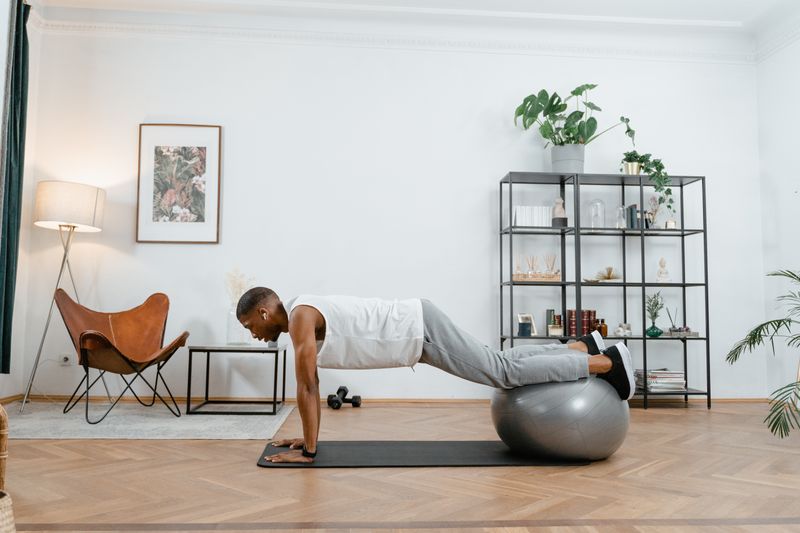
An upper/lower split trains the upper body twice a week and the lower body twice a week across four sessions, and it hits the sweet spot between full-body training and a high-volume bodybuilding split. For a home lifter with dumbbells, a bench, and maybe some bands, it delivers enough volume per muscle group to build real strength while keeping each session under an hour. It is the split most intermediate home trainees settle on, and for good reason.
The structure is simple. Two days target the upper body (chest, back, shoulders, arms) and two days target the lower body (quads, hamstrings, glutes, calves, core). You alternate them across the week with rest days between, so every muscle gets trained twice and recovers fully before the next hit. That twice-weekly frequency is what drives steady progress for anyone past the absolute beginner stage.
Who the upper/lower split suits
This split fits the lifter who has outgrown three-day full-body training but cannot commit to five or six gym days. If you can train four days a week and you have basic dumbbell equipment, the upper/lower split gives each muscle group enough sets per week to keep growing without the marathon sessions a full-body day requires once you get stronger.
It also suits home training specifically because four moderate sessions are easier to fit around a home schedule than two exhausting ones. Each workout runs 45 to 60 minutes, needs no spotter when you use dumbbells, and leaves clear rest days. For someone training in a spare room or garage, that rhythm is sustainable in a way a daily grind is not.
The weekly schedule
Retrospec Solana Thick Exercise Mat (1/2 in)
A thick, non-slip mat makes floor work and stretching comfortable on the joints.
As an Amazon Associate we earn from qualifying purchases.
The four sessions slot into the week with rest days between matched workouts so muscles recover. A common layout trains Monday, Tuesday, Thursday, and Friday, leaving Wednesday and the weekend for rest. The exact days flex around your life. What matters is keeping a rest day between the two upper sessions and between the two lower sessions.
The two upper days are not identical, and neither are the two lower days. Vary the rep ranges and some exercises between them so one upper day leans heavier and one leans toward higher reps. This keeps the stimulus fresh and covers more of each muscle's function. A workable week looks like the table below.
| Day | Focus | Emphasis |
|---|---|---|
| Monday | Upper A | Heavier, lower reps |
| Tuesday | Lower A | Heavier, lower reps |
| Wednesday | Rest | Recovery |
| Thursday | Upper B | Lighter, higher reps |
| Friday | Lower B | Lighter, higher reps |
| Sat / Sun | Rest | Recovery |
Upper-body day: the exercises and sets
An upper day covers a horizontal push, a horizontal pull, a vertical push, a vertical pull, and arm work. With dumbbells and a bench you can build all of these. Press the load, row it, push it overhead, pull it down or up, then finish the arms. The table below lays out a complete upper session with sets and reps you can run as either the A (heavier) or B (lighter) version by shifting the rep target.

| Exercise | Sets | Reps (A / B) |
|---|---|---|
| Dumbbell bench or floor press | 4 | 6–8 / 10–12 |
| One-arm dumbbell row | 4 | 6–8 / 10–12 |
| Dumbbell overhead press | 3 | 8–10 / 12–15 |
| Band or dumbbell pull-down / pull-up | 3 | 8–10 / 12–15 |
| Dumbbell biceps curl | 3 | 10–12 / 15 |
| Overhead or lying triceps extension | 3 | 10–12 / 15 |
Rest two to three minutes between the heavy compound sets and 60 to 90 seconds on the lighter accessory work. The press and row are the priority lifts, so do them first while you are fresh. The arm work goes last because those muscles already help on the presses and pulls, and a little dedicated volume tops them off.
Lower-body day: the exercises and sets
A lower day needs a squat pattern, a hinge pattern, a single-leg movement, calves, and core. Dumbbells handle all of these at home: goblet squats load the quads, Romanian deadlifts load the hamstrings and glutes, and split squats hit each leg individually. Heavier dumbbells or a loaded backpack let you keep progressing once bodyweight is too easy.
| Exercise | Sets | Reps (A / B) |
|---|---|---|
| Goblet or dumbbell squat | 4 | 6–8 / 10–12 |
| Romanian deadlift (dumbbells) | 4 | 8–10 / 12–15 |
| Bulgarian split squat | 3 | 8–10 each leg |
| Dumbbell or band glute bridge | 3 | 10–12 / 15 |
| Standing calf raise | 3 | 12–15 |
| Plank or hanging leg raise | 3 | 30–45 sec / 12 |
Lead with the squat and the Romanian deadlift, the two lifts that drive most of your lower-body strength, and give them the longer rests. The split squat brings balance and single-leg strength that a two-legged squat misses. Calves and core close the session, since they recover fast and need little rest between sets.
Progressing the plan over time
Double progression keeps the plan moving at home. Pick the rep range for each lift, add reps each week until you reach the top of the range on every set, then increase the weight and drop back to the bottom of the range. With adjustable dumbbells moving in chunks, adding reps first smooths out the jumps between weight settings.
Track every session so you know when to push. Note the weight, sets, and reps for each lift, and aim to beat last week on at least one of them. When a lift stalls for two or three weeks despite good rest and food, swap it for a variation or adjust the volume rather than grinding the same numbers. Steady, recorded progress is the whole point of running a structured split.
Adapting the split to your equipment and joints
The plan flexes to what you own. With only bands, swap dumbbell presses for banded presses and dumbbell rows for banded rows, keeping the same set and rep scheme. With a pull-up bar, use real or band-assisted pull-ups for the vertical pull. The structure (two upper days, two lower days, push and pull balanced) stays the same whatever the equipment.
For lifters over 50 or working around joint issues, live in the higher rep ranges with lighter loads, warm up longer, and swap any movement that pinches for a friendlier variation. A floor press instead of a bench press is easier on cranky shoulders, and a split squat to a comfortable depth spares the knees. Many people find the upper/lower split easy to adjust this way because each session already has room to scale the load down without losing the structure.
If four days a week is too many during a busy stretch, the split contracts cleanly to three. Run upper, lower, upper one week, then lower, upper, lower the next, so each muscle group still averages well over once a week. This rolling three-day version keeps the structure and most of the benefit while freeing up a training day, and you can switch back to the full four-day plan when your schedule opens up again.
🛠️ Free tools for this topic
No sign-up. They do the calculating and checking for you.
Published by the Gym4Home editorial team. Published September 9, 2026. Updated October 4, 2026.
Editorial responsibility: see Imprint.
Spotted an error or have something to add? corrections@gym4home.com
Home Gym Tips, Weekly
Equipment picks, workout ideas, and setup guides — for every space and every budget. No fluff, just useful.
🎁 Free bonus: The Home Gym Starter Checklist (PDF)
You might also like

Dumbbell Upper-Body Workout at Home: A Full Routine
A complete upper-body dumbbell routine for home, with a sets-and-reps table, form cues for every lift, and a simple progression plan.

Kettlebell-Only Workout Plan: A Complete Full-Body Program
A complete full-body workout plan using a single kettlebell, with exercises, sets and reps tables, a weekly schedule and clear progression rules.

3-Day Full-Body Home Gym Workout (With Sets and Reps)
A complete 3-day full-body home gym workout with sets, reps and form cues for every lift, built around dumbbells, a bench and a doorway pull-up bar.
📖 All articles on Gym4Home →
Browse our other articles