Best Stationary Bikes for Seniors: A Practical Buying Guide
This article may contain affiliate links. If you make a purchase through these links, we may earn a small commission at no extra cost to you. This helps us keep creating free content.
Health note: This article is for general information only and is not a substitute for medical advice. Talk to your doctor before starting a new exercise programme, especially if you have an existing health condition or injury.
Recumbent bikes are the most senior-friendly type of stationary bike because the seat back supports your spine and the low step-through frame means no swinging a leg over a high bar. They cost roughly $200 to 600 and need about 4 by 2 feet of floor. The main alternatives, upright and indoor cycling bikes, suit different bodies and goals, and the wrong pick can leave a bike gathering dust.
A stationary bike gives older adults steady cardio with almost no impact on the knees, hips and ankles. Cycling keeps the joints moving through a smooth range without the pounding of a treadmill. For many people over 60, that low-impact quality is the deciding reason to choose a bike over other cardio machines.
This guide compares the three bike types, lists the features that matter most for seniors, and names concrete models with approximate US prices so you can match a bike to your body, your room and your budget.
Three bike types, and who each suits
Recumbent bikes put you in a reclined seat with a backrest and the pedals out in front. The step-through frame and supported back make them the easiest to get on and off, and the kindest to a sore lower back. For most seniors, especially anyone with balance concerns or back pain, this is the default recommendation.
Upright bikes mimic a traditional bicycle with the pedals below you and no backrest. They take less floor space and engage your core a little more, but they ask more of your balance and put light pressure on the hands and seat. They suit a more mobile, active senior who finds recumbents too laid-back.
Comparison of bike types for seniors
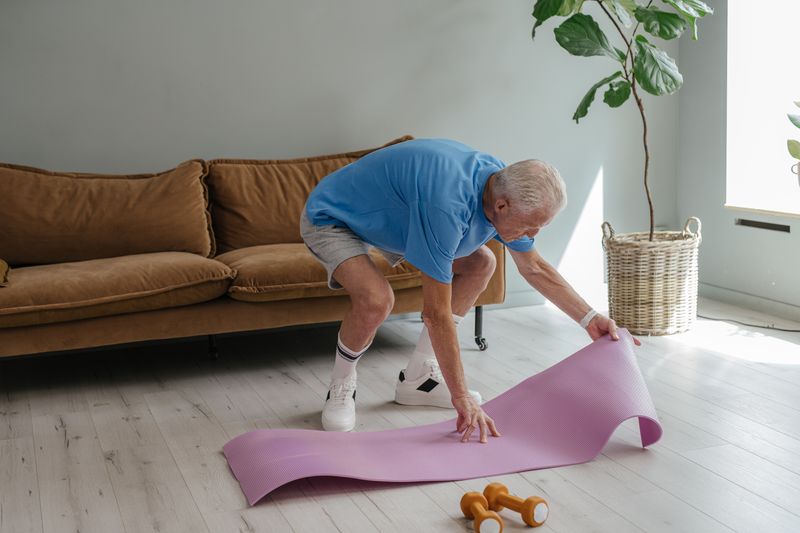
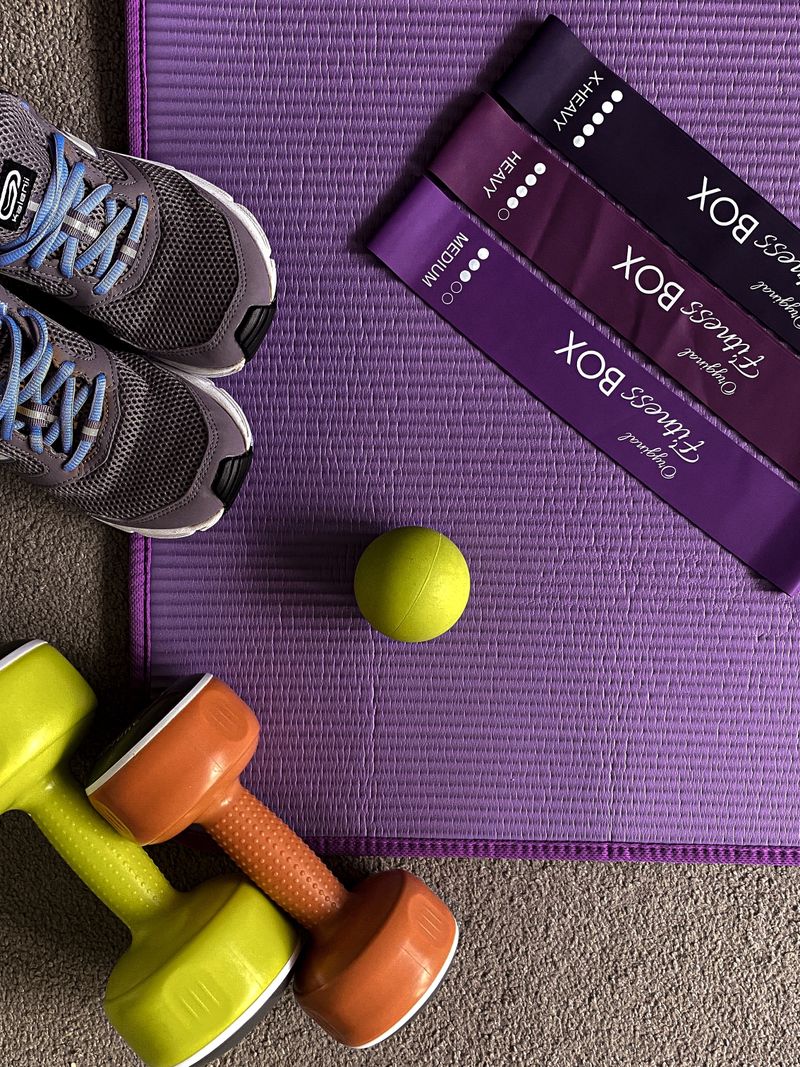
Retrospec Solana Thick Exercise Mat (1/2 in)
A thick, non-slip mat makes floor work and stretching comfortable on the joints.
As an Amazon Associate we earn from qualifying purchases.
The table sums up how the three types stack up on the points seniors care about. Prices are approximate US retail in 2026.
| Feature | Recumbent | Upright | Indoor cycling (spin) |
|---|---|---|---|
| Back support | Full backrest | None | None, leaning forward |
| Ease of getting on | Step-through, easiest | Moderate | Hardest, high frame |
| Joint impact | Very low | Very low | Low but intense |
| Balance demand | Lowest | Moderate | Highest |
| Footprint | Larger (~4 by 2 ft) | Compact | Compact |
| Typical price | $250 to 600 | $200 to 500 | $300 to 900 |
| Best for | Back pain, balance issues | Active, mobile seniors | Guided high-intensity only |
Features that matter most after 60
A low step-through height tops the list. The less you have to lift your leg, the safer and more likely you are to actually use the bike. Look for a frame you can step into rather than climb over, which is the recumbent's main advantage and a feature on some low-profile uprights too.
Seat comfort and adjustability come next. A wide, cushioned seat with easy fore-and-aft adjustment lets you set the leg extension correctly, which protects the knees. On recumbents, check that the seat slides on a clear track you can reach without bending awkwardly. A bike that is hard to adjust often ends up set wrong, and a wrongly set bike strains the joints it was meant to spare.
Three more features earn their place. A large, high-contrast display you can read without your glasses keeps the bike usable. Transport wheels matter if the bike shares a room and gets moved. A maximum user weight comfortably above your own gives a sturdier, less wobbly ride, so look for frames rated to 300 lb or more even if you weigh far less.
Recommended models and rough prices
For most seniors the best first bike is a recumbent in the $300 to 450 range with magnetic resistance and a step-through frame. Concrete examples follow, with approximate 2026 US retail prices that shift with sales.
- Schwinn 230 or 270 Recumbent: about $400 to 600. Comfortable vented seat, clear dual display, many resistance levels and a low step-through. A common, well-supported starting point for older riders.
- Marcy Recumbent Exercise Bike (ME-709): roughly $150 to 200. Basic, compact and inexpensive, with eight resistance levels and a simple display. A sensible budget pick if you want to test the habit before spending more.
- Sunny Health & Fitness Recumbent: about $200 to 350 depending on model. Good value, decent seat, magnetic resistance on the higher models. Check the specific model's max user weight before buying.
- NordicTrack or Schwinn upright: about $300 to 500 for an active, mobile senior who prefers an upright posture and a smaller footprint.
Setting up safely and starting slow
Set the seat so your knee keeps a slight bend at the bottom of the pedal stroke, never locking out straight. A seat too far back overextends the knee; too close cramps it. This single adjustment does more for joint comfort than any feature on the box, so take the time to dial it in before your first real ride.
Start with short, easy sessions and build gradually. Many people find that 10 minutes at light resistance, a few days a week, is a sustainable beginning that they can extend over the following weeks. The goal at the start is steady habit, not a hard workout. Keep resistance low enough that you can hold a conversation, and stop if you feel chest discomfort, dizziness or sharp joint pain.
Assembly, space and apartment noise
Most stationary bikes arrive partly assembled and take 30 to 60 minutes to finish, with the seat, pedals, console and stabiliser bars to attach. If lifting and turning a heavy frame is hard for you, ask the retailer about assembly service or have a family member help. Recumbents are bulkier to build than uprights but stay put once together, since you rarely need to move them.
Floor space planning saves frustration later. A recumbent needs roughly 4 by 2 feet plus room to step in at the side, while an upright fits a smaller footprint. Leave clearance around the pedals and a clear path to the seat so you are never stepping over cables or furniture. In a tight room, transport wheels let you tuck the bike against a wall between sessions.
The verdict
For the typical senior buying their first stationary bike, a magnetic-resistance recumbent in the $300 to 450 range is the right choice. The backrest, the step-through frame and the low balance demand make it the bike you will keep using, and consistent use beats any spec advantage from a fancier machine. The Schwinn recumbents and the well-reviewed Sunny models are reliable starting points.
Choose an upright only if you are already active and steady on your feet and want a smaller footprint with a more traditional cycling feel. Leave the indoor cycling bikes to guided, higher-intensity training. Match the bike to your body and your room first, and the workout takes care of itself.
Frequently asked questions
Is a recumbent or upright bike better for seniors? A recumbent is better for most seniors because of the back support and easy step-through entry. An upright suits more mobile, active older adults who are steady on their feet and want a smaller footprint.
How much should I spend on a senior stationary bike? A reliable magnetic-resistance recumbent runs $300 to 450. Budget recumbents around $150 to 200 work fine for testing the habit, while $500-plus buys smoother resistance, a better seat and more programmes.
How long should an older beginner ride? Many people start with about 10 minutes at light resistance a few days a week and build from there. Your doctor can give you a target that fits your own health, so check with them before setting a goal.
Are stationary bikes safe with knee arthritis? Cycling is one of the lower-impact cardio options and many people with knee arthritis find it manageable, provided the seat is set with a slight knee bend. Talk to your doctor or physio about your specific case before starting.
🛠️ Free tools for this topic
No sign-up. They do the calculating and checking for you.
Published by the Gym4Home editorial team. Published November 5, 2026.
Editorial responsibility: see Imprint.
Spotted an error or have something to add? corrections@gym4home.com
Home Gym Tips, Weekly
Equipment picks, workout ideas, and setup guides — for every space and every budget. No fluff, just useful.
🎁 Free bonus: The Home Gym Starter Checklist (PDF)
You might also like
Jumping Rope in an Apartment Without Annoying the Neighbors
Jump rope in an apartment without complaints. Why impact noise travels through the floor, how to build a quiet stacked surface, and the technique that keeps you silent.
Best Adjustable Dumbbells for Older Adults: A Practical Buying Guide
A practical guide to choosing adjustable dumbbells for older adults, comparing dial and pin systems, weight ranges and grip-friendly features with US prices.

How to Build a Home Gym After 60 on a Budget
A practical, budget shopping list and starter routine for building a joint-friendly home gym after 60, with US prices and where to spend versus save.
📖 All articles on Gym4Home →
Browse our other articles