Home Gym in a Small Apartment: The Complete Setup Guide
This article may contain affiliate links. If you make a purchase through these links, we may earn a small commission at no extra cost to you. This helps us keep creating free content.
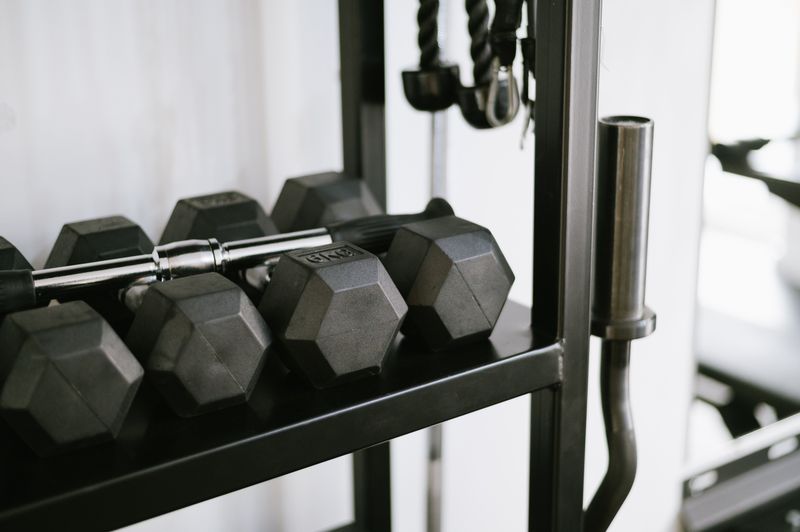
A complete strength setup fits in roughly 25 to 50 square feet, which is the footprint of a yoga mat plus a small storage corner. You do not need a spare room, a power rack or a treadmill to train every major muscle group at home. The constraint in an apartment is rarely your body. It is floor space, ceiling height, noise that travels to the neighbour below, and a budget that has to cover rent first.
This is the orientation map for building that setup. It walks through the equipment that earns its square footage, the layout tricks that make a corner feel like a gym, the noise rules that keep you on good terms with the building, and the storage habits that stop gear from taking over the living room. Each section points to a deeper area you can explore on its own.
How much space you actually need
Measure the clear floor area you can use during a workout, not the room itself. A standing exercise needs about 6 by 3 feet so your arms can extend overhead and to the sides without hitting a lamp. A floor exercise such as a plank or a glute bridge needs roughly 6 by 2 feet. If you can clear a rectangle of about 50 square feet for 30 minutes a day, you can run a full program. Many apartment dwellers train in 25 to 30 square feet by working one plane of motion at a time.
Ceiling height matters more than people expect. Overhead presses and jumping rope both need clearance. Standard apartment ceilings run 8 to 9 feet, which is fine for most adults pressing a dumbbell overhead, but tall lifters should test the movement before buying. If your ceiling is low, swap jump rope for a low-impact alternative such as marching in place or a step.
Storage space is the hidden half of the equation. Equipment that lives in a closet, slides under the bed or hangs on a wall hook does not count against your living space. That single idea, training area plus hidden storage, is what makes a small apartment gym sustainable past the first month.
The equipment that earns its footprint
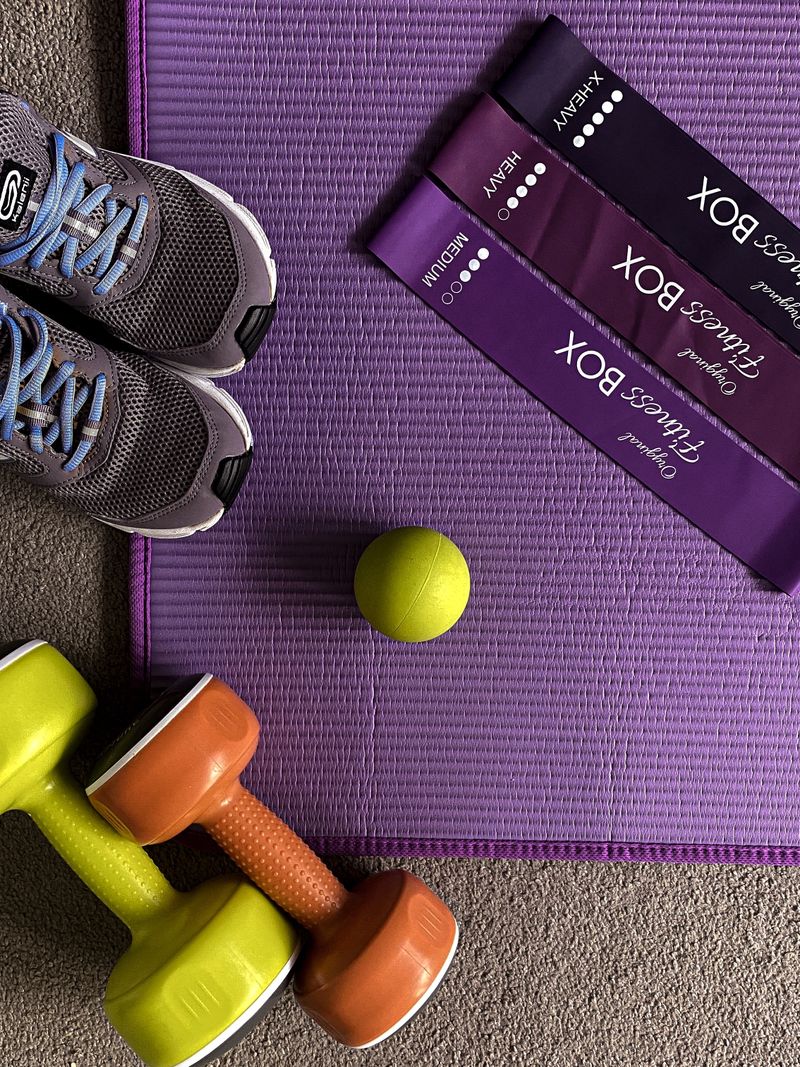
Fit Simplify Resistance Bands Set
Five resistance levels in a kit that fits in a drawer, gentle on the joints and ideal to start with.
As an Amazon Associate we earn from qualifying purchases.
Adjustable dumbbells replace an entire rack of fixed weights in the space of a shoebox. A single pair that dials from 5 to 50 pounds covers most apartment training and runs roughly $250 to $400 (approximate retail). Cheaper spin-lock adjustable dumbbells start near $80 but take longer to change between sets. For pure space efficiency, nothing beats them.
Resistance bands are the best value in home fitness. A full set of loop and tube bands costs about $20 to $40, weighs almost nothing, and fits in a drawer. They handle pulling movements that dumbbells struggle with at home, such as rows and pull-aparts, and they are quiet. A doorframe pull-up bar costs about $30, installs without drilling, and adds the one major movement most apartments lack.
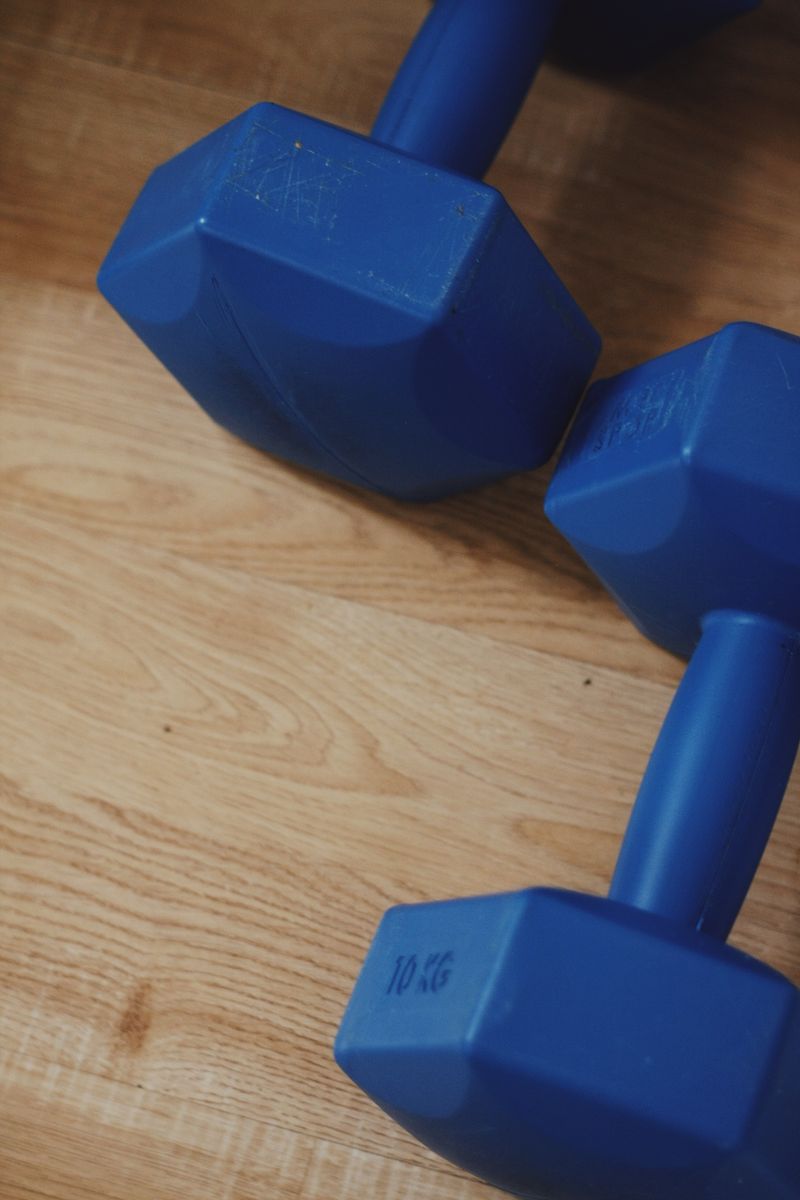
A folding bench expands what dumbbells can do, opening up presses, rows and step-ups. Flat-to-incline models fold to a few inches thick and lean behind a door. Expect roughly $80 to $200. A thick exercise mat, around $30 to $60, protects the floor, cuts noise, and defines your training zone so you are not chasing weights across hardwood.
A starter kit and what it costs
The table below shows a tiered build. Start at the essentials tier and add pieces as the habit sticks, rather than buying everything at once and watching half of it gather dust.
| Tier | Gear | Approx. US cost | Footprint |
|---|---|---|---|
| Essentials | Resistance band set, exercise mat, doorframe pull-up bar | $80–130 | One drawer + a door |
| Core build | Add adjustable dumbbells + folding bench | $410–730 | Closet corner |
| Complete | Add adjustable kettlebell + jump rope | $560–950 | Closet corner |
That complete tier trains every major muscle group, costs less than a year of most commercial gym memberships, and stores in a single closet corner. The essentials tier alone is enough to get visibly stronger for the first few months.
Layout: making a corner work
Pick a zone with a clear wall and a nearby door. The wall holds a mounted rack or hooks for bands and the jump rope. The door holds the pull-up bar. The floor in front becomes your training rectangle, marked by the mat so the space reads as a gym the moment the mat is down. Setup and pack-down should each take under two minutes, because friction is what kills a home routine.
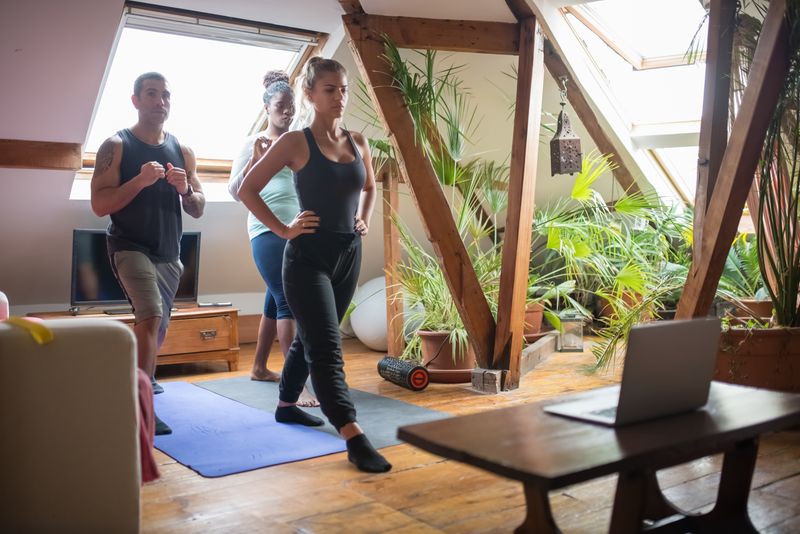
Light and air change how often you train. A corner near a window with decent airflow beats a dark hallway, even if the hallway has more square feet. If you train by video, position your phone or tablet so you can see it from the floor and from standing without moving the mat.
Vertical storage is the apartment dweller's main trick. A pegboard or a few wall hooks turn the dead space above the mat into your equipment rack, keeping the floor clear for movement. Adjustable dumbbells and a folding bench tuck into the closet between sessions.
Noise, floors and downstairs neighbours
Dropped weights are the fastest way to a complaint, so the rule in an apartment is simple: never drop, always lower under control. Adjustable dumbbells set down gently make almost no noise. A thick mat or interlocking foam tiles under your training zone absorb impact and protect the floor from dents, which also protects your deposit.
Jumping movements transmit straight through the floor to the unit below. If you have downstairs neighbours, favour low-impact cardio such as fast walking, step-ups onto a sturdy bench, or band work, and save jump rope for ground-floor units or daytime hours. Resistance bands and bodyweight training are close to silent, which is why they anchor most apartment programs.
A simple program for a small space
Three sessions a week covers strength for most people, with each session hitting the whole body so a missed day does not leave a muscle group untrained. A workout might pair a squat variation, a press, a row, a hinge and a core movement, three sets of 8 to 12 reps each. Bands and dumbbells handle all five patterns in your training rectangle without rearranging the room.
Progress by adding reps first, then resistance. When 12 reps feels easy, increase the dumbbell setting or move to a thicker band. This is how a tiny kit keeps producing results for months: the load goes up, the footprint stays the same. Cardio slots in as a brisk walk outside or a few quiet minutes of step-ups and band intervals at home.
The goal is consistency, not intensity on day one. A 25-square-foot corner used three times a week beats a spare-room setup used twice a month. Build the habit on the essentials tier, then add equipment as the routine proves it deserves the space.
Cardio without a machine
You can train your heart without surrendering half the room to a treadmill. Jump rope is the densest option: about 100 square feet of swing space is plenty, and a rope costs $10 to $30. For units with neighbours below, swap the rope for low-impact alternatives that keep both feet quieter on the floor. Marching with high knees, shadow boxing, and step-ups onto a sturdy bench all raise the heart rate without the thud of jumping.
Band and bodyweight circuits double as cardio when you keep the rest short. Cycle through squats, band rows, push-ups and mountain climbers with 20 seconds of work and 20 of rest for ten rounds, and you have a conditioning session in the same rectangle you use for strength. Outdoor walking and cycling remain the simplest cardio of all, and they free the apartment entirely for the days you lift.
Compact cardio machines exist for renters set on owning one. A folding under-desk treadmill or a foldable mini stepper stores upright against a wall and runs $150 to $400. Treat that as a later upgrade, not a first purchase, because the free options cover the same ground while you confirm the habit holds.
What to add as you progress
The first upgrade after the essentials tier is almost always adjustable dumbbells, because they unlock pressing and loaded squats that bands handle awkwardly. A folding bench comes next, turning those dumbbells into a full upper-body workout. Only after those two does specialised gear earn its space. An adjustable kettlebell suits swings and goblet work, and a suspension trainer that anchors over a door adds rows and rear-delt work for about $40 to $150.
Resist buying ahead of need. A common pattern is a closet full of single-purpose gadgets bought in the first enthusiastic month, most of them untouched by week three. Add one item, use it for a few weeks, and let the gap in your training tell you what to buy next. The apartment rewards a small kit used hard over a large kit used rarely.
Mistakes that waste space and money
The biggest error is buying a cardio machine before a single dumbbell. It eats the most floor space, makes the most noise, and is the item most likely to become a clothes rack. A close second is fixed-weight dumbbell sets, which demand shelf space for weights you outgrow or rarely touch, where one adjustable pair does the same job in a shoebox footprint.
Skipping the floor protection costs more than it saves. A bare hardwood or laminate floor dents under dropped weights and transmits every sound to the unit below, which risks both your deposit and your standing with the neighbours. A $30 mat or a $40 set of foam tiles solves both on day one. The last common mistake is buying everything at once: spread purchases out, prove the habit first, and let your training guide each addition.
Frequently asked questions
Can I really build muscle without heavy weights? Yes. Muscle responds to effort and progressive overload, not to the absolute number on a dumbbell. Bands, bodyweight and moderate adjustable dumbbells taken close to fatigue drive growth for most non-competitive lifters.
What if my apartment has carpet? Carpet is fine for bodyweight and band work and helps with noise. Put a firm mat or a board under a folding bench so it does not rock, and under dumbbells so they do not sink and tip.
How do I do pull-ups in a rental? A doorframe pull-up bar wedges into the frame using leverage, with no screws or drilling, and removes in seconds. Check your door frame is solid trim, not hollow moulding, and test it at low body weight first.
Is a kettlebell or a dumbbell better for small spaces? An adjustable dumbbell is more versatile for an apartment because it covers presses, rows and curls cleanly. Add a kettlebell later if you want swings and goblet squats. For one first purchase, the dumbbell wins.
How much should I budget to start? Around $80 to $130 gets you bands, a mat and a pull-up bar, which is enough to train hard for the first couple of months. Add dumbbells and a bench once the habit holds, bringing the core build to roughly $410 to $730.
Will my downstairs neighbour hear me? Bodyweight and band work are close to silent. Dumbbells are quiet if you lower them under control onto a mat or foam tiles and never drop them. Jumping movements do carry through the floor, so save jump rope for ground-floor units or daytime hours and use step-ups or marching otherwise.
How do I store everything in a studio? Wall hooks or a pegboard hold bands, the jump rope and a suspension trainer above your training zone, keeping the floor clear. Adjustable dumbbells sit in a closet corner, and a folding bench leans flat behind a door. The whole complete kit fits in roughly a single closet corner plus a stretch of wall.
Can I get a full-body workout with just bands and a pull-up bar? Yes for the first months. Bands cover squats, presses, rows, hinges and curls, while the pull-up bar adds vertical pulling and hanging core work. You will eventually want more load for the legs, which is when adjustable dumbbells become the natural next buy.
What floor protection do I actually need? A single thick exercise mat, $30 to $60, is enough for bodyweight and band sessions and light dumbbell use. If you lift heavier dumbbells or want better sound damping, add interlocking foam tiles, $20 to $50 a pack, under the main training square. Both protect the floor from dents that could cost your deposit.
🛠️ Free tools for this topic
No sign-up. They do the calculating and checking for you.
Published by the Gym4Home editorial team. Published June 2, 2026. Updated October 4, 2026.
Editorial responsibility: see Imprint.
Spotted an error or have something to add? corrections@gym4home.com
Home Gym Tips, Weekly
Equipment picks, workout ideas, and setup guides — for every space and every budget. No fluff, just useful.
🎁 Free bonus: The Home Gym Starter Checklist (PDF)
You might also like
A Quiet 20-Minute Apartment Gym Morning Routine
A 20-minute quiet strength circuit you can do at 6am in an apartment without waking the neighbors below. Full routine and how to do each move.
Jumping Rope in an Apartment Without Annoying the Neighbors
Jump rope in an apartment without complaints. Why impact noise travels through the floor, how to build a quiet stacked surface, and the technique that keeps you silent.
Foldable Rowing Machines for Apartments: Picks and Trade-Offs
Folding magnetic rowers store in 2 square feet and stay quiet for downstairs neighbors. How resistance type affects noise, what specs to check, and picks by budget.
📖 All articles on Gym4Home →
Browse our other articles