How to Build a Home Gym After 60 on a Budget
This article may contain affiliate links. If you make a purchase through these links, we may earn a small commission at no extra cost to you. This helps us keep creating free content.

Hinweis: Dieser Artikel ersetzt keine ärztliche Beratung. Besprich Trainingsfragen im Zweifel mit Arzt oder Physiotherapie.
Health note: This article is for general information only and is not a substitute for medical advice. Talk to your doctor before starting a new exercise programme, especially if you have an existing health condition or injury.
A complete strength-and-cardio setup for an adult over 60 costs around $150–250, less than three months of a commercial gym membership. You do not need a power rack, a treadmill or a wall of dumbbells. Most of what keeps you strong, mobile and steady on your feet after 60 comes from a handful of cheap, joint-friendly tools that fit in a closet.
The priorities shift with age. The goal is no longer a bigger bench press; it is keeping the muscle that protects your joints, the balance that prevents falls, and the cardio that keeps stairs easy. Resistance bands, a pair of light dumbbells and a sturdy chair cover almost all of that. What follows is a practical shopping list with rough US prices, built around what actually matters in your 60s and beyond.
What matters most after 60
Muscle loss accelerates with age, and that loss is the main reason everyday tasks get harder. Strength training two or three times a week is the single most effective thing you can do to slow it, and it works at any age. Many people in their 70s and 80s gain noticeable strength within a couple of months of starting, so it is never too late to begin.
Balance and mobility sit right behind strength. Falls are a leading cause of injury later in life, and simple balance work may help reduce that risk. Cardio keeps your heart and lungs working and supports everything else. The good news for a budget is that none of these three priorities needs expensive equipment.
The core kit and what it costs
Fit Simplify Resistance Bands Set
Five resistance levels in a kit that fits in a drawer, gentle on the joints and ideal to start with.
As an Amazon Associate we earn from qualifying purchases.
Resistance bands are the foundation. A set of loop or tube bands with handles costs $15–30 and replaces a whole rack of dumbbells for upper-body work. They load the muscle without the joint stress of heavy iron, the resistance is easy to dial up or down, and the whole set stores in a drawer. For anyone with arthritic hands or shoulders, bands are often the gentlest way to train.
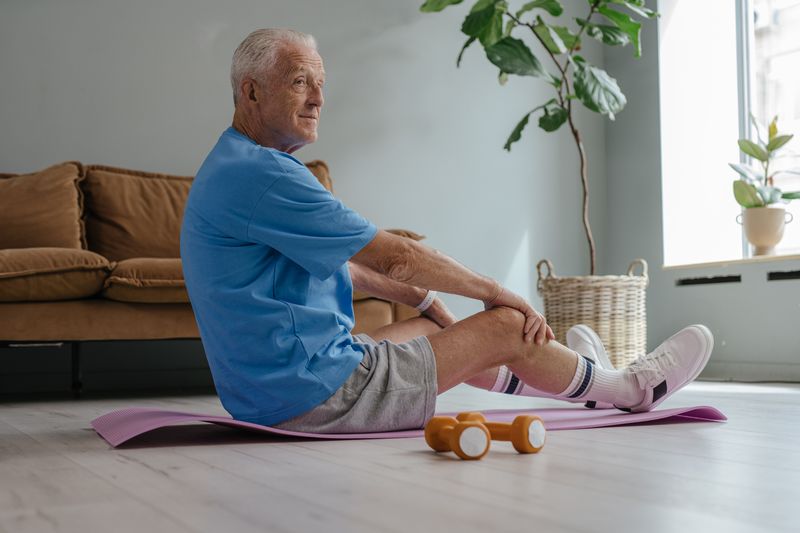
A pair of light adjustable dumbbells, or a couple of fixed pairs in the 5–15 pound range, adds load for exercises where bands feel awkward. Expect $30–80 depending on type. A sturdy chair you already own handles sit-to-stands and seated exercises for free. A non-slip exercise mat at $20–40 protects your knees and back during floor work and balance drills.
| Item | Approx US price | Main use |
|---|---|---|
| Resistance band set | $15–30 | Full-body strength, joint-friendly |
| Light dumbbells (5–15 lb) | $30–80 | Added load, grip strength |
| Non-slip exercise mat | $20–40 | Floor work, knee protection |
| Sturdy chair | $0 (own it) | Sit-to-stands, seated moves, balance support |
| Doorframe pull-up bar (optional) | $25–35 | Assisted pulls, stretching |
| Ankle weights (optional) | $15–25 | Leg raises, balance progression |
Cardio without a treadmill
You do not need a $1,000 machine to get your heart rate up. Walking is the most underrated cardio there is, and brisk daily walks cost nothing. For indoor days, a simple under-desk pedal exerciser runs $40–70 and lets you cycle gently while seated, which suits anyone with balance concerns or sore knees.
If you want a dedicated machine and the budget stretches, a used recumbent bike often turns up for $100–250 on local marketplaces. The reclined seat supports your back and the low-impact pedalling is forgiving on the knees. Buy second-hand for cardio; these machines are heavy, people offload them constantly, and the savings are large.
A simple starter routine
Begin with movements that build the strength used in daily life: standing up, carrying, reaching and staying steady. Do the strength block two or three times a week on non-consecutive days, and walk on the days between. Start with the lower rep number and add reps as the movement feels easy.
- Sit-to-stands: stand up from a chair without using your hands, then sit back slowly. 8–12 reps. Builds the leg strength behind balance and stairs.
- Band rows: anchor a band, pull the handles to your ribs, squeeze the shoulder blades. 10–12 reps. Strengthens the upper back and counters a hunched posture.
- Band or dumbbell shoulder press: press from shoulder height to overhead. 8–10 reps. Keeps reaching and lifting easy.
- Heel raises: rise onto your toes holding the chair for support, lower slowly. 12–15 reps. Builds calf strength and ankle stability.
- Standing balance hold: stand on one foot near the chair for 10–20 seconds each side. Progress by lightening your grip.
Where to spend and where to save
Spend on the band set and a decent mat, because you use them every session and a cheap mat slides on hard floors. Buy dumbbells second-hand or in fixed light pairs rather than expensive adjustable sets you will not need to climb past. Cardio machines are the easiest place to save: buy used.
The full kit, bought sensibly, lands around $150–250 and lasts for years with no membership fee. Compared with a gym that costs $40–60 a month and a drive each way, the home setup pays for itself in a single season and removes every weather and scheduling excuse. The most important purchase is the one you will use, so start small and add only what a real gap in your routine demands.
Setting up a safe space at home
You need very little floor area: a clear patch about 6 by 6 feet is enough for the whole routine. The priority is a non-slip surface and room to extend a band or your arms without hitting furniture. A corner of a bedroom or living room works fine, and a sturdy door anchor lets you train pulling movements without buying a frame.
Lighting and a stable chair matter more than they sound. Train where you can see clearly, keep a wall or counter within reach for balance work, and use a chair that does not slide or tip when you push off it. Keep your phone nearby in case you need it. These small touches turn a corner of a room into a space you will actually use, and they reduce the everyday risks that come with training alone.
Frequently asked questions
Is it safe to start strength training in your 60s or 70s? For most people, yes, and the benefits are large. Start light, move slowly, and clear it with your doctor first if you have heart, joint or blood-pressure concerns. Building strength later in life is well supported and many people gain noticeably within weeks.
Do I really not need heavy weights? Correct. Resistance bands and light dumbbells provide enough load to build meaningful strength after 60, with far less joint stress than heavy iron. Progress by adding reps or band tension, not by chasing big numbers.
How often should I train? Two to three strength sessions a week on non-consecutive days, plus walking on the days in between, is a sustainable and effective base. Rest days are when the muscle actually rebuilds.
What if I have arthritis or joint pain? Resistance bands are usually the gentlest place to start because they load the muscle smoothly with no jarring. Work within a pain-free range, warm up with a few minutes of easy movement first, and ask your doctor or a physio which exercises suit your specific joints. Mild muscle soreness is fine; sharp joint pain means stop and reassess.
Can I build a home gym if I use a walker or have limited mobility? Yes. Seated band exercises, gentle dumbbell work and chair-based movements build real strength without standing. Many effective routines for limited mobility are done entirely from a sturdy chair, and a physio can tailor a safe starting set to your situation.
🛠️ Free tools for this topic
No sign-up. They do the calculating and checking for you.
Published by the Gym4Home editorial team. Published August 19, 2026. Updated October 4, 2026.
Editorial responsibility: see Imprint.
Spotted an error or have something to add? corrections@gym4home.com
Home Gym Tips, Weekly
Equipment picks, workout ideas, and setup guides — for every space and every budget. No fluff, just useful.
🎁 Free bonus: The Home Gym Starter Checklist (PDF)
You might also like
Building a Small-Space Home Gym for Under $500
Five hundred dollars buys a complete strength setup that fits a 6ft corner. The exact gear list, priority order, and real US prices.
How to Set Up a Home Gym in a Corner
A step-by-step plan to build a complete home gym in one corner: measuring, flooring, the anchor bench, weights, wall storage and a movement-friendly layout, with US prices.
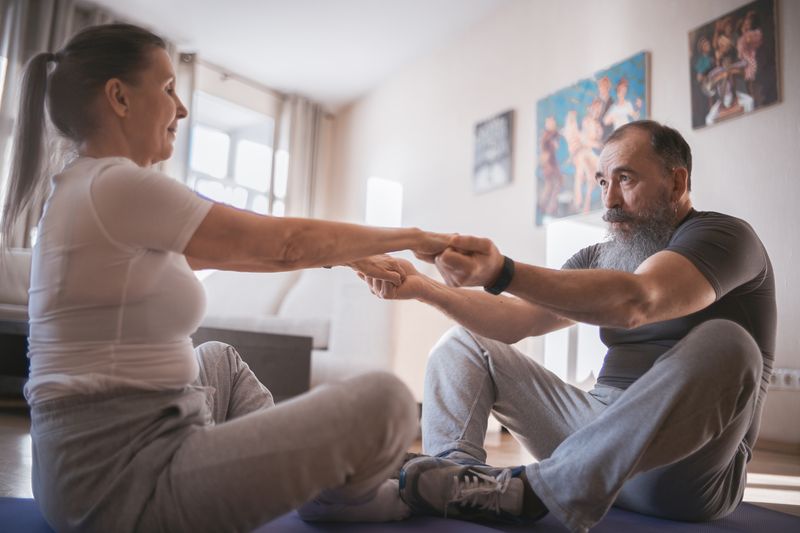
Best Home Gym Equipment for Seniors Over 60: What Actually Works
A practical, joint-friendly home gym for people over 60, ranked by value and adjustability, with approximate US prices and a sensible buy-in-order plan.
📖 All articles on Gym4Home →
Browse our other articles