Foldable Gym Equipment for Apartments: A Complete Buying Guide
This article may contain affiliate links. If you make a purchase through these links, we may earn a small commission at no extra cost to you. This helps us keep creating free content.
Hinweis: Dieser Artikel ersetzt keine ärztliche Beratung. Besprich Trainingsfragen im Zweifel mit Arzt oder Physiotherapie.
A foldable weight bench, a folding squat rack, and a set of adjustable dumbbells fit a full strength workout into a closet and a corner. That combination runs about $400 to $700 and stores flat against a wall when you are done. Apartment training does not mean buying tiny gimmicks. It means buying real equipment that collapses, hinges, or stacks so the floor goes back to being a living room between sessions.
The constraint that actually matters in an apartment is not weight. It is footprint and noise. A pair of 50-pound dumbbells weighs the same in a studio as in a garage, but you cannot leave a loaded barbell across the hallway, and your downstairs neighbor hears every dropped plate. This guide covers the gear that solves both problems, with rough US retail prices so you can budget before you shop.

What makes equipment apartment-friendly
Three things separate apartment gear from garage gear: it folds or breaks down, it stays under your noise tolerance, and it does not need bolting to a concrete floor. A folding squat rack mounts to wall studs and swings flat. Adjustable dumbbells replace a 15-piece rack with two handles. A rubber-topped or foam tile floor turns a hardwood living room into something you can train on without telegraphing every rep to the unit below.
Weight capacity still matters, but most apartment lifters never need a 1,000-pound rated rack. A bench rated to 600 to 800 pounds total covers any realistic press or row. Pay more attention to the folded dimensions and the stability when it is open. A wobbly folding bench is worse than no bench, because you will stop using it.
Noise is the quiet dealbreaker. Steel plates clanging on a steel rack carry through a building. Bumper plates, rubber-coated dumbbells, and a thick floor mat cut that down to something a neighbor tolerates. If you live above someone, treat the floor as part of the equipment budget, not an afterthought.

The core foldable pieces, ranked by value
You do not need all of this at once. Start with a bench and adjustable dumbbells, then add a folding rack when you want to squat and press heavier. Here is how the main categories compare on price, footprint, and what each one unlocks.
| Equipment | Approx. US price | Folded footprint | What it unlocks |
|---|---|---|---|
| Adjustable dumbbells (pair, 5–50 lb) | $250–400 | Two boxes, shoe-box size | Most upper-body and unilateral work |
| Folding flat/incline bench | $80–200 | 5–7 in deep, leans on wall | Presses, rows, step-ups, support |
| Wall-mounted folding squat rack | $200–450 | 4–6 in off the wall | Barbell squats, presses, pull-ups |
| Adjustable kettlebell | $100–180 | One unit, basketball size | Swings, goblet squats, carries |
| Resistance band set with door anchor | $30–60 | Fits a drawer | Pulls, presses, mobility, travel |
| Folding treadmill or rower | $400–900 | Stands upright or slides flat | Conditioning, low-impact cardio |
Adjustable dumbbells are the highest-value purchase for an apartment because they replace the single bulkiest thing in any gym: the dumbbell rack. One pair spans 5 to 50 pounds per hand and lives on a closet shelf. The dial or pin mechanism does add a few inches of length over a fixed dumbbell, so check that your storage spot has clearance.
Adjustable dumbbells: the apartment workhorse
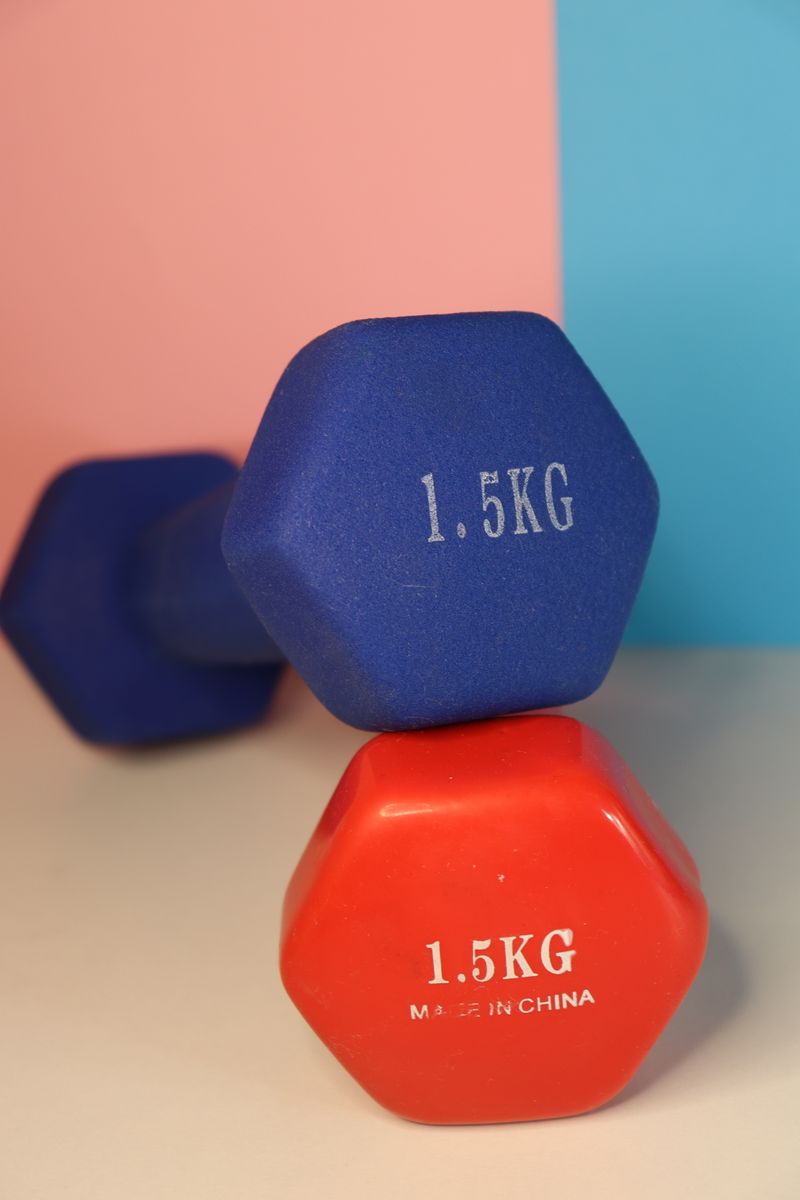
A single pair of adjustable dumbbells covers presses, rows, curls, lunges, and shoulder work without storing 15 separate pairs. Two designs dominate. Dial-style sets such as Bowflex SelectTech (around $300 to $400 a pair) change weight by twisting a handle. Plate-and-pin sets like PowerBlock (around $250 to $350) stack square blocks. Both work well in a small space.
Dial models adjust fastest, which matters during drop sets. Block models tend to be more compact in length and shrug off a short drop better, since there are fewer exposed plastic parts. For an apartment where you want a tight footprint and durability over a few inches of speed, the block design has the edge. If you switch weights constantly between exercises, the dial is worth the slightly larger size.
Folding benches and racks
A folding bench is the cheapest piece that meaningfully expands what you can train. Flat-only models start around $80. An adjustable incline/flat/decline bench runs $130 to $200 and folds to lean against a wall. Look for a rated capacity of at least 600 pounds total and a wide, stable base. The cheap ones with a narrow tripod foot tip when you row hard on one side.
A wall-mounted folding squat rack is the apartment answer to a power cage. It bolts into wall studs, holds a barbell for squats and presses, and folds to within 4 to 6 inches of the wall when stowed. Prices run $200 to $450 depending on whether it includes a pull-up bar and weight storage pins. The non-negotiable requirement is solid wall framing. You are hanging a loaded barbell off your wall, so the mount has to hit real studs, not just drywall.
If drilling into walls is off the table because you rent, a freestanding folding rack or a sturdy squat stand is the alternative. These cost a bit more and take more floor space when open, but they leave the walls untouched and move out with you. For most renters the freestanding stand is the better pick, with the wall-mount reserved for owners or long leases where a few patched holes at move-out are acceptable.
Cardio that folds away
Folding treadmills and rowers solve the cardio problem without surrendering a permanent chunk of the room. A folding treadmill stands the deck upright or tucks under a bed and runs $400 to $900 for something stable enough for jogging. Walking-pad style treadmills are flatter and cheaper, around $250 to $400, and slide under a couch, though they top out at walking and slow jogging speeds.

A folding rower is quieter than a treadmill and easier on the joints, which suits the 50-plus reader carrying knee or hip wear. Magnetic rowers fold to stand vertically in a corner and take roughly a 2-by-2-foot floor patch when stored. Expect $300 to $700 for a unit that will not flex and creak. For an apartment with noise concerns and joints to protect, the rower beats the treadmill. The treadmill wins only if your training goal specifically needs running.
Budgeting and noise control
A complete apartment setup lands in three tiers. A starter kit of resistance bands, one adjustable kettlebell, and a folding bench runs about $250 and trains the whole body. A mid kit adds adjustable dumbbells for roughly $600 total. A full kit with a folding rack, barbell, and bumper plates reaches $900 to $1,300 and covers serious barbell training. None of it permanently occupies more than a corner.
Floor protection is the cheapest noise upgrade and the one renters skip too often. Interlocking 3/4-inch rubber or high-density foam tiles cost $2 to $4 per square foot and deaden the thud of a dropped dumbbell. A dedicated lifting area of 6 by 6 feet costs under $100 in tiles and saves your floor deposit. Bumper plates instead of iron plates cut the metallic ring further, at a higher price per pound.
Small but essential accessories
The big pieces get the attention, but a few small items determine whether a folding setup is pleasant to use or a chore. A pull-up bar is the highest-value accessory at $25 to $40. A doorframe model needs no drilling and lifts off when you are done, while a wall or rack-mounted bar is sturdier for heavier people. Either one adds a whole category of back and arm work for the price of lunch.
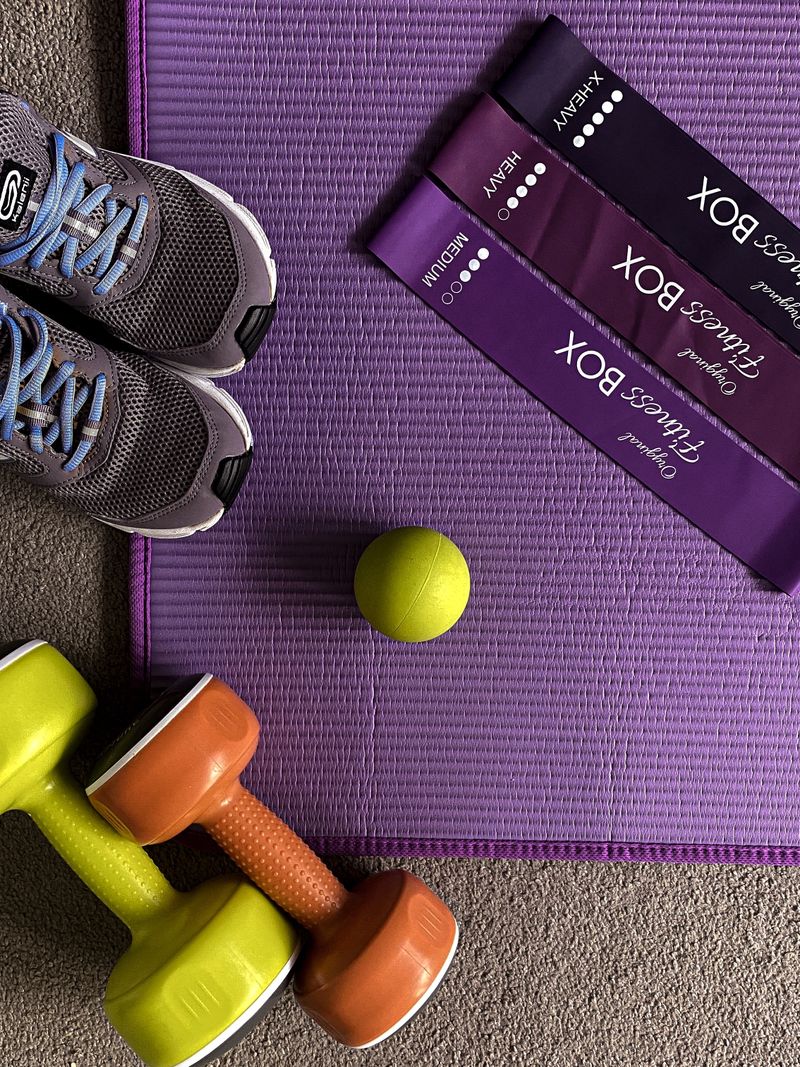
Resistance bands round out a folding gym better than any other cheap buy. A set with a door anchor ($30 to $60) covers rows, presses, pull-aparts, and joint-friendly warm-ups, and the whole kit lives in a drawer. For the 50-plus lifter, bands are also the gentlest way to start a movement before loading it with iron. A foam roller and a couple of furniture sliders round out mobility and core work for under $40 combined.
A chalk ball or liquid chalk ($8 to $15) keeps grip secure on heavier dumbbell and barbell work without the mess of loose chalk that a landlord would notice. Lifting straps are optional but help an older lifter whose grip fails before the target muscle does, which is common with age. None of these take meaningful storage space, and together they expand a minimal setup into a complete one.
Sample setups by space and budget
Matching the gear to your actual room and money prevents both overbuying and the frustration of a setup that cannot do what you want. The three setups below cover most apartment situations, from a studio corner to a converted spare bedroom.
| Setup | Gear | Approx. total | Best for |
|---|---|---|---|
| Studio corner | Bands, adjustable kettlebell, folding bench, floor tiles | $250–350 | Tightest spaces, lowest noise |
| One-bedroom | Adjustable dumbbells, folding bench, pull-up bar, tiles | $550–700 | Full-body strength, small footprint |
| Spare room | Folding rack, barbell, bumper plates, bench, dumbbells | $1,000–1,400 | Serious barbell training at home |
The one-bedroom setup is the sweet spot for most readers. It trains every major muscle group, fits in a corner, folds away, and costs less than a year of a commercial gym membership in many cities. The spare-room setup only makes sense if you are committed to heavy barbell squats and deadlifts and have the floor and framing to support them.
Storage, maintenance, and floor protection
A folding gym only stays usable if folding it away is quick, otherwise it migrates into a permanent obstacle. Keep the storage spot within a few steps of the workout area. A closet, a gap beside a wardrobe, or the space under a bed all work. The faster the reset, the more often you will actually train, which is the entire point of buying foldable gear in the first place.
Maintenance on home equipment is light but not zero. Wipe sweat off benches and handles after each session, since salt corrodes steel and degrades vinyl over months. Check the bolts on a folding rack or bench every few weeks, because the fold-and-unfold cycle loosens hardware faster than a static frame. A drop of light machine oil on the hinges and adjustment pins of dumbbells keeps the mechanisms smooth and quiet.
Common mistakes to avoid
The most expensive mistake is buying a cheap, wobbly folding bench to save $50. An unstable bench feels unsafe, so it sits unused, and the saving turns into a total loss. Spend the extra on a wide, high-capacity base. The second common error is overbuying on day one, filling a small room with a rack and barbell before knowing whether you will stick with barbell training. Start with the bench-and-dumbbell core and expand once the habit holds.
Ignoring noise until a neighbor complains is the third trap, and it is avoidable. Lay the floor tiles, choose rubber-coated weights, and train in daytime hours from the start rather than fixing it after a confrontation. The last mistake is choosing a wall-mounted rack in a rental without checking the lease or the studs. A loaded barbell on a poorly anchored mount is dangerous, and unauthorized wall holes can cost a deposit. When in doubt, go freestanding.
Frequently asked questions
Can you build real strength with only foldable equipment?
Yes. Adjustable dumbbells to 50 pounds per hand plus a folding bench cover progressive overload for most people for years. Add a folding rack and barbell and there is no strength ceiling an apartment lifter realistically hits at home.
Will my downstairs neighbor hear me?
Some sound carries no matter what, but rubber floor tiles, rubber-coated weights, and not dropping loads from overhead reduce it to a level most buildings accept. Daytime training helps more than any single piece of gear.
Is a wall-mounted rack safe in an apartment?
It is safe only if it bolts into real wood studs or solid masonry, not drywall alone. Renters who cannot or should not drill into walls should choose a freestanding folding stand instead.
How much space do I actually need?
A workout area of roughly 6 by 6 feet is enough for dumbbell and bench work. Add a few feet of clearance for a barbell. When the gear folds away, that same space returns to normal use.
What should I buy first?
Start with a folding adjustable bench and one pair of adjustable dumbbells. That pairing trains the entire body, fits in a closet, and costs under $600. Expand into a rack and barbell later if you want to load heavier.
🛠️ Free tools for this topic
No sign-up. They do the calculating and checking for you.
Published by the Gym4Home editorial team. Published June 22, 2026. Updated August 27, 2026.
Editorial responsibility: see Imprint.
Spotted an error or have something to add? corrections@gym4home.com
Home Gym Tips, Weekly
Equipment picks, workout ideas, and setup guides — for every space and every budget. No fluff, just useful.
🎁 Free bonus: The Home Gym Starter Checklist (PDF)
You might also like
Foldable Rowing Machines for Apartments: Picks and Trade-Offs
Folding magnetic rowers store in 2 square feet and stay quiet for downstairs neighbors. How resistance type affects noise, what specs to check, and picks by budget.
A Quiet 20-Minute Apartment Gym Morning Routine
A 20-minute quiet strength circuit you can do at 6am in an apartment without waking the neighbors below. Full routine and how to do each move.
Jumping Rope in an Apartment Without Annoying the Neighbors
Jump rope in an apartment without complaints. Why impact noise travels through the floor, how to build a quiet stacked surface, and the technique that keeps you silent.
📖 All articles on Gym4Home →
Browse our other articles