Home Gym for Seniors: The Complete Guide to Getting Started
This article may contain affiliate links. If you make a purchase through these links, we may earn a small commission at no extra cost to you. This helps us keep creating free content.
Health note: This article is for general information only and is not a substitute for medical advice. Talk to your doctor before starting a new exercise programme, especially if you have an existing health condition or injury.
A full-body home gym for an older adult can be assembled for around $150 to $400. That is less than three months of a typical commercial gym membership in most US cities. The low cost is only half the appeal. You train on your own schedule, in private, at a temperature you like. No machine is occupied when you want it, and there is no drive to and from a facility on a winter evening. For anyone over 50 who has watched a gym membership lapse because the logistics never quite worked, a small, well-chosen home setup is often the difference between training and not training.
A home gym suits older adults for reasons worth spelling out: how to deal with real space and budget limits, exactly what equipment to buy in what order, the four kinds of training that matter as you age, a sample weekly routine, and how to stay safe and consistent. It is written for an apartment corner or spare room.
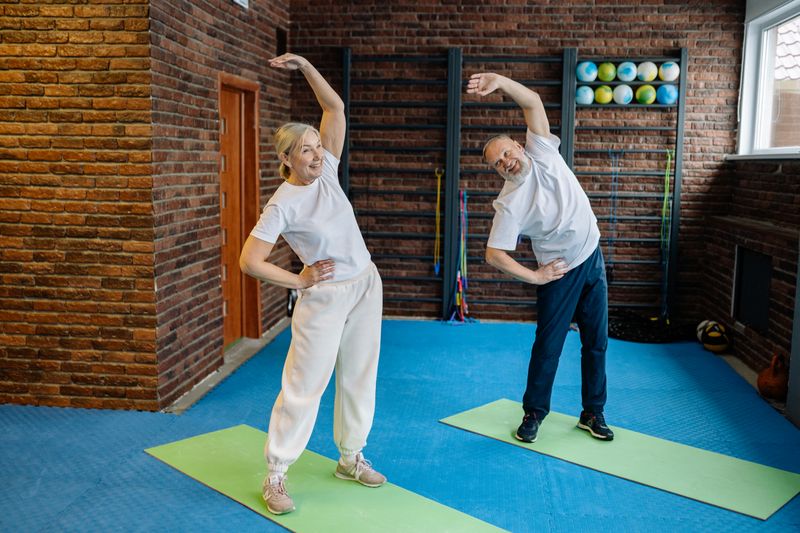
Why a home gym makes sense after 50
Muscle mass declines roughly 3 to 8 percent per decade after age 30, and the rate accelerates after 60. This age-related loss, called sarcopenia, is one of the main reasons people lose independence later in life. Resistance training has been shown in many studies to slow and partly reverse it at any age, with people in their 80s and 90s still building strength when they train. You do not need a barbell loaded with hundreds of pounds to benefit. Consistent, moderate resistance is what counts.
Home training removes the most common reasons people skip workouts. There is no commute and no closing time. You also skip the crowd and the membership awkwardness. You can do ten minutes before breakfast and ten more after dinner if that suits you better than one long session. For someone managing joint sensitivity, training at home also means you control the surface, the pace, and the exact movements. No class instructor pushes you into something your knees do not like.
Space and budget
Fit Simplify Resistance Bands Set
Five resistance levels in a kit that fits in a drawer, gentle on the joints and ideal to start with.
As an Amazon Associate we earn from qualifying purchases.
You do not need a dedicated room. A surprising amount fits into a corner of about 50 square feet, roughly a 7-by-7-foot patch of floor. That is enough for a mat, a set of resistance bands, a pair or two of dumbbells, and room to stand, step, and lie down. In an apartment, the two constraints that matter most are noise and storage. Choose equipment that is quiet to use and easy to tuck away, and your downstairs neighbour will never know you train.
A useful starter setup costs $150 to $400 depending on what you already own. You can spend far more, but most of that money buys convenience and capacity you will not need for the first year. Start small, train consistently, and add equipment only when a specific exercise demands it. Buying everything on day one usually means a pile of unused gear within a month.
| Constraint | Apartment-friendly choice | Why |
|---|---|---|
| Noise | Bands, light dumbbells, a thick mat | No dropped weights, no impact thuds |
| Floor space | Adjustable dumbbells, foldable mat | Stores in a closet between sessions |
| Floor protection | Rubber or foam mat under any weights | Protects flooring and cushions joints |
| Ceiling height | Seated and standing band work | No overhead-bar clearance needed |
Equipment by priority: what to buy first
The order below matters more than the brands. Buy from the top and stop when your budget runs out. Everything above the line you skip is still a complete, useful gym. Prices are approximate US retail and vary by brand and sale.
| Priority | Item | Approx. US price | What it covers |
|---|---|---|---|
| 1 | Exercise mat (thick, 1/2 inch) | $20–40 | Floor work, stretching, joint cushioning |
| 2 | Resistance band set (loops + tube bands) | $20–40 | Full-body strength, low joint load |
| 3 | Sturdy chair (you likely own one) | $0 | Balance support, sit-to-stand, seated work |
| 4 | Adjustable dumbbells (light–moderate) | $80–150 | Progressive strength, lasts for years |
| 5 | Door-anchor for bands | $8–15 | Rows, presses, more angles |
| 6 | Step or low platform | $25–45 | Step-ups, low-impact cardio |
| 7 | Stability ball (sized to height) | $20–35 | Core, gentle mobility, seated balance |
Notice what is not on the list: no power rack, no treadmill, no cable machine. Those are excellent in the right context, but they are large, expensive, and unnecessary for the goals that matter most after 50, which are keeping strength, balance, and mobility. Adjustable dumbbells deserve a special mention because one pair replaces an entire rack and stores in a footprint smaller than a shoebox, which is exactly what an apartment needs.
Joint-friendly training principles
Joint sensitivity is common after 50, but it rarely means you should stop moving. Usually it means you should move differently. The guiding idea is to load muscles while sparing the joints. Resistance bands and controlled dumbbell work let you build strength without the impact of jumping or the grinding range of deep, loaded squats. Pain that is sharp, that lingers after a session, or that changes how you walk is a signal to back off and, if it persists, to ask a doctor or physiotherapist.
Three habits protect your joints. First, warm up for five minutes so tissue is pliable before it works. Second, move through a range that feels controlled rather than forcing a deep position your joints resent. Third, progress slowly, adding a little resistance or a couple of reps only when the current load feels easy. A useful rule of thumb is the talk test and the next-day test: you should be able to speak in short sentences during a set, and you should feel worked but not wrecked the following morning.
The four pillars of older-adult fitness
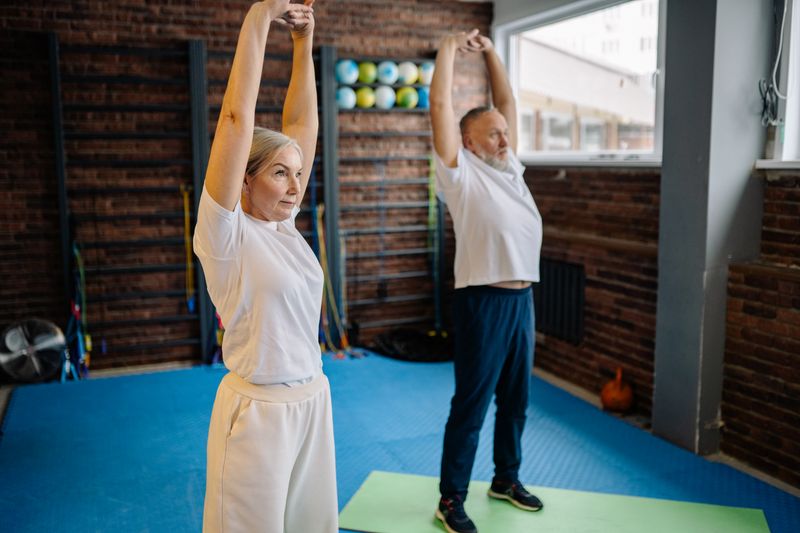
A complete programme after 50 is not just lifting. Four kinds of training each protect something different, and a home setup covers all four with the same handful of equipment. Skipping any one leaves a gap that shows up in daily life. Strength keeps you carrying groceries, cardio keeps your heart and stamina, balance keeps you upright, and mobility keeps you reaching, bending, and turning without strain.
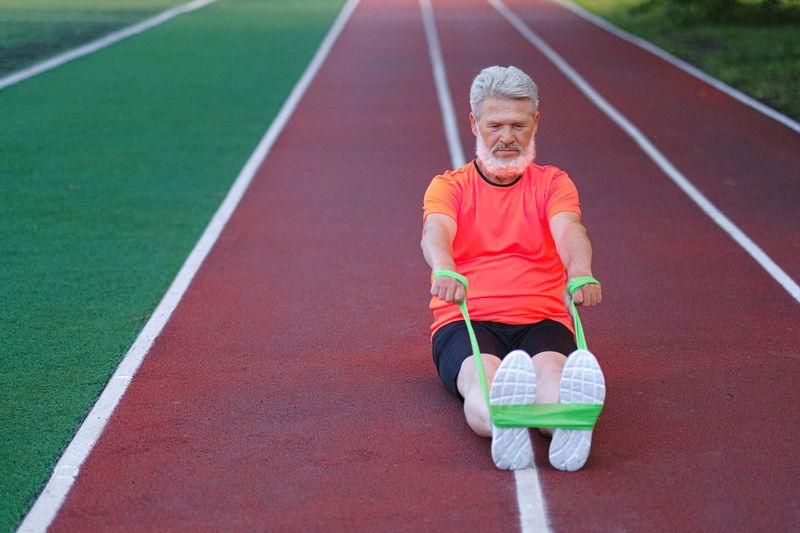
- Strength. Resistance work two to three times a week. This is the highest-value pillar for independence because it maintains muscle and bone. Bands, dumbbells, and bodyweight all qualify.
- Cardio. Anything that raises your heart rate for a sustained stretch: brisk walking, marching in place, step-ups, a stationary cycle. Aim to accumulate movement most days.
- Balance. Standing on one leg, heel-to-toe walking, controlled weight shifts. Balance trains quickly and is one of the strongest predictors of staying fall-free.
- Mobility. Gentle stretching and joint circles that keep range of motion. Five to ten minutes after a session, when muscles are warm, is ideal.
| Pillar | Why it matters | Home tools | How often |
|---|---|---|---|
| Strength | Muscle, bone, metabolism, independence | Bands, dumbbells, bodyweight | 2–3x/week |
| Cardio | Heart health, stamina, mood | Walking, step, marching | Most days |
| Balance | Fall prevention, confidence | Chair, open floor | Daily, a few minutes |
| Mobility | Range of motion, less stiffness | Mat, stability ball | After each session |
A sample weekly routine
The plan below assumes a beginner with no current routine and a basic kit of a mat, bands, and light dumbbells. It is built around three short strength sessions, daily movement, and a little balance and mobility woven in. Each session runs 20 to 35 minutes including a warm-up. Adjust the days to fit your life, since the pattern matters more than the exact calendar.
| Day | Focus | Roughly |
|---|---|---|
| Monday | Full-body strength (bands + dumbbells) + balance | 30 min |
| Tuesday | Brisk walk or step-ups (cardio) + mobility | 20–30 min |
| Wednesday | Full-body strength + balance | 30 min |
| Thursday | Walk or gentle cardio + stretching | 20–30 min |
| Friday | Full-body strength + mobility | 30 min |
| Saturday | Longer easy walk + balance practice | 30–45 min |
| Sunday | Rest or light stretching | 10 min |
A simple full-body strength session might include sit-to-stand from a chair, band rows, a band or dumbbell chest press, banded leg work, a standing band pull-apart for the upper back, and a gentle core exercise such as a seated march. Two or three sets of 10 to 15 reps each is a sensible starting target. If that feels like a lot, do one set of everything for the first two weeks and build from there.
Safety and fall prevention
Most exercise injuries at home come from a small number of avoidable causes: tripping over equipment, a slippery floor, moving too fast, or skipping the warm-up. Keep the training area clear, put bands and dumbbells away between sessions, and never train on a rug that slides. Keep a sturdy chair or counter within reach for any standing balance work so you always have something to grab.
Balance training itself is one of the best things you can do to prevent falls, but it should be done safely. Always practise near a support, progress from two hands on the chair to one hand to fingertips to hands-free, and never rush that progression. If you feel dizzy, stop and sit down. Stay hydrated, and if you take medication that affects blood pressure or balance, mention your new routine to your doctor.
How to progress without overdoing it
Progress is what turns exercise into results, but for older adults the art is progressing slowly enough that joints and connective tissue keep up with muscles. The body adapts in this order: technique first, then a few extra reps, then a little more resistance. Only change one thing at a time. If today's set of 12 feels easy and clean, try 13 or 14 next time before reaching for a heavier band or dumbbell.
A practical pattern is to hold a given resistance until you can do the top of your rep range with good form across all sets, then nudge resistance up and drop back to the bottom of the range. With bands that means moving to the next colour or doubling a lighter band; with adjustable dumbbells it means the next increment. Expect to spend weeks, not days, at each step, and accept that some weeks you hold steady. Steady is still winning.
Common mistakes and how to stay consistent
The most common mistake is starting too hard and getting too sore to come back. The second is buying too much equipment and feeling overwhelmed by it. The third is treating strength as the only thing that matters and neglecting balance and mobility, which often deliver the most noticeable day-to-day improvements. The fourth is comparing yourself to a younger version of yourself rather than to last month.
Consistency comes from making the session small and the cue obvious. Keep the gym set up in plain sight if space allows, attach the workout to an existing habit such as your morning coffee, and lower the bar on bad days, since five minutes of bands still counts and keeps the streak alive. Track sessions on a simple wall calendar; the visible chain of marks is a stronger motivator than any app for most people.
When to see a doctor or physio
Talk to your doctor before you start if you have heart disease, high or poorly controlled blood pressure, diabetes, recent surgery, a known joint problem, osteoporosis, or any condition that limits activity. The same goes if you simply have not exercised in a long time. A quick conversation can flag anything to avoid and often clears you to begin with confidence. A physiotherapist is the right call if a specific joint consistently complains; they can tailor movements to your body in a way no general article can.
None of this is a reason to wait indefinitely. For most older adults, gentle, progressive strength and balance work is not only safe but actively protective. The goal of the medical check is to start smart, not to talk yourself out of starting. Once you have the green light, the equipment list above and the weekly routine give you everything you need to begin this week.
Frequently asked questions
Is it safe to start strength training in my 60s, 70s, or 80s?
For most people, yes, and research suggests it may help maintain muscle, bone, and independence at any age. Start light, progress slowly, and check with your doctor first if you have a health condition. Strength gains happen even in people well into their 90s.
How much should I spend on a home gym?
A useful starter setup costs about $150 to $400. Begin with a mat and a band set for under $80, add adjustable dumbbells when you are ready, and only buy more when a specific exercise demands it. Spending more upfront usually buys unused gear.
How often should an older adult work out?
A common target is two or three strength sessions a week, daily movement such as walking, and a few minutes of balance and mobility most days. Total time can be as little as 20 to 30 minutes per strength session. Consistency over months matters far more than any single workout.
I have bad knees, can I still train at home?
Often yes, with joint-friendly choices. Resistance bands, seated and chair-supported exercises, and controlled ranges let you build strength without impact. Avoid deep loaded squats and jumping, stop on sharp joint pain, and see a physiotherapist if a knee consistently hurts during basic movement.
Do I need dumbbells, or are resistance bands enough?
Bands alone can build real strength and are the cheapest, quietest, most joint-friendly place to start. Many older adults never need more. Adjustable dumbbells add a different kind of load and finer progression once you outgrow your heaviest band, so they make a great second purchase rather than a first.
How do I avoid getting too sore to keep going?
Start with one set per exercise for the first couple of weeks, add sets and reps before adding resistance, and never increase more than one thing at a time. Mild soreness a day or two later is normal; if you are too sore to train again within a few days, you went too hard.
How long until I notice results?
Many people feel steadier and more capable in daily tasks within three to four weeks, even before visible changes. Measurable strength and balance improvements typically show over two to three months of consistent training. Patience and regularity are what produce lasting results.
🛠️ Free tools for this topic
No sign-up. They do the calculating and checking for you.
Published by the Gym4Home editorial team. Published May 31, 2026. Updated October 4, 2026.
Editorial responsibility: see Imprint.
Spotted an error or have something to add? corrections@gym4home.com
Home Gym Tips, Weekly
Equipment picks, workout ideas, and setup guides — for every space and every budget. No fluff, just useful.
🎁 Free bonus: The Home Gym Starter Checklist (PDF)
You might also like
How to Start Exercising at Home After 50: A Practical Plan
A step-by-step home workout plan for adults over 50, covering the cheapest starter kit, joint-friendly warm-ups, four beginner exercises, and an eight-week progression.
How to Build a Home Gym After 60 on a Budget
A practical, budget shopping list and starter routine for building a joint-friendly home gym after 60, with US prices and where to spend versus save.
Home Gym for Bad Knees: Joint-Friendly Equipment That Works
Joint-friendly home gym equipment for sore knees: low-impact cardio, resistance bands and dumbbells, US price ranges, a sample routine and gear to avoid.
📖 All articles on Gym4Home →
Browse our other articles