Are Home Gym Mirrors Worth It?
This article may contain affiliate links. If you make a purchase through these links, we may earn a small commission at no extra cost to you. This helps us keep creating free content.
A large gym mirror runs $80 to $300 installed and does one concrete job: it lets you see your own form in real time so you can fix it. For lifting technique that is a real benefit, not vanity. But mirrors also eat wall space, are heavy and fragile, and a cheap one can warp your reflection enough to mislead you. Whether they earn a place in your setup depends on what you train and how much wall you can spare.
This covers what a mirror actually does for your training, the difference between a safe gym mirror and a dangerous cheap one, and the cases where a phone on a tripod beats a mirror entirely.
What a mirror does for your training
A mirror gives instant feedback on movements where alignment matters and you cannot feel the fault yourself. Watching your knees track over your toes in a squat, keeping your hips level in a lunge, or checking shoulder position in an overhead press are all easier when you can see them happening rather than guessing.
That live feedback shortens the learning curve for anyone new to lifting. Form cues from an article only stick once you can match them to what your body is doing, and a mirror is the cheapest way to close that gap without a coach standing next to you.
The catch with side-view exercises
Fit Simplify Resistance Bands Set
Five resistance levels in a kit that fits in a drawer, gentle on the joints and ideal to start with.
As an Amazon Associate we earn from qualifying purchases.
One mirror only shows you one angle, and for many lifts the angle you most need is the side, not the front. A front-facing mirror tells you almost nothing about whether your back is rounding in a deadlift or your hips are shooting up first in a squat. To see your profile you have to turn sideways to the glass, which changes the exercise.
That single-angle limit is why a camera, placed at any angle and replayed in slow motion, beats a fixed front mirror for diagnosing the faults that actually cause injury. Many lifters end up using a mirror for quick live checks and a phone for the lifts where the side view matters.
| Exercise | Mirror useful? | Better tool |
|---|---|---|
| Squat | Side view only | Phone, side angle |
| Overhead press | Yes, front or side | Mirror |
| Deadlift | No, you look down | Phone, side angle |
| Bicep curl | Yes, front | Mirror |
| Bent-over row | No | Phone |
Safety: not every mirror belongs in a gym
A standard household mirror is a sheet of glass that shatters into sharp shards if a dumbbell or a swinging band hits it. That is a real hazard next to where you drop weights. Gym-grade mirrors are either tempered safety glass or come with a backing film that holds the pieces together if they break.
Mounting matters as much as the glass. A heavy mirror needs to be fixed into studs or with a proper adhesive rated for the weight, not hung on a single drywall hook. A mirror that falls behind a treadmill or onto a lifting platform is far more dangerous than no mirror at all.
Space and the apartment question
A useful gym mirror is wide, often 48 inches or more, because a narrow one only shows part of your body. That is a big commitment of wall in a room that probably already holds a rack, a bench, or a bike. In a shared or rented space, drilling a large heavy mirror into the wall may not even be allowed.
Leaning a mirror against the wall is the rental-friendly workaround, but it tilts the reflection and is a tipping risk near moving weights. A freestanding floor mirror on a stable base is safer for renters, though it costs more and still takes up footprint.
When a phone beats a mirror
A phone on a $20 tripod does everything a mirror does for form work, plus the things a mirror cannot. You can film from the exact angle a lift needs, replay it in slow motion, and compare today against last month. For diagnosing a stubborn fault, recorded video wins clearly.
The mirror still has one edge: it is live and effortless. You glance and adjust without stopping the set, which suits high-rep accessory work and anyone who finds filming every session a chore. For most home gyms, a phone is the smarter first buy and a mirror is a nice addition once the wall space exists.
The verdict for a home gym
Buy a proper gym mirror if you have the wall to spare, you do a lot of standing lifts where live front feedback helps, and you will mount it safely into studs or with rated adhesive. In that case a 48-inch tempered mirror around $120 to $250 is a solid, long-lasting addition.
Skip it if space is tight, you mostly deadlift and row, or you rent and cannot mount heavy glass. A phone and tripod for under $40 cover the form-checking job better for those exercises and pack away to nothing. Plenty of strong home gyms run for years with no mirror at all.
Mounting and lighting, the parts that get botched
The most common mirror complaint is not the glass but the install. A large mirror is heavy, often 40 pounds or more, and drywall anchors alone will not hold it long term. Find the studs, mount a French cleat or a rated bracket, and the mirror stays put for years. Adhesive can supplement screws but should rarely be the only thing holding a heavy mirror over a workout area.
Lighting changes how useful a mirror is. A mirror on a wall opposite a window can throw glare that washes out your reflection at certain times of day, and a dim corner makes form checks useless. Even, slightly-from-the-front light gives the clearest view of your body position. If your gym corner is dark, a cheap clip-on LED panel does more for mirror usefulness than upgrading the glass.
Size and shape: how big is big enough
A mirror that only shows your upper body is close to useless for lifting, because the faults you most want to catch happen at the hips, knees, and feet. For standing lifts you want to see from roughly mid-shin to the top of your head, which usually means a mirror at least 48 inches tall mounted fairly low.
Width buys you room to move sideways and still stay in frame, which matters for lunges and any lateral work. A single wide panel beats two narrow ones with a seam down the middle, since the seam sits right where you want to check alignment. If budget forces a smaller mirror, prioritise height over width and mount it low rather than at eye level.
🛠️ Free tools for this topic
No sign-up. They do the calculating and checking for you.
Published by the Gym4Home editorial team. Published November 12, 2026.
Editorial responsibility: see Imprint.
Spotted an error or have something to add? corrections@gym4home.com
Home Gym Tips, Weekly
Equipment picks, workout ideas, and setup guides — for every space and every budget. No fluff, just useful.
🎁 Free bonus: The Home Gym Starter Checklist (PDF)
You might also like
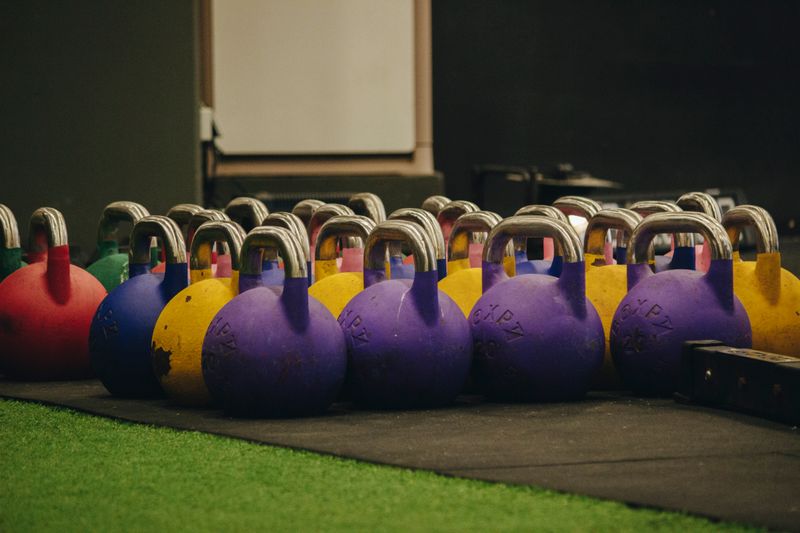
Home Gym Equipment: What to Buy First (and What to Skip)
A step-by-step buying order for home gym equipment, starting with adjustable dumbbells and a bench, with price ranges and the pieces most people buy too early.
Gym-in-a-Bag: Storing Home Equipment in Tight Spaces
How to store a complete home gym in tight spaces using a duffel bag, vertical hooks and under-bed bins, with a two-minute deploy rule.
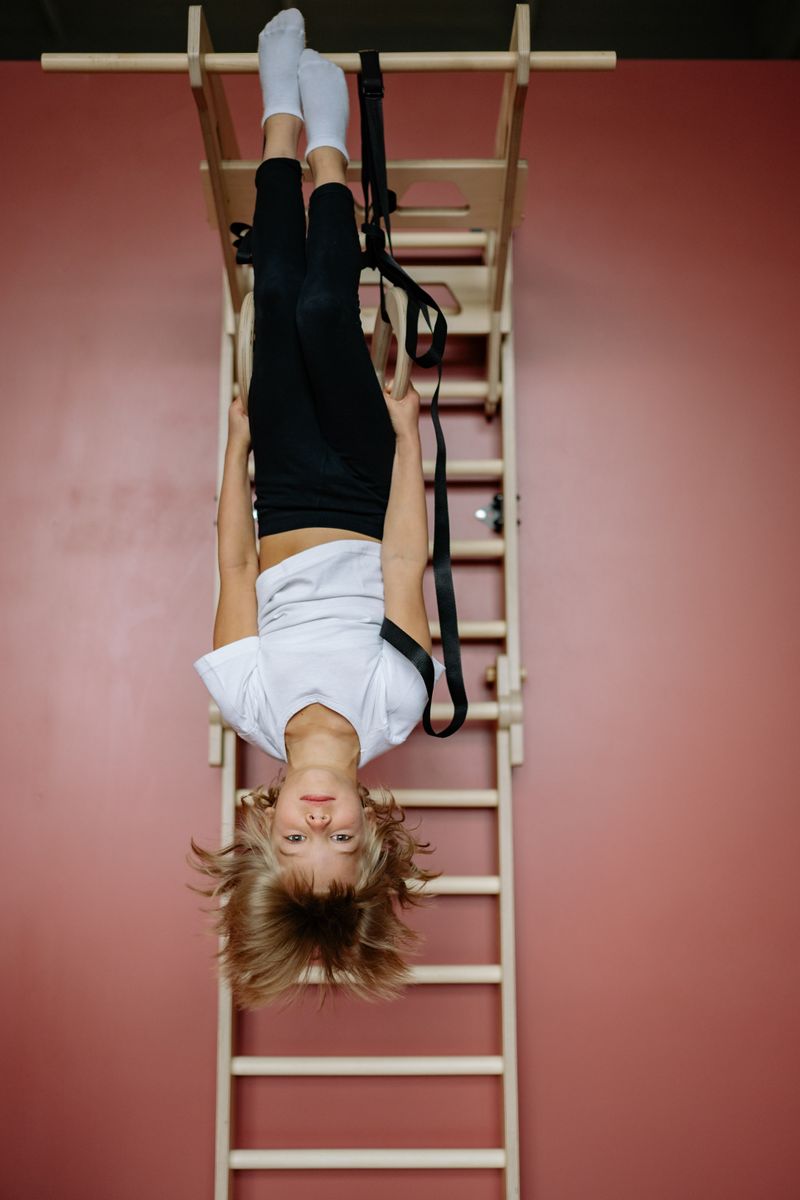
Multifunctional Equipment for a Small Home Gym
The best multifunctional gym equipment for small spaces, ranked by footprint and movements covered, with a complete corner-gym build under $500.
📖 All articles on Gym4Home →
Browse our other articles