When to Increase Weight in Your Home Gym (Beginner Rules)
This article may contain affiliate links. If you make a purchase through these links, we may earn a small commission at no extra cost to you. This helps us keep creating free content.
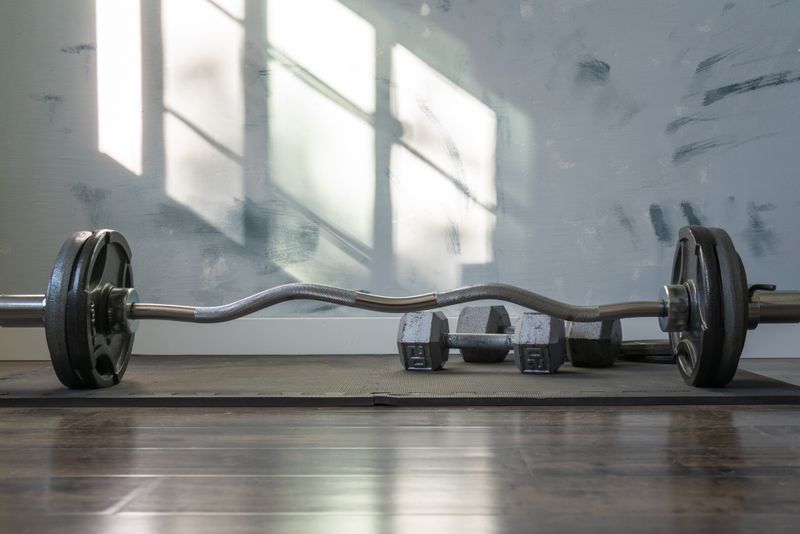
The clearest signal to add weight is finishing your last set with two reps still in the tank for two workouts in a row. If the final rep of your final set feels controlled and you could do three or four more, the load is no longer challenging your muscles enough to keep them adapting. Strength training works because you ask the body to handle slightly more than it is used to, and once a weight feels easy, that stimulus disappears.
Most beginners stall not because they lack motivation but because they keep lifting the same comfortable weight for months. The fix is a simple, repeatable rule for progression that you can apply at home without a coach watching your form. The methods below cover the two situations every home lifter runs into: when you can add plates, and when you cannot.
The two-clean-reps rule for adjustable equipment
If you train with adjustable dumbbells, a loadable barbell, or a plate-loaded machine, use a target rep range instead of a fixed number. Pick a range like 8 to 12 reps. Start at a weight where 8 reps is hard. Stay at that weight every session, adding reps as you get stronger, until you hit the top of the range (12) on all your planned sets with good form. That is your green light to move up.
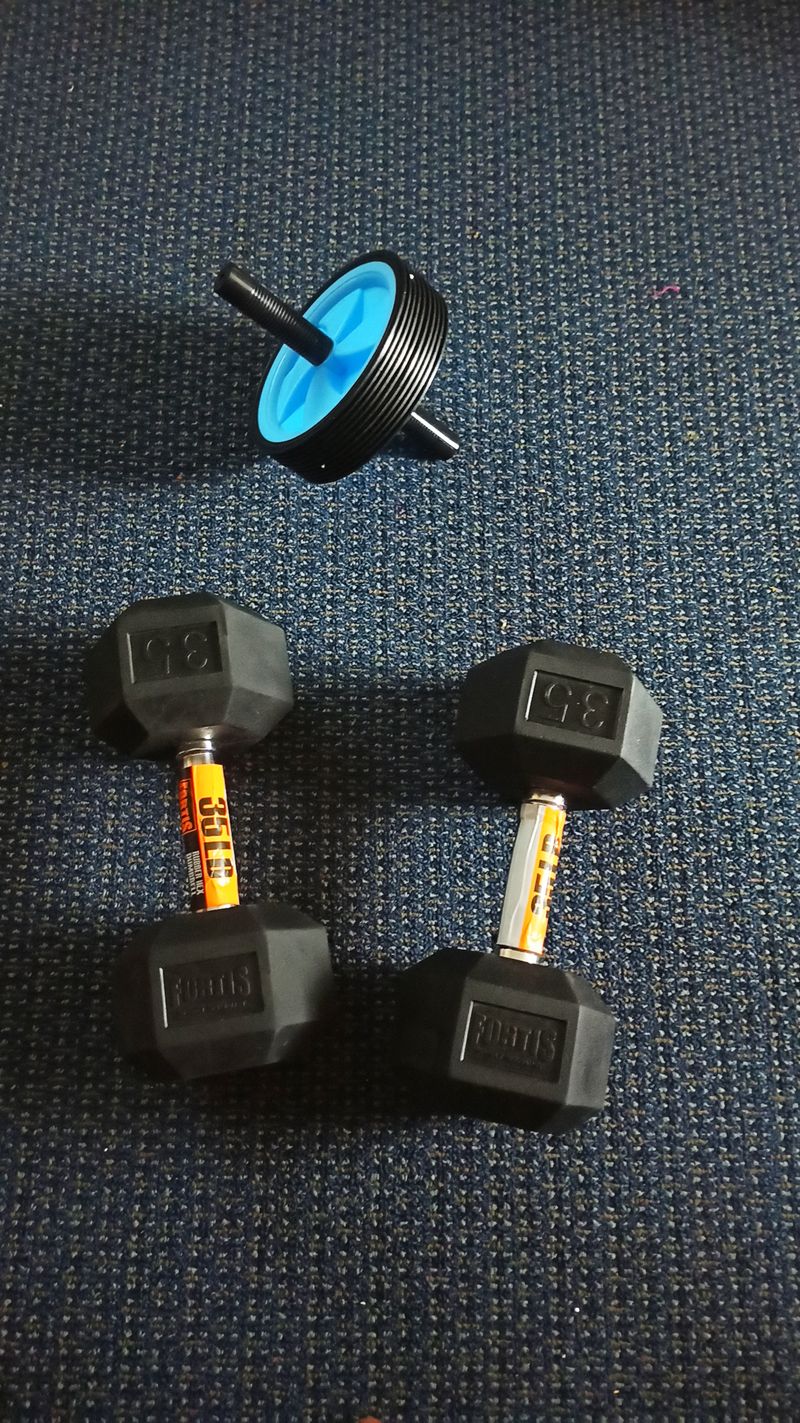
When you increase, jump to the next available weight and drop back down the rep range. You might go from 12 reps at 20 lb to 8 reps at 25 lb. That dip is expected and correct. You then climb the range again over the following weeks. This pattern, called double progression, keeps you moving forward without guesswork.
The clean reps and bar speed test
Fit Simplify Resistance Bands Set
Five resistance levels in a kit that fits in a drawer, gentle on the joints and ideal to start with.
As an Amazon Associate we earn from qualifying purchases.
Two factors tell you a weight is ready to go up: rep quality and bar speed. A clean rep moves through the full range with no jerking, no swinging, and no holding your breath through a grind. If your last two or three reps turn into a fight where your back rounds or the weight stalls halfway, you are training failure and sloppy form rather than strength, so do not add load yet.
Bar speed matters too. On the lifting (concentric) part of the movement, a weight you are ready to progress past will move noticeably faster than it did a few weeks ago. When a load that used to creep up now pops up quickly for your target reps, the muscle has adapted and is asking for more.
| Signal | What it means | Action |
|---|---|---|
| Hit top of rep range, all sets, clean form | Muscle has adapted | Add the smallest available weight |
| Last 2 reps slow but controlled | Near your limit, still productive | Hold weight, add reps next session |
| Form breaks, swinging, back rounds | Weight too heavy now | Reduce load, fix form first |
| Reps fast and easy, 3+ in reserve | Too light to drive growth | Increase weight now |
When you cannot add weight (fixed equipment)
Bodyweight movements, resistance bands, and single-weight kettlebells do not let you nudge the load up by a pound. You progress them by changing the difficulty of the movement itself. For push-ups, you might move from knees to full push-ups, then elevate your feet, then slow the lowering phase to a three-second count. Each change makes the same bodyweight feel heavier to the working muscles.

Resistance bands progress in two ways. You can switch to a thicker band, or you can increase tension by shortening the band or stepping further from the anchor. Adding reps and slowing the tempo also work. The principle never changes: when the current version feels manageable for your full set, make the movement harder rather than just grinding out more reps forever.
How fast should the weight climb?
Beginners progress faster than anyone else, which is the upside of starting out. In the first two or three months you might add weight every week or two on the big lifts like squats, presses, and rows. Smaller isolation lifts (curls, lateral raises) progress more slowly because the muscles involved are smaller and the usable weight jumps are proportionally larger.
Expect the pace to slow as you get stronger, and that is normal, not failure. Lower-body lifts usually tolerate bigger and more frequent jumps than upper-body lifts. A common pattern is roughly 5 to 10 lb steps on squats and deadlifts, and 2.5 to 5 lb steps on presses. When weekly progress stops, switch to adding a rep or a set before forcing more weight onto the bar.
What to do when you stall
A stall is when the same weight and reps refuse to budge for two or three weeks despite consistent training. The first thing to check is recovery, not the program. Poor sleep, too little food, and high stress all blunt your ability to add weight, and no progression scheme can outrun a body that is under-recovered. Fix the basics before you blame the routine, because most stalls in the first six months are recovery problems wearing a training-program disguise.
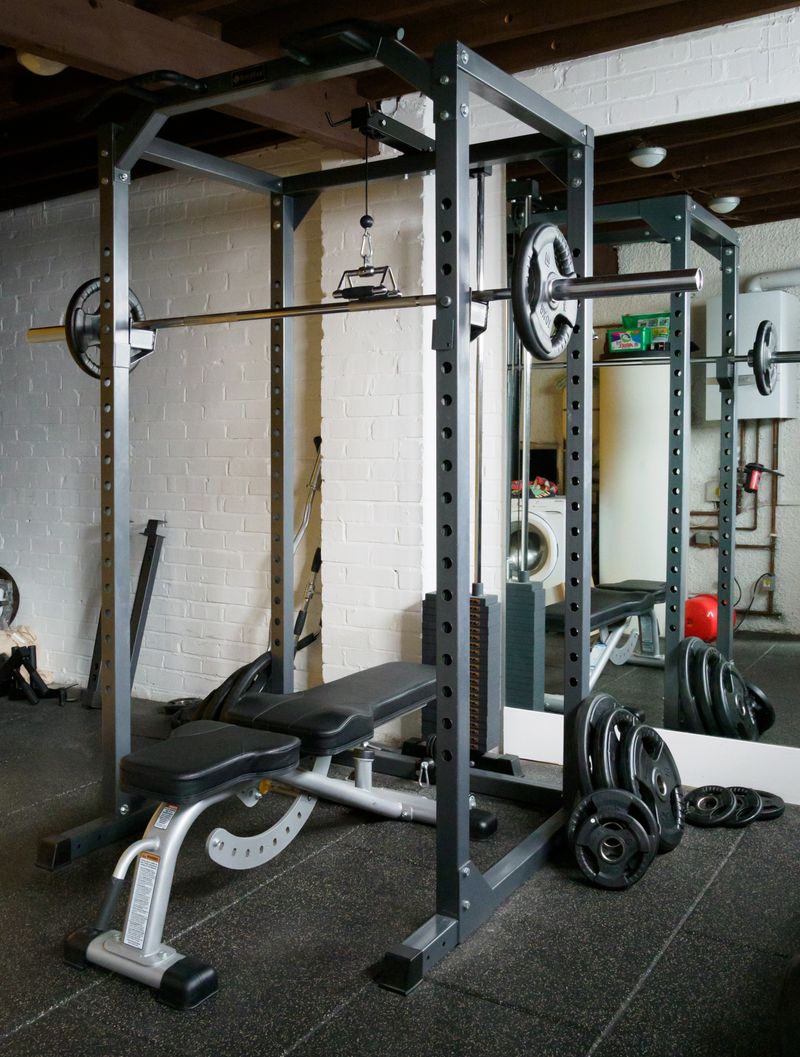
If recovery is solid and you are still stuck, change one variable at a time. Add a set to the stalled lift, slow the lowering phase to make the same weight harder, or take a single lighter week (a deload) to let fatigue clear before pushing again. Dropping the weight 10 percent and rebuilding over two weeks often breaks a plateau cleanly. The mistake is adding more and more weight to a bar you cannot move, which only reinforces bad form and deeper fatigue.
- Weeks 1 to 8: Add weight whenever you clear the top of your rep range with clean form, often every one to two weeks on big lifts.
- Months 3 to 6: Progress slows to every two to four weeks. Add reps or a set between weight jumps.
- After 6 months: Expect monthly or slower jumps. Track your lifts so you can see slow progress that feels invisible week to week.
Why a training log makes this easy
You cannot apply a progression rule if you do not know what you lifted last time. Write down the exercise, the weight, the sets, and the reps for every session. A cheap notebook or a notes app is enough. The log turns a vague feeling of "that felt hard" into a clear decision: last week was 10 reps at 30 lb, today was 12 clean reps, so next session goes to 35 lb.
A log also catches the opposite problem. If you have repeated the same weight and reps for four weeks with no change, the page makes the stall obvious so you can adjust your sleep, food, or program. Progress at home is mostly about consistency and accurate record-keeping, and the lifters who track their numbers are the ones who keep adding plates long after the early boost fades.
🛠️ Free tools for this topic
No sign-up. They do the calculating and checking for you.
Published by the Gym4Home editorial team. Published November 3, 2026.
Editorial responsibility: see Imprint.
Spotted an error or have something to add? corrections@gym4home.com
Home Gym Tips, Weekly
Equipment picks, workout ideas, and setup guides — for every space and every budget. No fluff, just useful.
🎁 Free bonus: The Home Gym Starter Checklist (PDF)
You might also like
Soreness After a Workout: What Is Normal and What Isn't
How to tell normal post-workout muscle soreness (DOMS) from a real warning sign, plus what actually helps you recover.

How to Start a Home Gym From Scratch (Step-by-Step for Beginners)
A step-by-step beginner guide to building a home gym from scratch: space, the five items to buy first, noise fixes, a starter routine, and smart upgrades.
A Real Home Gym Setup for Under $100
A complete under-$100 home gym built on resistance bands, a pull-up bar and a mat, with a shopping list, a full-body workout and clear limits.
📖 All articles on Gym4Home →
Browse our other articles