How Much Does a Home Gym Cost? Real Budgets for 2026
This article may contain affiliate links. If you make a purchase through these links, we may earn a small commission at no extra cost to you. This helps us keep creating free content.
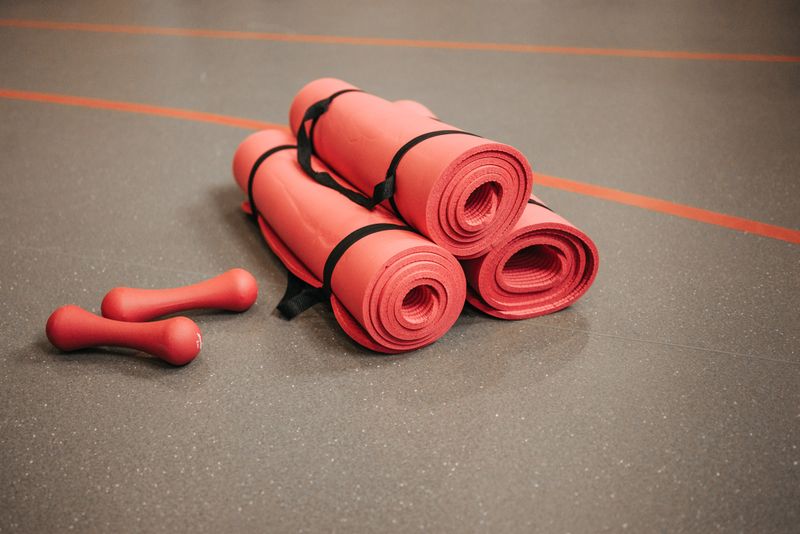
A functional home gym costs between $200 and $2,500 depending on how you train, and the lower end of that range covers everything a beginner actually needs for the first year. The wide spread comes down to one choice: whether you buy machines or buy free weights. Free weights do more for less money and fit in far less space, which is why almost every sensible home setup starts there.
Below are four real budgets, from a closet-sized starter kit to a full garage gym. Each one lists what you get, the approximate retail prices, and who it suits. Prices are rough US ranges and shift with sales and used-market availability, so treat them as planning figures rather than exact quotes.
The $200 starter kit
For around $200 you can train your whole body with adjustable resistance and almost no floor space. This is the right budget for a beginner who wants to test the habit before committing more cash, or anyone in a small apartment. It stores in a closet and makes no noise that bothers neighbors.
| Item | Approx. price |
|---|---|
| Resistance band set | $25–40 |
| One pair of medium dumbbells | $40–60 |
| Exercise mat | $20–35 |
| Doorframe pull-up bar | $25–35 |
| Suspension trainer (optional) | $30–50 |
Bands handle pressing, rowing and shoulder work, while the dumbbells add load to squats and lunges. The doorframe pull-up bar costs about $30 and installs in two minutes with no drilling. This kit will not let you lift very heavy, but it covers every movement pattern long enough to build a real base. Most beginners spend their first three months here without ever feeling limited.
The suspension trainer is the one optional piece worth considering, because it adds rows, assisted squats and core work that bands alone do not cover as well. It anchors over a door or to a beam and packs into a bag the size of a lunchbox. If your budget is tight, skip it at first and add it later once you know you will stick with training.
The $600 dumbbell setup
Fit Simplify Resistance Bands Set
Five resistance levels in a kit that fits in a drawer, gentle on the joints and ideal to start with.
* Affiliate link. We may earn a commission at no extra cost to you.
Around $600 buys the single most useful upgrade in home training: a pair of adjustable dumbbells plus a bench. Adjustable dumbbells replace 15 fixed pairs in the footprint of a shoebox and run roughly $300 to $450 for a quality set that goes up to 50 pounds per hand. That weight range carries most people for a year or more.
| Item | Approx. price |
|---|---|
| Adjustable dumbbells (to 50 lb) | $300–450 |
| Adjustable bench | $120–200 |
| Mat and bands (carryover) | $45–75 |
The bench unlocks proper pressing, rows and step-ups, and it folds flat against a wall when you are done. Look for one with an adjustable backrest so you can hit flat, incline and seated angles from a single piece. This budget is the sweet spot for most home lifters. It costs less than three months of a busy commercial gym membership in a major city, and you own it forever.
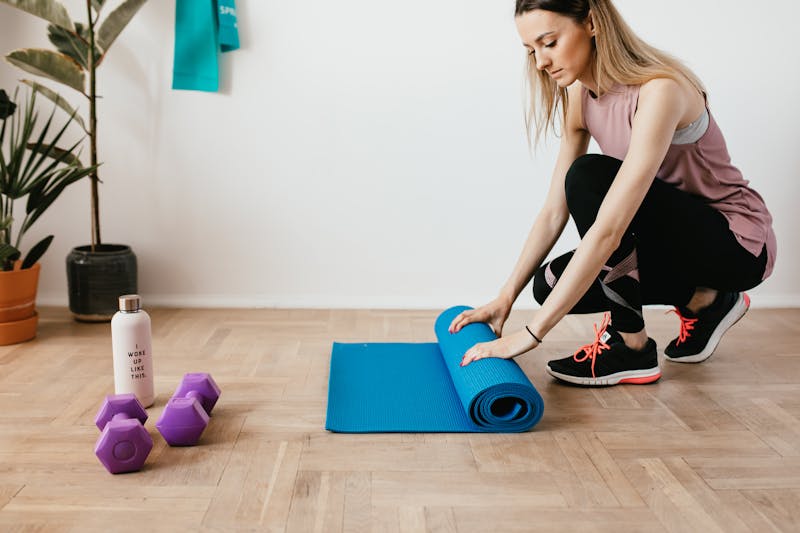
The reason adjustable dumbbells justify their price is the space they save. A traditional set covering 5 to 50 pounds in pairs takes up a full rack and weighs over 800 pounds in total. The adjustable version delivers the same range in two compact handles that sit on a shelf. For an apartment or a shared room, that footprint difference is the deciding factor.
The $1,200 squat-rack tier
At roughly $1,200 you add a barbell and a squat stand, which opens up heavy squats, deadlifts and presses. This is where a home gym starts to match a commercial one for the big lifts. You need a garage, basement or spare room with about 50 square feet of clear floor and a ceiling high enough to press overhead.
| Item | Approx. price |
|---|---|
| Squat stand or half rack | $200–400 |
| Olympic barbell | $150–250 |
| Weight plates (300 lb set) | $300–500 |
| Rubber flooring | $80–150 |
Plates are the item most worth buying used, since steel and rubber do not wear out. Check local listings and you can often cut the plate cost in half. A half rack with safety arms also lets you train heavy alone without a spotter, which matters when nobody else is home.
Choose between iron and rubber-coated bumper plates based on your floor and your lifts. Bumpers can be dropped safely from overhead and protect both the plate and the ground, which suits deadlifts and any olympic-style lifting. Iron plates cost less and take up less space per pound, but dropping them cracks tiles and dents concrete. For a garage on a slab, bumpers plus a thin mat are the safer pairing.
The $2,500 full garage gym
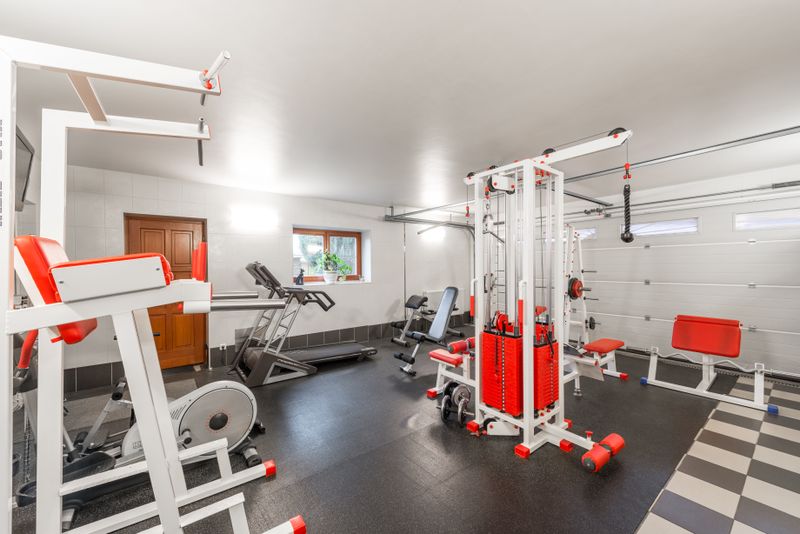
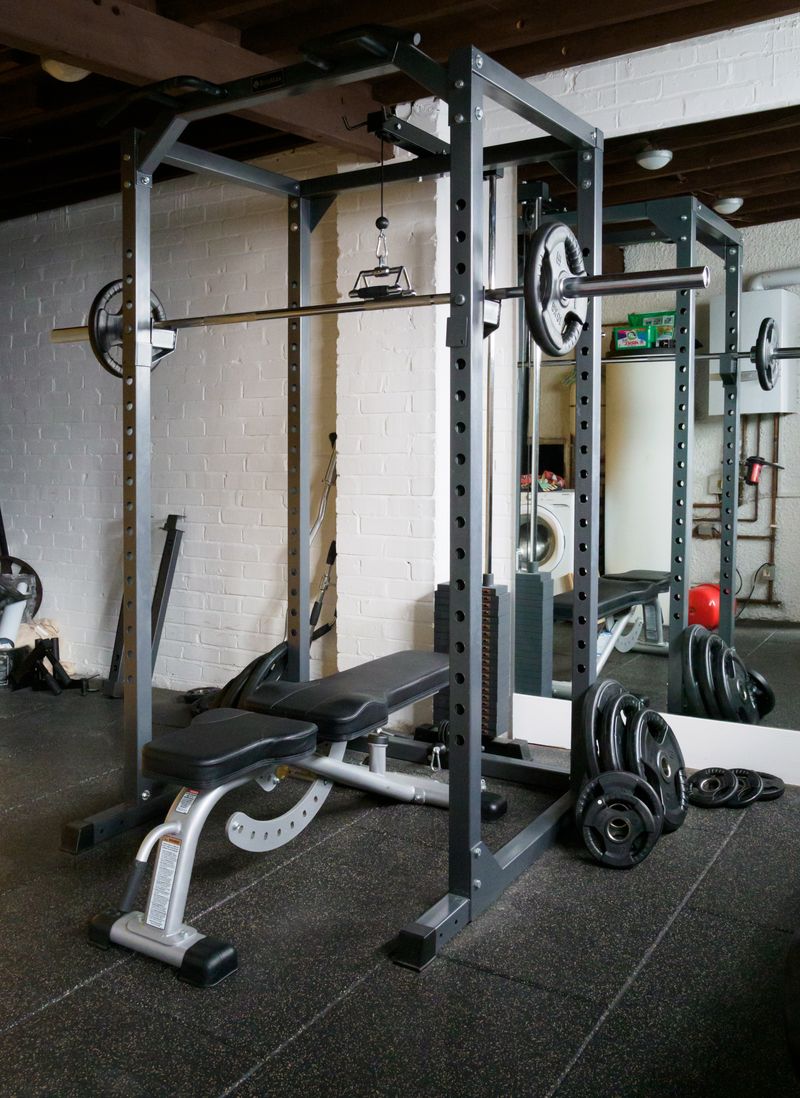
A $2,500 budget builds a complete garage gym that you will not outgrow. It adds a full power rack with a pull-up bar and cable attachment, more plates, and usually a cardio piece. This tier suits a committed household, especially when two people share it and split the cost.
| Item | Approx. price |
|---|---|
| Full power rack with cables | $600–1,000 |
| Barbell + 400 lb plates | $500–750 |
| Adjustable bench | $150–250 |
| Air bike or rower | $400–700 |
| Flooring | $150–250 |
The power rack is the heart of this setup. Its cable attachment covers lat pulldowns and rows that free weights struggle to replicate, and the safety bars make solo training as safe as a staffed gym. A rower or air bike adds conditioning without needing a separate room. Before you buy a rack, measure your ceiling height, since many racks stand over seven feet tall and a pull-up bar needs clearance above that.
One overlooked cost at this tier is the electrical and climate side. A garage gym in a hot or freezing region may need a fan, a space heater or a dehumidifier to stay usable year round, and bare metal rusts in a damp space. Budget a little for a wall fan and a moisture absorber, and your equipment will last far longer than it would in an unmanaged garage.
Hidden costs and where to save
Flooring is the cost most beginners forget. Dropping weights on bare concrete or laminate damages both the floor and the equipment, so budget $50 to $200 for rubber mats or interlocking tiles. A few rubber tiles under the lifting area are enough for dumbbell work; full barbell training wants a wider platform.
Buying used is the strongest saving lever in home-gym building. Plates, dumbbells, racks and benches show up constantly on local marketplaces from people who quit, often at half price or less. The items worth buying new are the ones where a failure is risky: barbells and the rack itself.
The most expensive home gym is the one you do not use, so match the budget to your real habit rather than your aspirations. Start at the tier you will actually train in three times a week, prove the habit for a month, then upgrade. Equipment that sits idle in a corner cost you full price for zero benefit, while a $200 kit you use every week pays for itself in skipped membership fees within months.
Frequently asked questions
Can you build muscle with just dumbbells? Yes, and most people can for a year or more. Dumbbells cover every major movement pattern, and as long as you progressively add weight and reps, your muscles cannot tell whether the load came from a dumbbell or a barbell. The barbell only becomes necessary when you outgrow the heaviest dumbbells you own.
Is a home gym cheaper than a commercial membership? Over time, clearly. A typical US gym runs $30 to $60 a month, so a $600 dumbbell setup breaks even in roughly one to two years and then costs nothing. The break-even comes faster if you would otherwise pay for a busier downtown gym or train as a household of two.
How much space do you really need? A dumbbell-and-bench setup works in about 25 square feet, roughly the footprint of a yoga mat plus room to swing. Barbell training wants closer to 50 square feet and a higher ceiling for overhead presses. The starter band kit needs almost no dedicated space at all.
What should you buy first? Adjustable dumbbells, every time. They are the one purchase that covers the widest range of exercises per dollar and per square foot, and they stay useful no matter how far your gym grows from there. Everything else is built around them.
🛠️ Free tools for this topic
No sign-up. They do the calculating and checking for you.
Published by the Gym4Home editorial team. Published August 6, 2026.
Editorial responsibility: see Imprint.
Spotted an error or have something to add? corrections@gym4home.com
Home Gym Tips, Weekly
Equipment picks, workout ideas, and setup guides — for every space and every budget. No fluff, just useful.
🎁 Free bonus: The Home Gym Starter Checklist (PDF)
You might also like
Soreness After a Workout: What Is Normal and What Isn't
How to tell normal post-workout muscle soreness (DOMS) from a real warning sign, plus what actually helps you recover.

How to Build a Home Gym After 60 on a Budget
A practical, budget shopping list and starter routine for building a joint-friendly home gym after 60, with US prices and where to spend versus save.
What Kettlebell Weight to Start With (by Body Type and Goal)
The right first kettlebell is heavier than most beginners think. Starting weights by body type, how to test fit during the swing, prices, and a two-bell plan.
📖 All articles on Gym4Home →
Browse our other articles