A Real Home Gym Setup for Under $100
This article may contain affiliate links. If you make a purchase through these links, we may earn a small commission at no extra cost to you. This helps us keep creating free content.
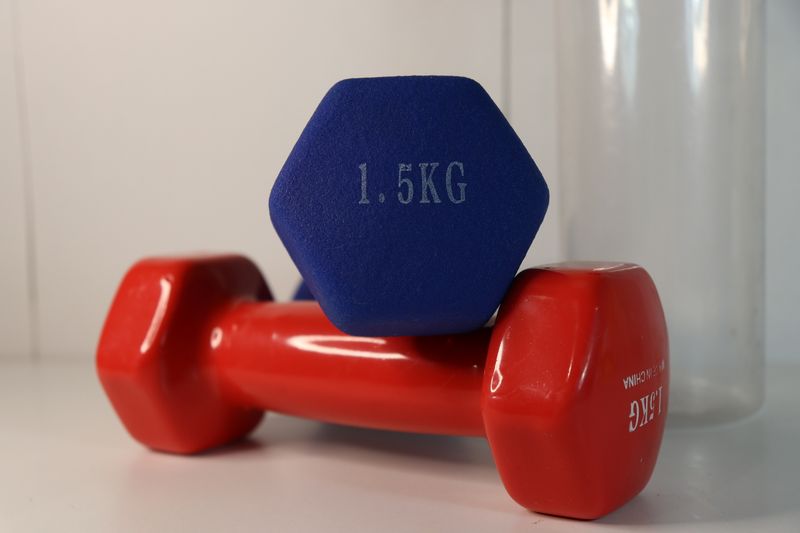
Under $100 buys a home gym that trains every major muscle, as long as you spend on versatile tools instead of one cheap machine. A $90 marketplace exercise bike or a single vinyl dumbbell set wastes the budget on one job. The same money split across bands, a pull-up bar and a mat covers pushing, pulling, squatting and core work for a beginner's entire first few months.
This is the leanest tier of home gym, and it is not a downgrade. Plenty of strong, lean people train almost entirely with bands and bodyweight. The kit below is what to buy, in priority order, so even $60 gets you training today.
The $100 shopping list
Buy from the top down and stop when the money runs out. Each item earns its place by covering movements the others miss. Prices are approximate US retail.
| Priority | Item | Approx. price | Unlocks |
|---|---|---|---|
| 1 | Resistance band set (loops + handles) | $25–40 | Press, row, curl, pull-apart, squat |
| 2 | Doorframe pull-up bar | $25–35 | Pull-ups, hangs, assisted rows |
| 3 | Exercise mat (6mm+) | $20–30 | Floor work, planks, joint cushioning |
| 4 | Ab wheel | $10–15 | Core and shoulder stability |
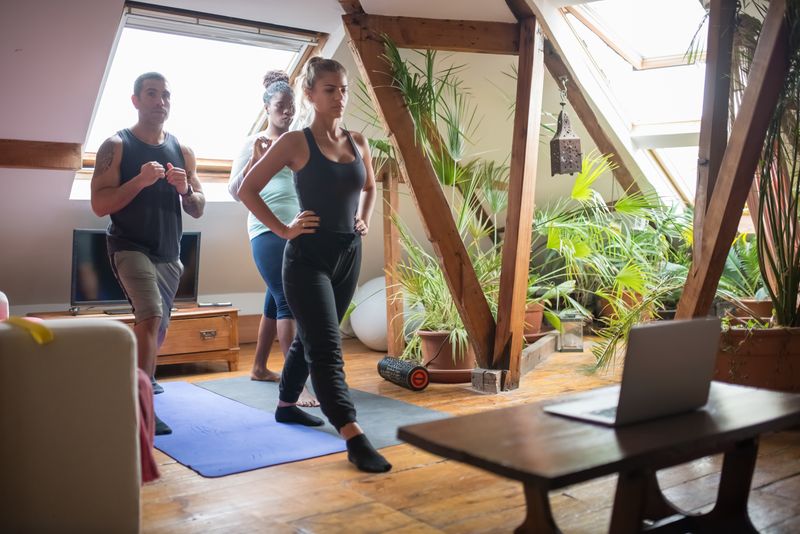
That full list lands at $80 to $120 depending on sales, so you may trim the ab wheel to stay strictly under $100. Bands are the non-negotiable purchase. A good set with a range of tensions gives you the equivalent of a light dumbbell rack in a bag the size of a sandwich.
Why bands beat cheap weights at this budget
Fit Simplify Resistance Bands Set
Five resistance levels in a kit that fits in a drawer, gentle on the joints and ideal to start with.
As an Amazon Associate we earn from qualifying purchases.
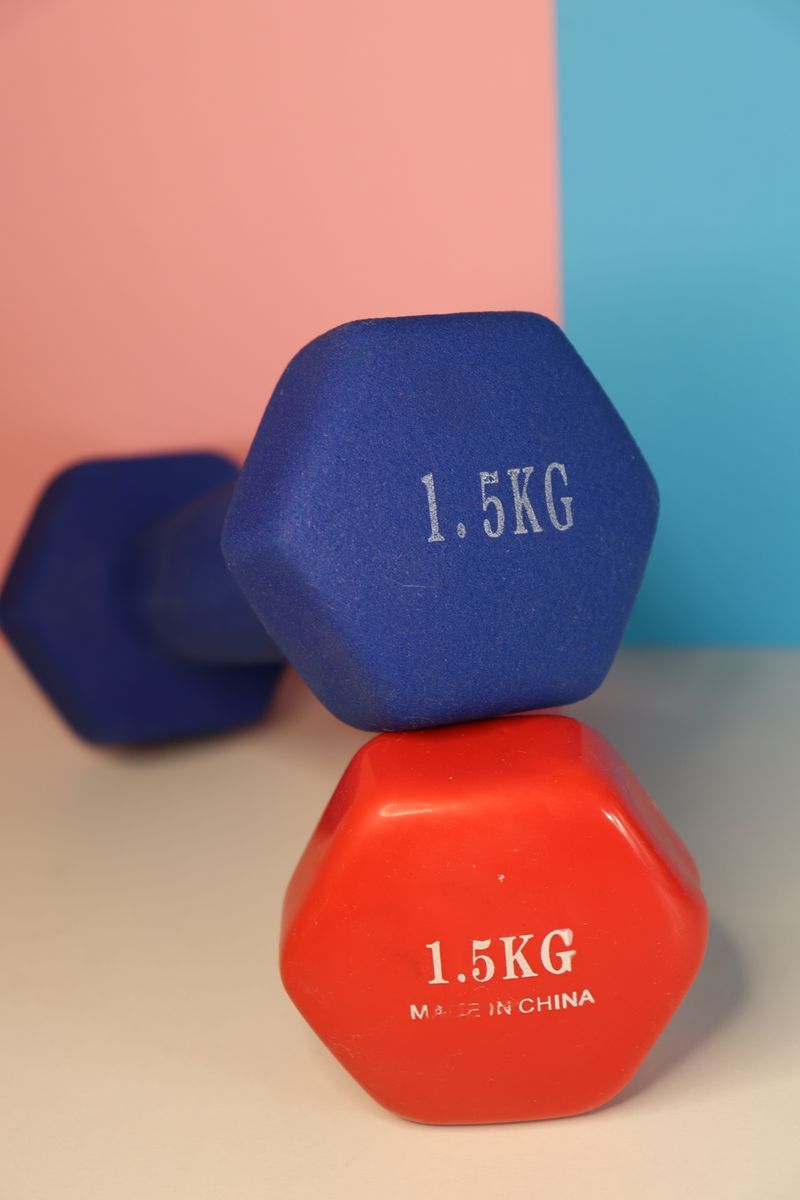
At the $100 level, a real weight set barely exists. What you find for that money is a 40 lb vinyl dumbbell set, sand-filled and awkward, that you outgrow on squats within weeks while it is already too heavy for shoulder work. Bands sidestep that trap because tension scales with how far you stretch them. One set spans light rehab loads to challenging press resistance.
Bands are also the quietest, most apartment-friendly equipment that exists. Nothing drops, nothing clanks, and there is no weight to thud through a floor. For a renter or anyone with sleeping kids in the next room, that alone justifies starting here.
Your first full-body workout
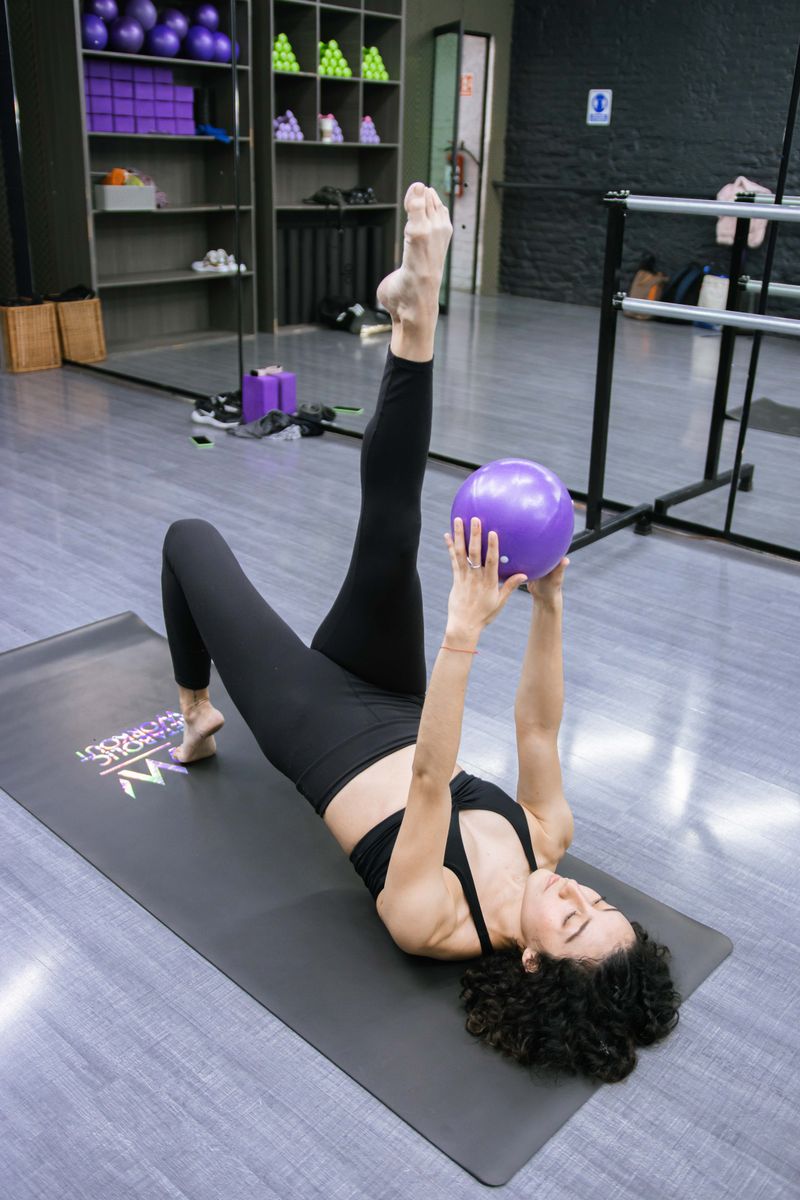
Five movements cover the whole body. Anchor the band in the door where noted. Run this three times a week with a rest day between.
- Band squat: stand on the band, hold the handles at your shoulders, squat. 3 sets of 12.
- Band chest press: anchor behind you, press forward. 3 sets of 12.
- Doorframe pull-up (or band pulldown if you cannot pull yourself up yet): 3 sets to near failure.
- Band row: anchor in front, pull the handles to your ribs. 3 sets of 12.
- Ab wheel rollout (from knees): 3 sets of 8. Keep the back flat, do not sag.
Twenty-five to thirty-five minutes, start to finish. As it gets easy, slow the lowering phase to three seconds and the same band suddenly feels heavier without any new gear.
Where the $100 gym runs out
Bands have a ceiling for lower-body strength. Your legs will eventually push past what even stacked heavy bands provide for squats and deadlifts, and that is the signal to add weight. The limit is not a flaw of the budget tier. It is just the point where the next $100 should go toward adjustable dumbbells.
Until then, progress comes from more reps, slower tempo and shorter rest, not new equipment. A beginner who trains the five movements above consistently for three months will build a base that makes the eventual move to weights far more effective.
Storing it and keeping it cheap
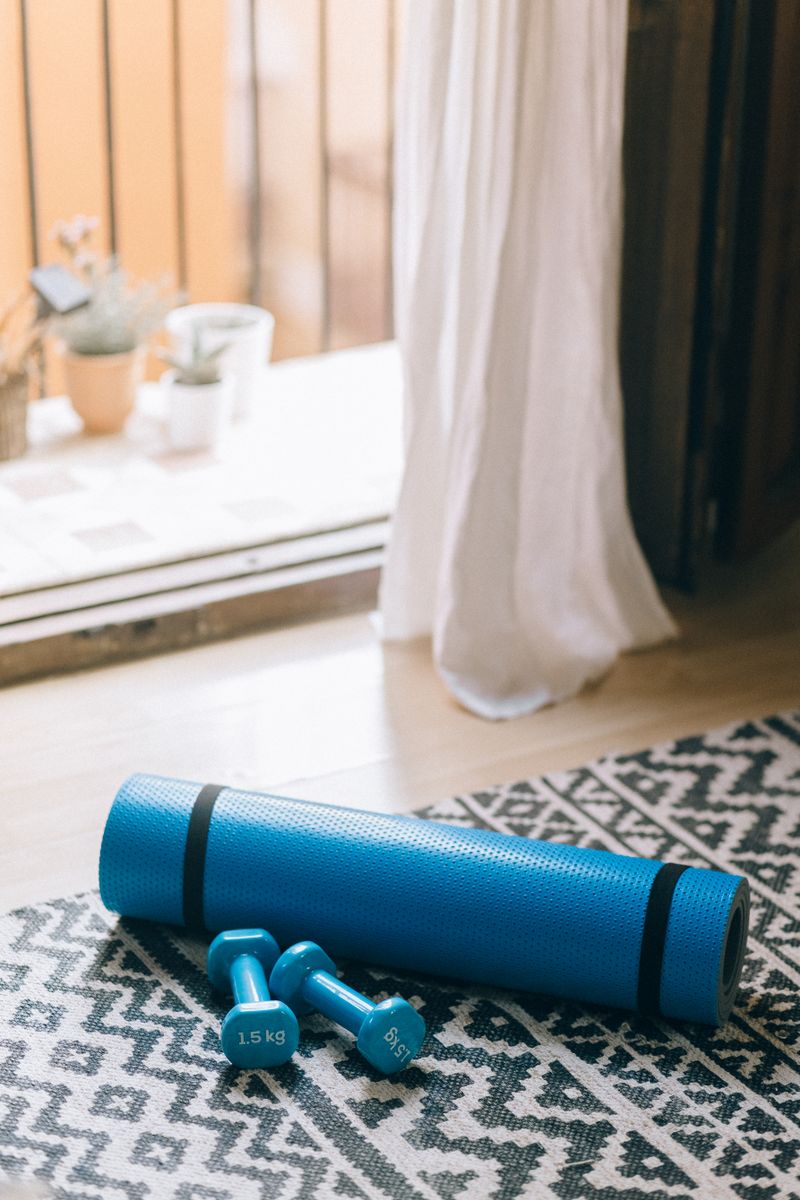
The whole kit fits in a single drawer or a small bin. Bands and the door anchor go in a zip bag, the pull-up bar lifts off and leans in a closet, the mat rolls up, and the ab wheel sits in a corner. There is no rack, no permanent footprint and nothing to dust.
To stretch the budget further, watch for band sets and pull-up bars in the marketplace second-hand, where they sell for half retail and barely wear out. Spend the savings on a second, heavier band set rather than a gadget. A $100 gym done right is the cheapest fitness decision most people will ever make, and it removes every excuse about cost and space at once.
How to keep progressing without spending more
The fear with a $100 gym is that you stall once the bands stop feeling heavy. In practice, bands give you more progression room than people expect, because resistance is about position and tempo, not just band thickness. Shortening your grip on the band raises the tension at every point in the rep. Standing further from the anchor does the same. Stacking two bands together adds load in fine increments that a fixed dumbbell jump cannot match.
Tempo is the other lever. Lowering a band press over four seconds instead of one turns the same band into a much harder set, and pausing for two seconds at the hardest point removes the momentum that makes a rep easy. A beginner can train the same five movements for six months and keep getting stronger purely by adding reps, slowing the lowering phase, shortening rest periods and increasing the number of hard sets per week. Equipment is rarely the limiting factor in the first half-year of training.
Common questions about a $100 gym
Can you build muscle with only bands? Yes, for a beginner and well into the intermediate range. Muscle responds to tension and effort, not to the specific source of resistance. Bands provide both, and the main limit is heavy lower-body strength, where your legs eventually outgrow what bands can supply. Upper body, core and conditioning have a much higher band ceiling.
What if you cannot do a single pull-up? Almost nobody can at first. Loop a resistance band over the doorframe bar, rest one knee in it, and the band carries part of your weight so you can complete reps. As you get stronger, switch to a lighter band, then to negatives, where you start at the top and lower as slowly as you can. That progression builds a real pull-up over a few months with no extra gear.
Is a doorframe bar safe in a rental? The leverage-mount type uses no screws and leaves no marks, so it suits a rental. The catch is that it needs a solid wood frame, not a hollow interior moulding, and it must be tested slowly before you trust it with your full weight. If your frames are flimsy, skip the bar and use band pulldowns through a door anchor instead.
🛠️ Free tools for this topic
No sign-up. They do the calculating and checking for you.
Published by the Gym4Home editorial team. Published October 29, 2026.
Editorial responsibility: see Imprint.
Spotted an error or have something to add? corrections@gym4home.com
Home Gym Tips, Weekly
Equipment picks, workout ideas, and setup guides — for every space and every budget. No fluff, just useful.
🎁 Free bonus: The Home Gym Starter Checklist (PDF)
You might also like
Building a Small-Space Home Gym for Under $500
Five hundred dollars buys a complete strength setup that fits a 6ft corner. The exact gear list, priority order, and real US prices.
How to Set Up a Home Gym in a Corner
A step-by-step plan to build a complete home gym in one corner: measuring, flooring, the anchor bench, weights, wall storage and a movement-friendly layout, with US prices.
Multifunctional Equipment for a Small Home Gym
The best multifunctional gym equipment for small spaces, ranked by footprint and movements covered, with a complete corner-gym build under $500.
📖 All articles on Gym4Home →
Browse our other articles