How to Create a Home Gym Workout Space in Any Room
This article may contain affiliate links. If you make a purchase through these links, we may earn a small commission at no extra cost to you. This helps us keep creating free content.
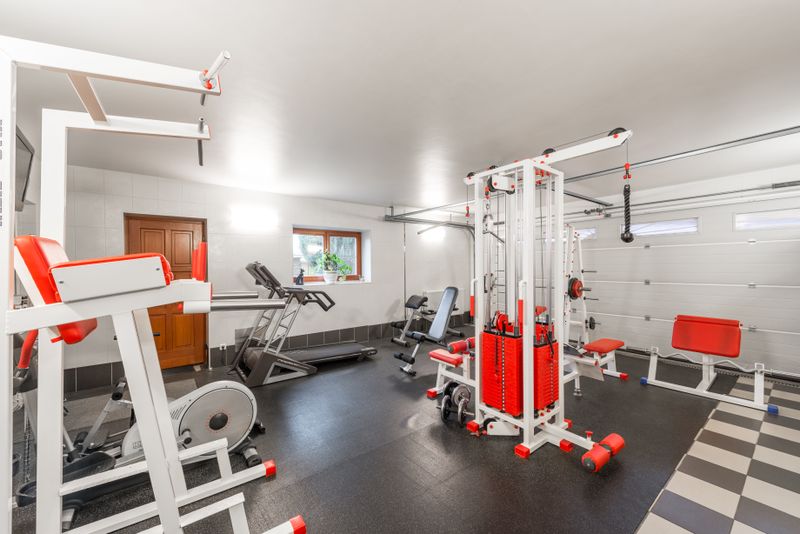
A usable home workout space fits in about 50 square feet, roughly the footprint of two parked bicycles. Most people overestimate how much room they need and never start, when the real job is carving out a defined, protected zone in a corner, a spare room, or a garage bay. The steps below turn an awkward bit of floor into a space you will actually train in.
Step 1: Choose the right corner
Pick the spot before you buy a single piece of gear. The best home gym corner has solid flooring, room to extend your arms overhead and to the sides, and a way to get fresh air. Walk the candidate spots and run through this quick assessment.
- Floor type. Ground-floor concrete handles weight and impact best. Upstairs wooden floors limit you to lighter, drop-free training.
- Overhead clearance. Reach up with a broom handle. You want room for overhead presses, and ideally a doorway or beam for a pull-up bar.
- Wall access. A free wall is useful for a mirror, a band anchor, or storage hooks. Corners give you two.
- Airflow. A window or fan keeps the space usable in summer. A sealed garage corner becomes unbearable fast.
Step 2: Protect the floor and create a zone
Retrospec Solana Thick Exercise Mat (1/2 in)
A thick, non-slip mat makes floor work and stretching comfortable on the joints.
As an Amazon Associate we earn from qualifying purchases.
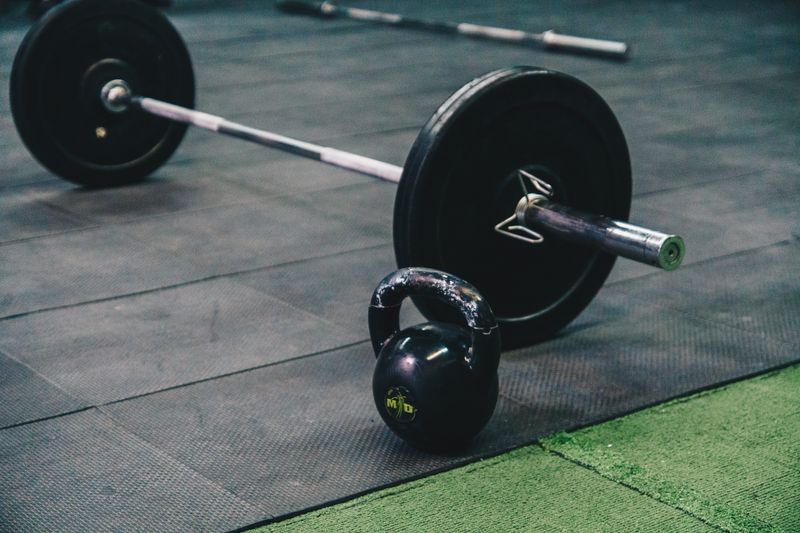
Flooring does two jobs: it protects the surface beneath and it visually marks your training zone. Rubber gym tiles or interlocking foam mats run about $2-4 per square foot and give grip, cushioning, and noise reduction. Even a single 6 by 4 foot mat under your main lifting spot transforms a slippery garage or a carpeted room into a stable platform.
Marking the zone matters psychologically as much as practically. A defined square of flooring signals that this is where training happens, which makes it easier to start and harder to let the area fill with clutter. Keep the boundary clear and treat anything stored inside it as out of place.
Step 3: Fit the essentials into a small footprint
A complete workout space needs surprisingly little, and choosing space-efficient gear is what makes a small room work. The table below shows a setup that covers full-body strength training inside roughly 50 square feet, with rough US prices and the storage trick that keeps each item out of the way.
| Item | Rough price | Space-saving angle |
|---|---|---|
| Adjustable dumbbells | $80-300 | One pair replaces a whole rack |
| Folding adjustable bench | $80-200 | Folds flat against a wall |
| Resistance bands | $15-30 | Hang on a hook, near zero footprint |
| Doorframe pull-up bar | $25-40 | Removes in seconds, no drilling |
| Rubber mat | $50-120 | Defines the zone, stores rolled up |
This collection stows into a single corner when you are done. A pull-up bar lifts out of the doorframe, the bench folds against the wall, and the dumbbells tuck under it. The room goes back to being a room, which is exactly what makes a home space sustainable in shared living areas.
Step 4: Sort lighting, mirror, and atmosphere
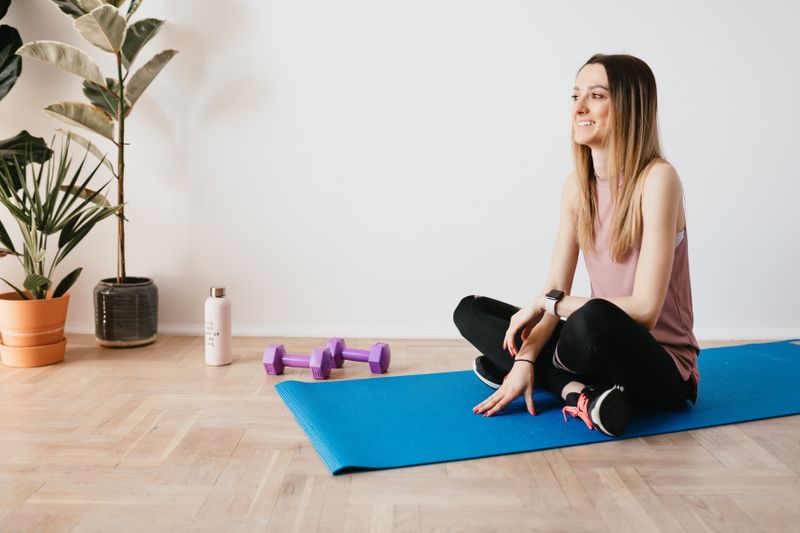
Good light and a mirror upgrade a workout corner more than most gear does. Bright, even lighting lets you see your footing and check alignment, and it quietly makes a dim garage feel like somewhere you want to be. A wall mirror, even an inexpensive door mirror, lets you self-check knee and shoulder position during lifts.
Small touches keep you coming back. A fan for airflow, a speaker for music, and a hook for a towel and water bottle cost little and remove friction. The easier and more pleasant the space is to step into, the less your motivation has to do on a tired evening.
Step 5: Set up storage that resets in seconds
A space you have to rebuild every session is a space you will abandon. The fix is storage that makes resetting fast: wall hooks for bands, a folding bench that snaps flat, and a tray or shelf for the dumbbells. When putting everything away takes under a minute, the area stays clear and the gym stays usable.
Vertical storage is the small-space lifesaver. Hooks, a narrow shelf, or a wall-mounted rack get gear off the floor and free the footprint for movement. In a shared room, this also keeps the space looking tidy enough that nobody else minds it being there.
Adapt the space to your room type
The same gear lives differently in a garage, a spare bedroom, and an apartment corner, so a few room-specific tweaks make each one work. A garage gains the most from climate control, since an uninsulated one swings from freezing to stifling and quietly kills your consistency. A clip-on fan, a small heater, or a window unit keeps it usable year round.
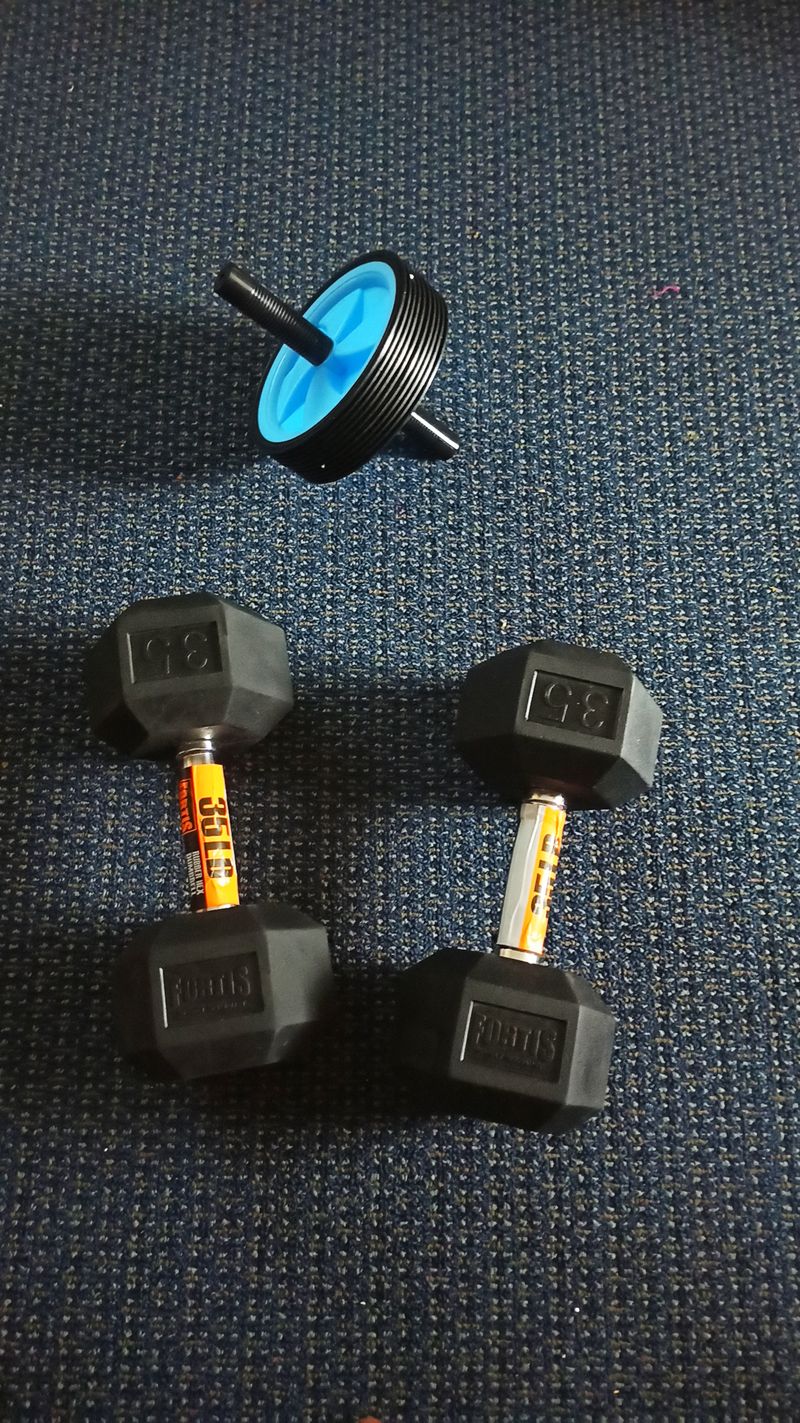
A spare bedroom rewards quiet, tidy gear because the room often doubles as an office or guest space. Adjustable dumbbells and a folding bench keep it looking like a room rather than a gym between sessions. An apartment corner demands the strictest noise and footprint discipline of all, which means thick mats, no dropped weights, and gear that vanishes into a closet.
Whatever the room, the priorities stay the same: stable footing, enough clearance, controllable temperature, and storage that resets fast. Tune those four to your specific space and almost any room becomes a place you can train hard.
Step 6: Make the space match your training
The final step is matching the layout to what you actually do. If your plan is dumbbell strength work, prioritize bench space and clear floor for lunges. If you want some cardio, leave a clear lane for a jump rope or a folding machine. Set the space up around your real routine rather than an imagined one, and revisit the layout after a month once you know how you train.
A home workout space does not need to look like a commercial gym to outperform one for your goals. A protected corner, a few well-chosen pieces, decent light, and fast reset storage beat a sprawling setup that intimidates you into skipping. Build the small version well and it will carry you for years.
How small can a workout space be? A defined area of about 50 square feet handles a full dumbbell strength routine. If you only have a 6 by 6 foot corner, bands, dumbbells, and bodyweight work still cover the essentials.
Will my floor handle the weight? Ground-floor concrete handles almost anything. Upstairs and apartment floors call for thick mats, lighter loads, and no dropping, since both the structure and the noise become a concern above ground level.
Do I need a mirror? A mirror helps you self-check side-to-side alignment and is worth an inexpensive door model. Pair it with side-on phone video for the depth and spine angles a mirror cannot show you.
How do I keep a shared room usable? Choose gear that folds or hangs, store it vertically on hooks and shelves, and keep the reset under a minute. When the space turns back into a normal room quickly, nobody minds it being there.
🛠️ Free tools for this topic
No sign-up. They do the calculating and checking for you.
Published by the Gym4Home editorial team. Published November 11, 2026.
Editorial responsibility: see Imprint.
Spotted an error or have something to add? corrections@gym4home.com
Home Gym Tips, Weekly
Equipment picks, workout ideas, and setup guides — for every space and every budget. No fluff, just useful.
🎁 Free bonus: The Home Gym Starter Checklist (PDF)
You might also like
Home Gym Equipment: What to Buy First (and What to Skip)
A step-by-step buying order for home gym equipment, starting with adjustable dumbbells and a bench, with price ranges and the pieces most people buy too early.
How to Start a Home Gym From Scratch (Step-by-Step for Beginners)
A step-by-step beginner guide to building a home gym from scratch: space, the five items to buy first, noise fixes, a starter routine, and smart upgrades.
Gym-in-a-Bag: Storing Home Equipment in Tight Spaces
How to store a complete home gym in tight spaces using a duffel bag, vertical hooks and under-bed bins, with a two-minute deploy rule.
📖 All articles on Gym4Home →
Browse our other articles