How to Start a Home Gym From Scratch (Step-by-Step for Beginners)
This article may contain affiliate links. If you make a purchase through these links, we may earn a small commission at no extra cost to you. This helps us keep creating free content.
Hinweis: Dieser Artikel ersetzt keine ärztliche Beratung. Besprich Trainingsfragen im Zweifel mit Arzt oder Physiotherapie.
A complete beginner home gym fits in a corner of a spare room and costs $150 to $400 for everything you actually need in the first year. The rest of a commercial gym is equipment you will rarely touch. Starting from scratch is mostly about buying less, not more, and buying it in the right order so each piece earns its space before the next one arrives.
Most people stall because they try to copy a full commercial floor at home, run out of room or money, and quit. The smarter path is a tiny, flexible kit that covers every major movement pattern, then a slow upgrade as your strength and habit grow. This page walks through the whole sequence: the space, the first purchases, the floor and noise problem, a starter routine, and how to expand without waste.
Decide how much space you really have
You need about 6 by 6 feet of clear floor to train safely with bodyweight and bands, and 7 by 8 feet if you add an adjustable bench and dumbbells. Measure the actual usable rectangle, not the whole room, because a bed or desk edge eats the space you thought you had. Stand in the spot and swing your arms out wide and overhead. If you hit a wall or a lampshade, the area is too small for pressing and overhead work.
Ceiling height matters more than people expect. Standing overhead presses with a bar or dumbbells need roughly your height plus 30 inches, so a 7-foot basement ceiling rules out jumping rope and tall presses for anyone over about 5 foot 8. A spare bedroom, a garage bay, a wide hallway, or a covered balcony can all work. The corner of a living room works too if you choose equipment that stores flat against a wall when you are done.
Buy these five things first
Fit Simplify Resistance Bands Set
Five resistance levels in a kit that fits in a drawer, gentle on the joints and ideal to start with.
As an Amazon Associate we earn from qualifying purchases.
Five purchases cover every basic strength movement for a beginner: a thick exercise mat, a set of resistance bands, a pair of adjustable dumbbells, a doorframe pull-up bar, and a sturdy chair or low bench you may already own. Together these let you push, pull, squat, hinge, and carry, which is the entire menu of human movement patterns. You do not need a barbell, a rack, or a machine to get visibly stronger in your first six months.
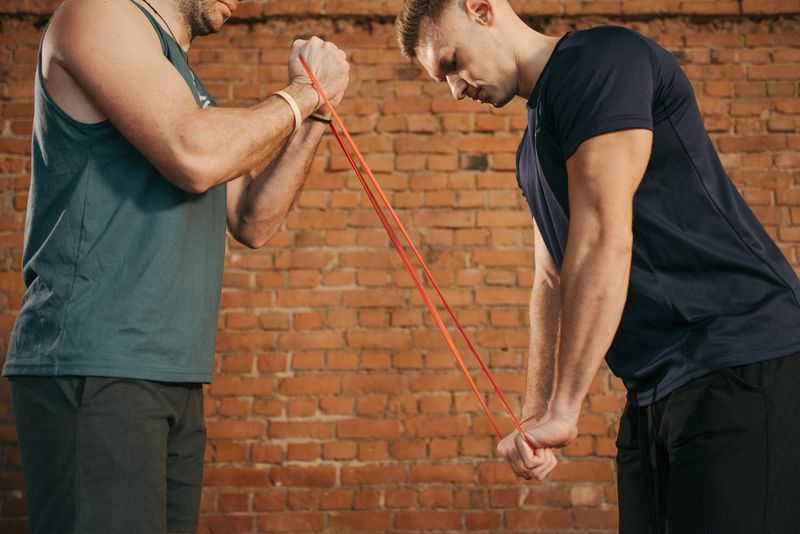
Resistance bands are the highest value item for the money. A loop-band set runs about $15 to $30 and replaces a stack of light dumbbells for rows, pull-aparts, presses, and assisted pull-ups. Adjustable dumbbells cost more, roughly $80 to $150 for a budget dial pair that spans 5 to 25 pounds, but they replace a whole rack of fixed weights and store in the footprint of a shoebox. A doorframe pull-up bar is about $25 to $35 and installs in two minutes with no drilling, using leverage against the frame.
| Item | Approx US price | What it covers | Apartment notes |
|---|---|---|---|
| Exercise mat (half inch) | $20–40 | Floor work, joint cushioning | Quiet, rolls up to store |
| Resistance band set | $15–30 | Rows, presses, assisted pulls | Silent, fits in a drawer |
| Adjustable dumbbells (pair) | $80–150 | Press, curl, squat, row | Set down quietly, small footprint |
| Doorframe pull-up bar | $25–35 | Back and grip strength | No drilling, removable |
| Bench or sturdy chair | $0–90 | Step-ups, presses, dips | A solid dining chair often works |
Solve the floor and noise problem early
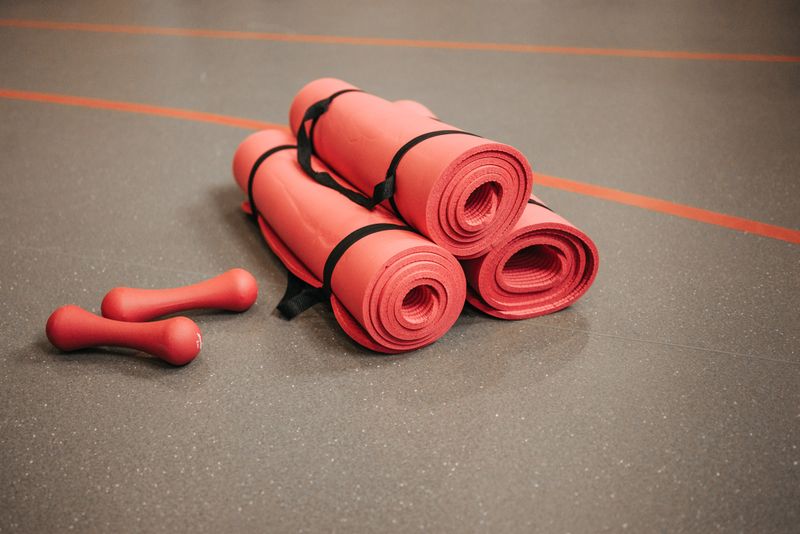
Dropped weights and jumping are the two things that get apartment dwellers into trouble with neighbours below. Solve it before your first session, not after a complaint. A half-inch exercise mat or a couple of interlocking foam tiles under your training spot absorb most of the sound and protect the floor underneath. For dumbbell work, set the weights down with control instead of dropping them, and the noise stays near zero.
Hard flooring also wears on your joints over time during impact work, so skip jumping, burpees, and rope on bare concrete or tile. If you train in a garage, a rubber horse-stall mat from a farm-supply store costs about $40 to $60, covers a 4 by 6 area, and outlasts gym-branded tiles at a fraction of the price. In a bedroom, a thick yoga mat plus carpet is usually enough for the quiet, controlled exercises a beginner should be doing anyway.
Run this simple starter routine
A beginner needs three short full-body sessions a week, not a daily split aimed at advanced lifters. Train every other day so muscles recover, and keep each session to about 30 minutes. The routine below uses only the five starter items and hits push, pull, squat, hinge, and core in one pass. Rest about 60 to 90 seconds between sets.
- Goblet squat: hold one dumbbell at your chest, sit down between your knees, stand tall. 3 sets of 10.
- Band row: anchor a band in the door, pull the handles to your ribs, squeeze the shoulder blades. 3 sets of 12.
- Dumbbell floor press or push-up: press the weights up from a lying position, or do push-ups on the mat. 3 sets of 8 to 10.
- Romanian deadlift: dumbbells in front of your thighs, hinge at the hips, lower to mid-shin, stand up. 3 sets of 10.
- Dead hang or assisted pull-up: hang from the bar, or use a band for help. 3 sets, hold or rep to a steady stop short of failure.
Add a small amount of weight or one extra rep each week once a set feels easy. That slow, steady increase is the entire engine of getting stronger. Write the numbers down so you can see the progress, because a notes app on your phone is the cheapest and most effective piece of home-gym gear you own.
Expand only when a piece earns its place
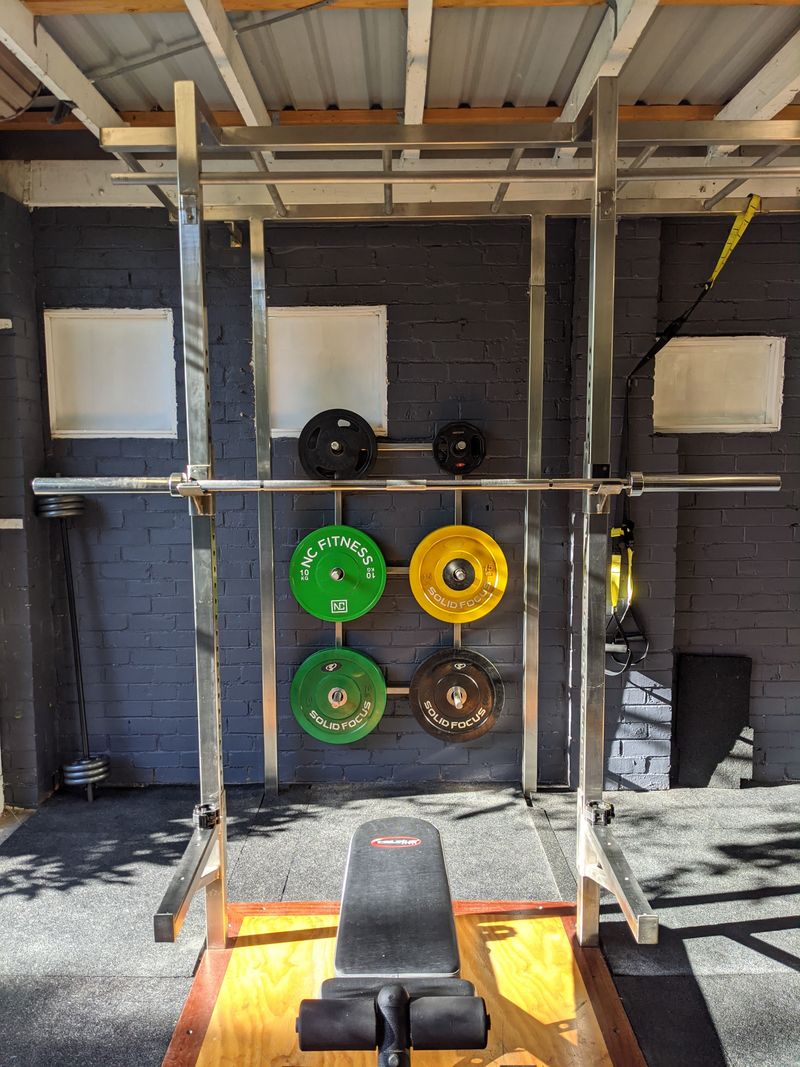
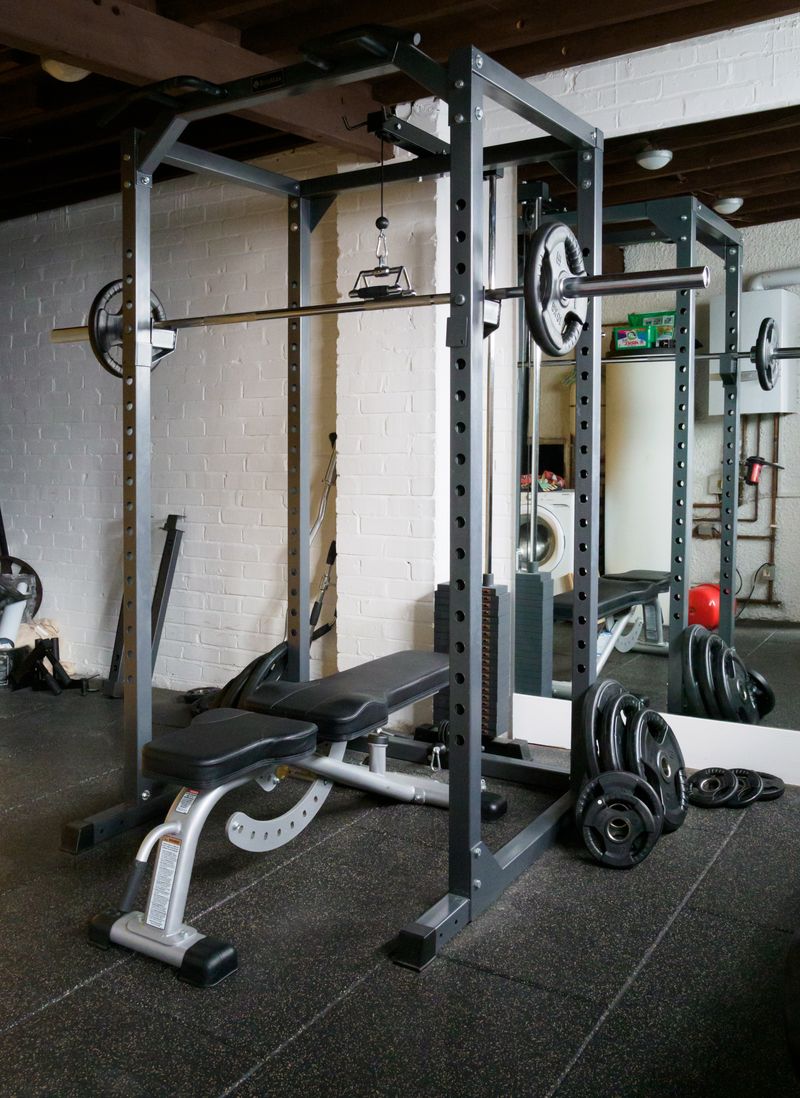
Upgrade when your current kit limits you, not on a schedule. When the band stops feeling heavy on rows, add a heavier band or a barbell. When floor presses get easy, an adjustable bench (about $90 to $180) unlocks proper incline and decline angles. A power tower or a wall-mounted rack makes sense only once you are training four or more days a week and want a barbell, which is usually a year-plus into the habit.
Resist the urge to buy a cardio machine early. A treadmill or rower is the largest, loudest, most expensive item most people buy first and abandon fastest. Walking outside, a $30 jump rope on a proper mat, or a used spin bike covers cardio for a fraction of the space and money. Let the equipment follow the habit, not the other way around.
Set a budget and avoid the common money traps
Split your budget into a small first wave and a larger reserve you only spend once the habit sticks. A sensible plan is $80 to $120 on a mat and bands to start training this week, then $150 to $250 held back for dumbbells, a bar, or a bench after a solid month of sessions. This order protects you from the most expensive beginner mistake, which is buying a full setup that gathers dust because the routine never took hold.
The biggest money traps are predictable. Vibrating belt machines, ab rollers sold on infomercials, and novelty gadgets promise shortcuts and deliver clutter. Fixed-weight dumbbell sets cost more per pound and eat far more floor space than an adjustable pair. A cheap folding treadmill from a big-box store often dies within a year of regular use, so a used commercial-grade machine or no machine at all beats it. Spend on the items you will touch every session and skip anything that markets itself on novelty.
Plan a weekly schedule you can actually keep
The schedule that builds a habit is the one that fits your real week, not an ideal one. Three fixed sessions, say Monday, Wednesday, and Friday, give muscles a recovery day between efforts and leave the weekend open. Attach each session to something you already do, like training right after your morning coffee or before dinner, so the cue is automatic and you stop relying on motivation.
Keep the first month deliberately easy to sustain. Two short sessions a week that you never miss beat four ambitious ones you abandon by week three. Once the habit is automatic, adding a fourth day or lengthening the sessions is simple. Track every workout in a notes app, since seeing an unbroken streak is a stronger motivator than any piece of equipment, and the record tells you exactly when to add weight or reps.
Keep your equipment safe and lasting
A few minutes of care doubles the life of cheap gear. Wipe sweat off dumbbells, mats, and bands after each session, because salt corrodes metal and degrades rubber over time. Store resistance bands away from direct sunlight and heat, since UV and high temperatures make the rubber brittle and snap-prone within a year. Check the bolts on a pull-up bar, bench, or rack every few weeks and tighten anything that has worked loose.
Safety also means training within your limits while you build the movement skill. Learn each exercise with light weight or just bodyweight before you load it heavy, and stop a set the moment your form breaks down rather than grinding out an ugly last rep. If you train alone with a barbell, set the safety pins on a rack or stick to dumbbells you can drop to your sides, so a missed rep never traps you under a load. Slow, clean progress keeps you training for years, which is the only thing that actually moves the needle.
Frequently asked questions
How much does a beginner home gym cost?
A functional starter kit runs about $150 to $400 for a mat, bands, adjustable dumbbells, a pull-up bar, and a bench. You can start for under $80 with just a mat and bands and add the rest over a few months as your budget allows.
Do I need a barbell and rack to get strong?
No. For your first six to twelve months, adjustable dumbbells and bands drive plenty of strength gain. A barbell and rack become worthwhile once dumbbell loads cap out and you are training consistently four or more days a week.
How much space does a home gym actually need?
About 6 by 6 feet of clear floor covers bodyweight and band work. Add a bench and dumbbells and you want roughly 7 by 8 feet. Check that your ceiling clears your height plus about 30 inches for overhead movements.
How do I keep it quiet in an apartment?
Train on a half-inch mat or foam tiles, set dumbbells down with control instead of dropping them, and skip jumping on hard floors. Bands and controlled dumbbell work are close to silent, so most apartment training disturbs no one.
How often should a beginner train?
Three full-body sessions a week on alternating days is the sweet spot. It gives muscles time to recover, fits a busy schedule, and progresses faster for a beginner than daily training that leaves you sore and skipping sessions.
What should I buy first if I only have $50?
A resistance band set and a decent mat. That covers rows, presses, squats, and floor work silently in a tiny footprint, and it costs about $35 to $50 together. Add dumbbells and a pull-up bar next as funds allow.
Can I build a home gym in a small apartment?
Yes, and a corner of about 6 by 6 feet is enough. Bands, adjustable dumbbells, a mat, and a doorframe pull-up bar all store away in a closet or drawer, so the room keeps its everyday use. Keep the work controlled and quiet and the setup disturbs no neighbours.
Is it better to buy everything at once or build up slowly?
Build up slowly. Start with a mat and bands so you train this week, then add dumbbells, a bench, or a bar after a month of consistent sessions. This protects you from spending several hundred dollars on a full setup before you know the habit will stick.
How long until I see results?
Most beginners notice strength and energy gains within four to six weeks of three sessions a week, with visible changes following over a few months. Progress depends far more on showing up consistently and adding a little weight or a rep over time than on which equipment you own.
🛠️ Free tools for this topic
No sign-up. They do the calculating and checking for you.
Published by the Gym4Home editorial team. Published June 8, 2026. Updated October 4, 2026.
Editorial responsibility: see Imprint.
Spotted an error or have something to add? corrections@gym4home.com
Home Gym Tips, Weekly
Equipment picks, workout ideas, and setup guides — for every space and every budget. No fluff, just useful.
🎁 Free bonus: The Home Gym Starter Checklist (PDF)
You might also like
Soreness After a Workout: What Is Normal and What Isn't
How to tell normal post-workout muscle soreness (DOMS) from a real warning sign, plus what actually helps you recover.
Home Gym Equipment: What to Buy First (and What to Skip)
A step-by-step buying order for home gym equipment, starting with adjustable dumbbells and a bench, with price ranges and the pieces most people buy too early.
Foam Roller Guide: Types, Density and How to Use One
A practical foam roller guide covering density, length and texture, how to pick your first roller, and a step-by-step routine for the main muscle groups.
📖 All articles on Gym4Home →
Browse our other articles