Quiet Home Gym for Apartments: A Complete No-Noise Setup Guide
This article may contain affiliate links. If you make a purchase through these links, we may earn a small commission at no extra cost to you. This helps us keep creating free content.
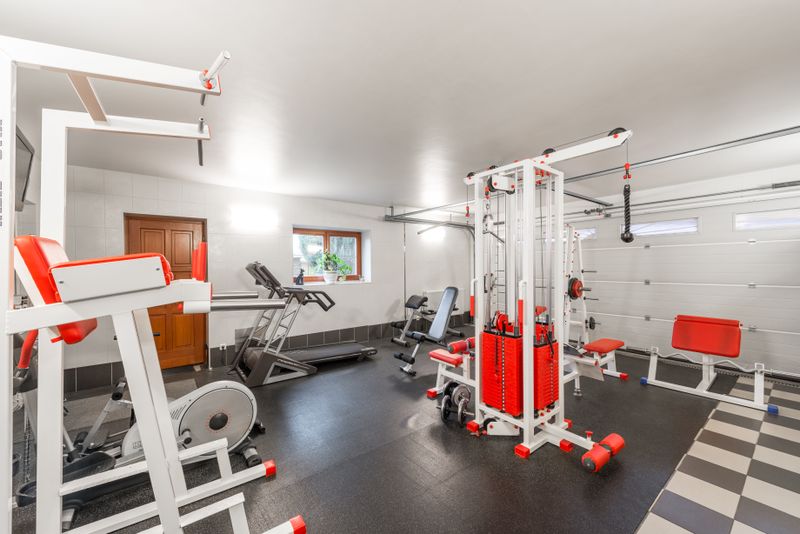
A dropped 45-pound dumbbell on a hardwood floor registers around 90 decibels at the source, roughly the level of a lawnmower. In an apartment, that sound travels straight through the floor to the unit below. The good news is that a quiet, neighbor-friendly home gym is mostly a matter of equipment choice and floor protection, not square footage or money. This guide walks through every layer of a silent setup, from the slab under your feet to the machines that make zero impact noise.
Noise in an apartment gym comes from two separate sources, and they need two separate fixes. Impact noise is the thud of weight hitting the floor or your feet landing during a jump. Airborne noise is the whir of a fan, the clank of a cable stack, or the hum of a motor. Most people only think about the thud, then get a complaint about a treadmill motor humming through the wall at 6 a.m. Plan for both.
Everything below assumes a rental where you cannot bolt anything into structure or pour new flooring. Each recommendation works on top of existing floors and comes apart when you move.
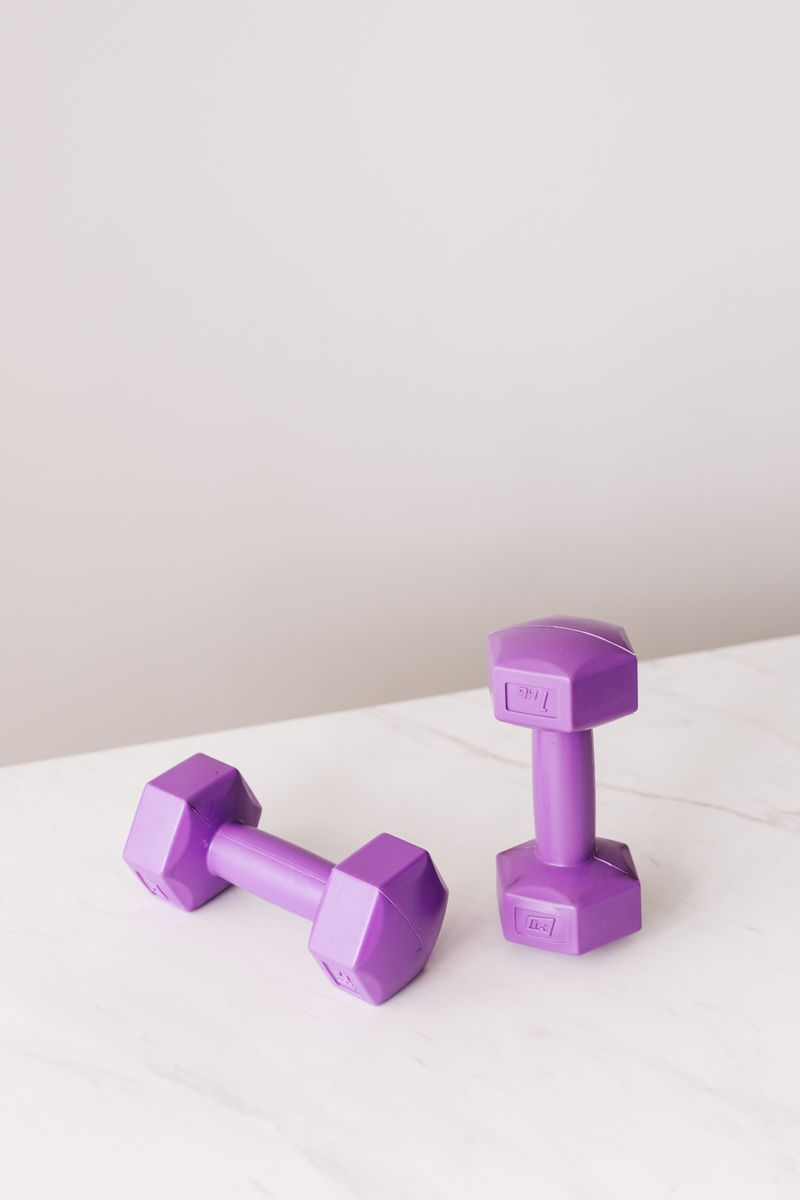
Start with the floor: the biggest noise fix
Floor protection does more for noise than any single piece of equipment. A bare slab transmits impact directly to the structure; a layered floor absorbs it before it spreads. The standard apartment stack is a horse-stall mat on top of interlocking foam tiles, and it cuts impact noise dramatically while protecting the floor underneath from dents.
Rubber horse-stall mats are the workhorse of home gyms because they are cheap and dense. A 4x6-foot mat is about three-quarters of an inch thick, weighs roughly 95 pounds, and costs $40 to $60 at a farm-supply store. That density is exactly what deadens a dropped weight. Under the mat, half-inch EVA foam tiles add a second decoupling layer and stop vibration from reaching the subfloor.
| Flooring layer | Thickness | Approx. US price | What it does |
|---|---|---|---|
| EVA foam tiles (base) | 0.5 in | $2–4 per sq ft | Decouples from subfloor, absorbs vibration |
| Horse-stall rubber mat (top) | 0.75 in | $40–60 per 4x6 mat | Deadens impact, protects floor, stable base |
| Drop pad (optional, lifting zone) | 2–3 in | $60–120 | Absorbs heavy barbell drops in one spot |
If you lift a barbell, add a dedicated drop zone. A two-inch crash pad or a stack of two stall mats in the spot where the bar lands turns a sharp bang into a dull thump. Better still, train in a way that does not require dropping the bar at all, which the equipment section below makes easy.
Choose equipment that is quiet by design
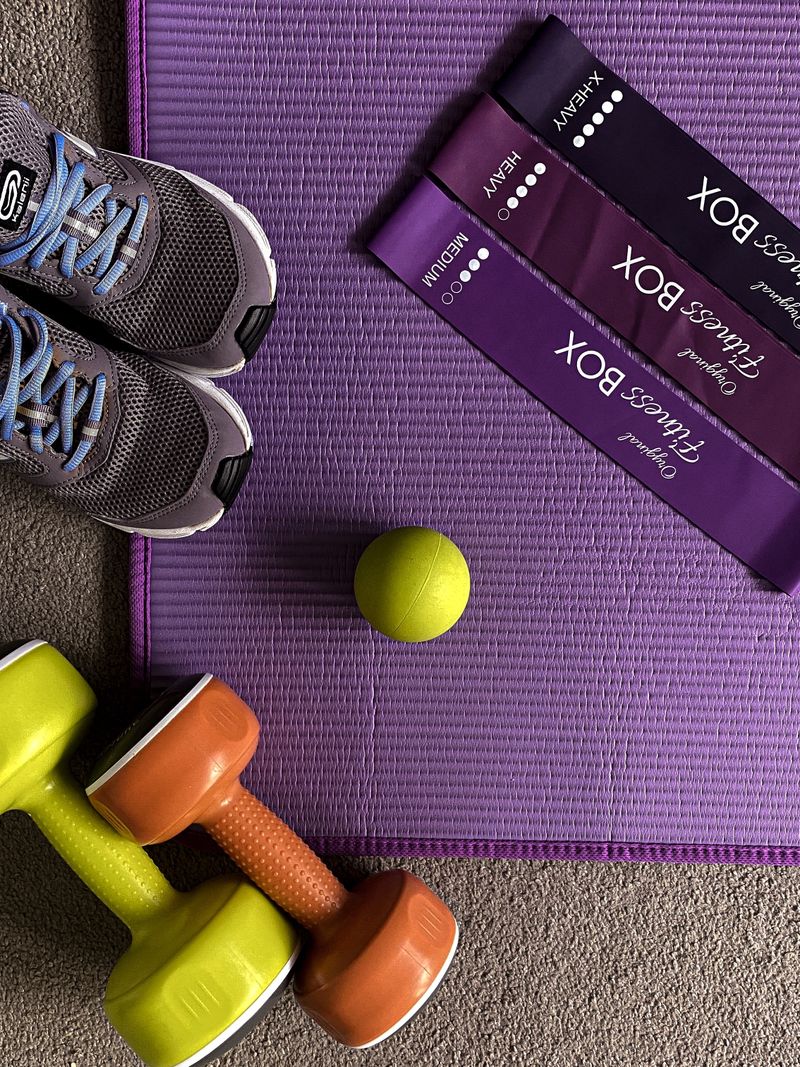
Fit Simplify Resistance Bands Set
Five resistance levels in a kit that fits in a drawer, gentle on the joints and ideal to start with.
As an Amazon Associate we earn from qualifying purchases.
The quietest gym is built from equipment that never produces an impact in the first place. Adjustable dumbbells, resistance machines with weight stacks on guide rods, and band-based trainers all load and unload muscle without anything striking the floor. Swap the noisy categories out before you try to soundproof them.
Adjustable dumbbells replace a whole rack and stay quiet if you set them down rather than drop them. Spin-dial models like the Bowflex SelectTech 552 cover 5 to 52.5 pounds per hand and run about $300 to $430 a pair. The PowerBlock Elite is more compact and arguably more durable for the money at $300 to $350. Both let you set the weight down softly because the plates are captured in a housing, not loose iron.
For pressing and squatting without a barbell, a single adjustable kettlebell or a pair of dumbbells covers most needs. If you want a barbell, load it with control: press and squat from a rack and lower the bar under control rather than dropping it. A folding squat rack with safety arms set just above the bottom of your squat lets you bail onto the arms quietly instead of dumping the bar.
Cardio without the motor hum or the foot strikes
Treadmills are the worst offender in an apartment because they combine a humming motor, a vibrating deck, and the repeated impact of your feet. If you can, pick a cardio machine that has neither a loud motor nor floor impact. Magnetic-resistance equipment is nearly silent and needs no power for resistance.
A magnetic rowing machine or a magnetic spin bike produces almost no noise beyond the whoosh of your own breathing. Magnetic rowers like the Sunny Health SF-RW5713 run $200 to $300 and fold to stand against a wall. A magnetic upright or recumbent bike in the $250 to $500 range is whisper-quiet and ideal for early mornings. Avoid air-resistance bikes and fans: the flywheel roar on those is loud and travels through walls.
| Cardio option | Noise profile | Approx. US price | Apartment verdict |
|---|---|---|---|
| Magnetic rower | Very quiet, folds up | $200–300 | Best all-round pick |
| Magnetic spin/recumbent bike | Whisper-quiet, low impact | $250–500 | Excellent for early mornings |
| Under-desk / walking pad | Low motor hum, soft steps | $150–350 | Good if you walk, not run |
| Air bike / fan bike | Loud flywheel roar | $400–800 | Avoid in apartments |
| Folding treadmill | Motor hum + foot impact | $400–900 | Last resort, needs heavy mats |
If you walk rather than run, a slim walking pad under a standing desk is a reasonable compromise. The motor hum is modest and walking impact is light, but still set it on stall mats and keep the speed under 3 mph during quiet hours. Skip running on any treadmill in a unit with people below you, no matter how good the mats are.
A complete no-noise setup in 50 square feet
Fifty square feet, roughly a 7x7-foot corner, holds a complete quiet gym. The layout matters: put the lifting zone over the thickest floor protection and keep the cardio machine on its own mat so its vibration does not couple into the platform. Here is a build that covers strength and cardio for around $900 to $1,200 total.
- Floor: Two horse-stall mats over half-inch foam tiles in the working corner ($150–200).
- Strength: One pair of metal adjustable dumbbells, 5–52.5 lb ($300–430).
- Bench: A folding adjustable bench that stores flat against the wall ($120–200).
- Bands: A set of loop bands plus a doorway anchor for pulls and rows ($25–40).
- Cardio: A folding magnetic rower or bike ($200–500).
This kit trains every major movement pattern: press and row with the dumbbells and bands, squat and hinge with the dumbbells and bench, and pull with the bands and a doorframe bar. The rower fills the cardio gap. Nothing in it makes an impact sound louder than setting a heavy book on a table, which is the whole point.
Train at quiet hours without a single complaint
Technique controls noise as much as equipment does. Lower every weight under control instead of letting it drop the last few inches, and your floor barely registers the set. The habit that ruins apartment peace is the casual clang of setting weights down hard between sets, repeated forty times a workout.
Avoid plyometrics and jump-based movements during early mornings and late evenings. Box jumps, jump rope, burpees, and jumping jacks all create sharp impacts that mats only partly absorb. Substitute low-impact alternatives: step-ups in place of box jumps, fast bodyweight squats in place of jump squats, and a rower or bike interval in place of jump rope. You keep the conditioning and lose the thud.
Time your loudest work for daytime hours when neighbors are awake and ambient building noise masks it. Save the quietest sessions, band work and steady-state cardio, for early mornings. A quick note to your downstairs neighbor introducing yourself and asking them to flag any issue goes a long way; most complaints come from people who were never given a chance to mention a problem early.
Foldable and storable: keeping the gym invisible
In a shared apartment, a gym that disappears keeps the peace with roommates and partners as much as soundproofing keeps the peace with neighbors. Every item in the 50-square-foot build folds or stacks. The bench folds flat, the rower stands on end, the dumbbells tuck under the bench, and the bands go in a drawer.
Look for specific storage features when buying. A bench that folds to under 12 inches deep slides behind a door. A rower with a folding rail and transport wheels rolls into a closet. Adjustable dumbbells with a compact cradle take the footprint of a single milk crate instead of a full rack. These features cost little extra and make the difference between a dedicated gym room and a corner that converts back to living space in two minutes.
Wall-mounted storage helps if your lease allows a few small anchors. A vertical band rack and two sturdy hooks for a folded mat clear the floor entirely. If you cannot drill, a slim freestanding storage tower holds bands, a foam roller, and small accessories against the wall without touching it.
Common mistakes that cause complaints
Most noise complaints in apartment gyms trace back to a handful of avoidable errors, and fixing them costs little. The first is flooring only the visible area while leaving the equipment feet on bare floor. A treadmill or bike standing on hard floor transmits vibration even when the rest of the room is matted, so the machine itself must sit on rubber.
The second common error is buying equipment before testing noise. A machine that seems quiet in a showroom can hum loudly through a shared wall once it runs for twenty minutes at home. Where possible, choose magnetic-resistance gear with a published low-noise rating, and place any motorized machine against an interior wall rather than the wall you share with a neighbor.
The third is training at the wrong hours. The same workout that no one notices at 2 p.m. draws a complaint at 6 a.m. when the building is silent and ambient noise is gone. Keep impact work and any machine with a motor to daytime hours, and reserve early mornings for bands, stretching, and bodyweight movements that make no sound at all. A small adjustment to timing solves more complaints than any amount of extra matting.
Frequently asked questions
Will horse-stall mats really stop my downstairs neighbor from hearing me?
They drastically reduce impact noise but do not make a gym silent. A stall-mat-over-foam stack absorbs most of the thud from setting weights down and from light footwork. It will not fully mask a barbell dropped from overhead or someone running on a treadmill, which is why the quiet setup avoids both. For controlled dumbbell and band work, the layered floor is usually enough that neighbors hear nothing.
Are resistance bands strong enough to replace heavy weights?
For most home-gym goals, yes, especially when paired with adjustable dumbbells. Stacked loop bands provide 100-plus pounds of resistance on pulls and presses, and band tension increases through the range of motion, which challenges muscles differently than iron. Bands fall short only for very heavy lower-body work like loaded squats, where a pair of 50-pound dumbbells fills the gap. The two tools together cover nearly everyone who is not training for a powerlifting meet.
What is the quietest cardio machine for an apartment?
A magnetic rowing machine. It has no motor, no flywheel roar, and no foot impact, so the only sound is the seat sliding and your breathing. A magnetic recumbent or upright bike comes a close second. Both fold for storage and cost $200 to $500. Avoid air bikes and any treadmill if you have neighbors below you.
Can I lift a barbell in an apartment at all?
You can, as long as you never drop it. Use a folding rack with safety arms set just above your bottom position so you can bail the bar onto the arms quietly if a rep fails. Lower the bar under control on every rep and keep a crash pad in the landing zone. Many apartment lifters skip the barbell entirely and use adjustable dumbbells, which deliver similar results with far less risk of a noise complaint.
How much should a complete quiet apartment gym cost?
A full strength-and-cardio setup runs about $900 to $1,200: floor protection ($150–200), adjustable dumbbells ($300–430), a folding bench ($120–200), bands ($25–40), and a folding magnetic cardio machine ($200–500). You can start for under $400 with mats, one pair of adjustable dumbbells, and a band set, then add cardio and a bench later.
🛠️ Free tools for this topic
No sign-up. They do the calculating and checking for you.
Published by the Gym4Home editorial team. Published June 11, 2026. Updated October 4, 2026.
Editorial responsibility: see Imprint.
Spotted an error or have something to add? corrections@gym4home.com
Home Gym Tips, Weekly
Equipment picks, workout ideas, and setup guides — for every space and every budget. No fluff, just useful.
🎁 Free bonus: The Home Gym Starter Checklist (PDF)
You might also like
Multifunctional Equipment for a Small Home Gym
The best multifunctional gym equipment for small spaces, ranked by footprint and movements covered, with a complete corner-gym build under $500.
A Quiet 20-Minute Apartment Gym Morning Routine
A 20-minute quiet strength circuit you can do at 6am in an apartment without waking the neighbors below. Full routine and how to do each move.
Jumping Rope in an Apartment Without Annoying the Neighbors
Jump rope in an apartment without complaints. Why impact noise travels through the floor, how to build a quiet stacked surface, and the technique that keeps you silent.
📖 All articles on Gym4Home →
Browse our other articles