Apartment Gym Under $200: The Complete Small-Space Kit
This article may contain affiliate links. If you make a purchase through these links, we may earn a small commission at no extra cost to you. This helps us keep creating free content.
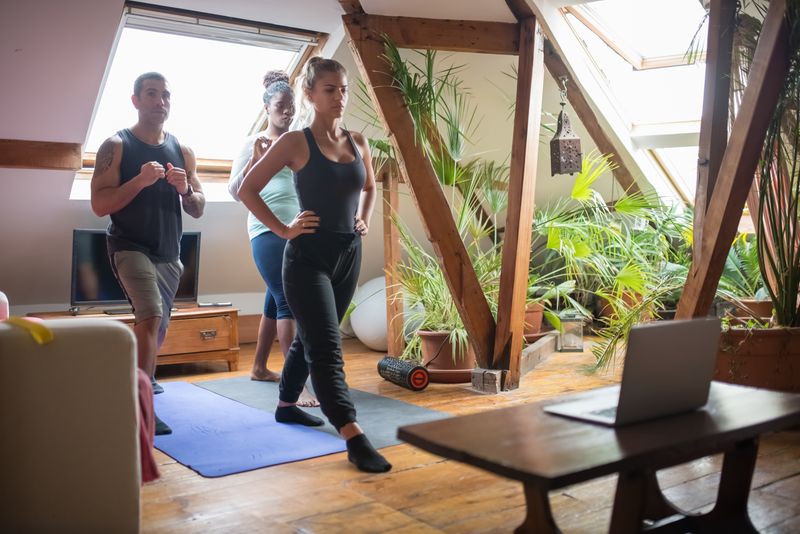
A complete apartment gym fits on a single closet shelf and costs under $200 if you buy by movement pattern instead of by machine. The trap most renters fall into is buying one bulky item, like a $200 bench or a flimsy folding treadmill, that eats the budget and the floor space while covering only one type of training. A smarter $200 covers pushing, pulling, hinging, squatting and carrying with gear that stacks into a corner.
The math works because resistance bands, light adjustable dumbbells, a doorframe pull-up bar and a mat together cover most of what a beginner or returning lifter needs for the first year. Heavy barbells and racks are a later purchase, and the wrong one for a third-floor walk-up with downstairs neighbours.
What $200 actually buys
Spread across five small purchases, $200 buys broad coverage rather than one heavy item. Prices below are approximate US retail and shift with sales, so treat them as planning figures.

| Item | Approx. price | Covers |
|---|---|---|
| Resistance band set (5 loops + handles) | $25–40 | Press, row, curl, pull-apart |
| Doorframe pull-up bar | $25–35 | Pull-ups, hanging, rows |
| Adjustable dumbbell pair (to 25 lb each) | $80–110 | Squat, press, hinge, carry |
| Exercise mat (6mm+) | $20–30 | Floor work, joint cushioning |
| Suspension trainer (optional) | $25–40 | Bodyweight rows, core |
If money is tight, drop the suspension trainer first. The bands cover most of the same pulling work, and you can add the trainer once a paycheque allows. The adjustable dumbbells are the one place not to cheap out, because knockoffs with loose collars rattle and slip under load.
Why bands and dumbbells beat a single machine
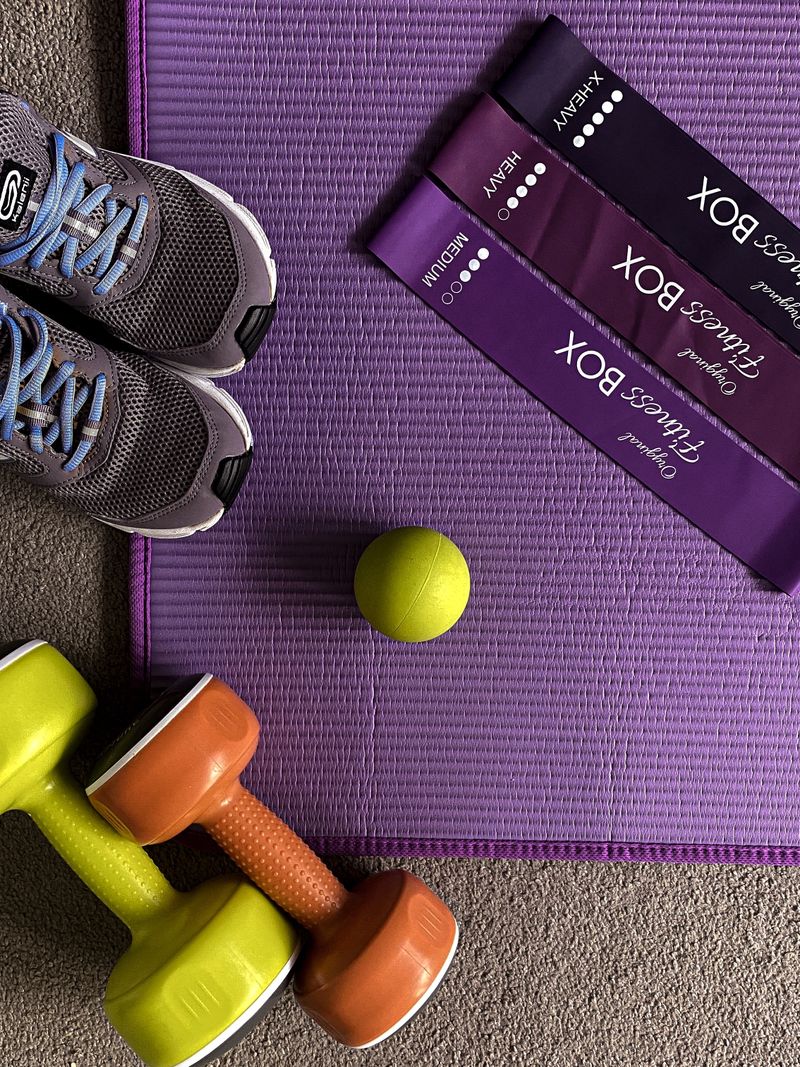
Fit Simplify Resistance Bands Set
Five resistance levels in a kit that fits in a drawer, gentle on the joints and ideal to start with.
As an Amazon Associate we earn from qualifying purchases.
A $200 folding treadmill or a single-station home gym looks like better value on paper because it is one big object for your money. In a small apartment that logic reverses. One machine trains one or two patterns, takes a permanent footprint, and is loud enough to annoy the people below you. The modular kit trains every major pattern and disappears into a corner between sessions.
Bands also soften the joint problem that worries a lot of returning lifters. Resistance is lowest at the start of a rep and highest at the end, which is gentler on cranky shoulders and knees than a fixed weight that hits hardest at the bottom. That does not make bands magic, but it does make them forgiving while you rebuild strength.
A sample full-body session
You do not need a different exercise for every muscle. Five compound movements hit nearly everything. Run this twice a week to start, with at least one rest day between sessions.
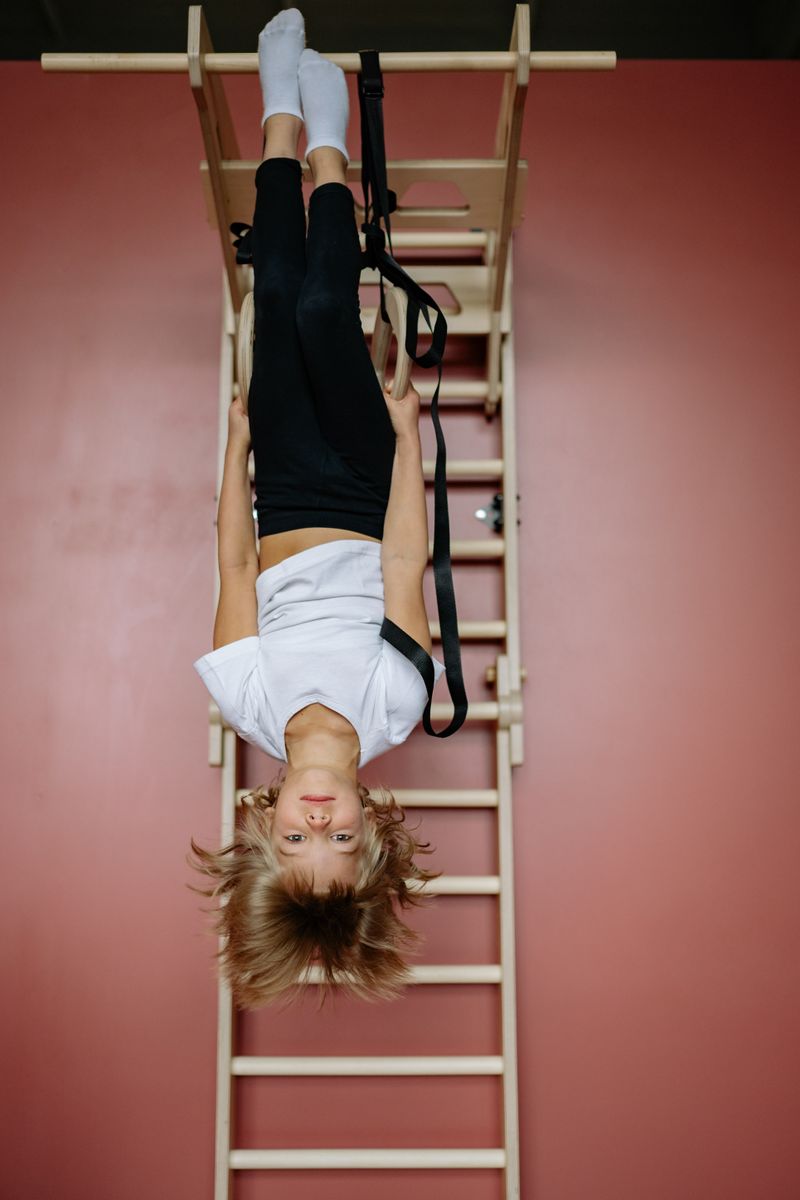
- Goblet squat (dumbbell at chest): 3 sets of 10. Sit back, keep heels down.
- Floor press or band press: 3 sets of 10. Control the lowering, do not bounce.
- Doorframe pull-up or band pulldown: 3 sets to near failure. Assist with your legs on a chair if needed.
- Romanian deadlift (dumbbells): 3 sets of 10. Soft knees, push hips back, feel the hamstrings.
- Suitcase carry (one dumbbell, walk the hallway): 3 trips per side. Builds grip and core.
The whole session runs 30 to 40 minutes. Add a band pull-apart or two between sets if you sit at a desk all day and your upper back needs the work.
Keeping the neighbours happy
Noise complaints end more home-gym plans than money does. Dropped dumbbells, jumping and a treadmill motor all travel straight through a floor. The under-$200 kit is quiet by design, but a few habits keep it that way. Lower weights to the mat instead of dropping them. Swap jumping jacks for band work or step-backs. Train during daytime hours when ambient building noise is already higher.
A thick mat does double duty here. The 6mm cushioning protects your joints during floor work and muffles the thud of a dumbbell set down between reps. For a lighter wallet, two layers of cheap foam tiles work nearly as well.
What to add once the budget allows
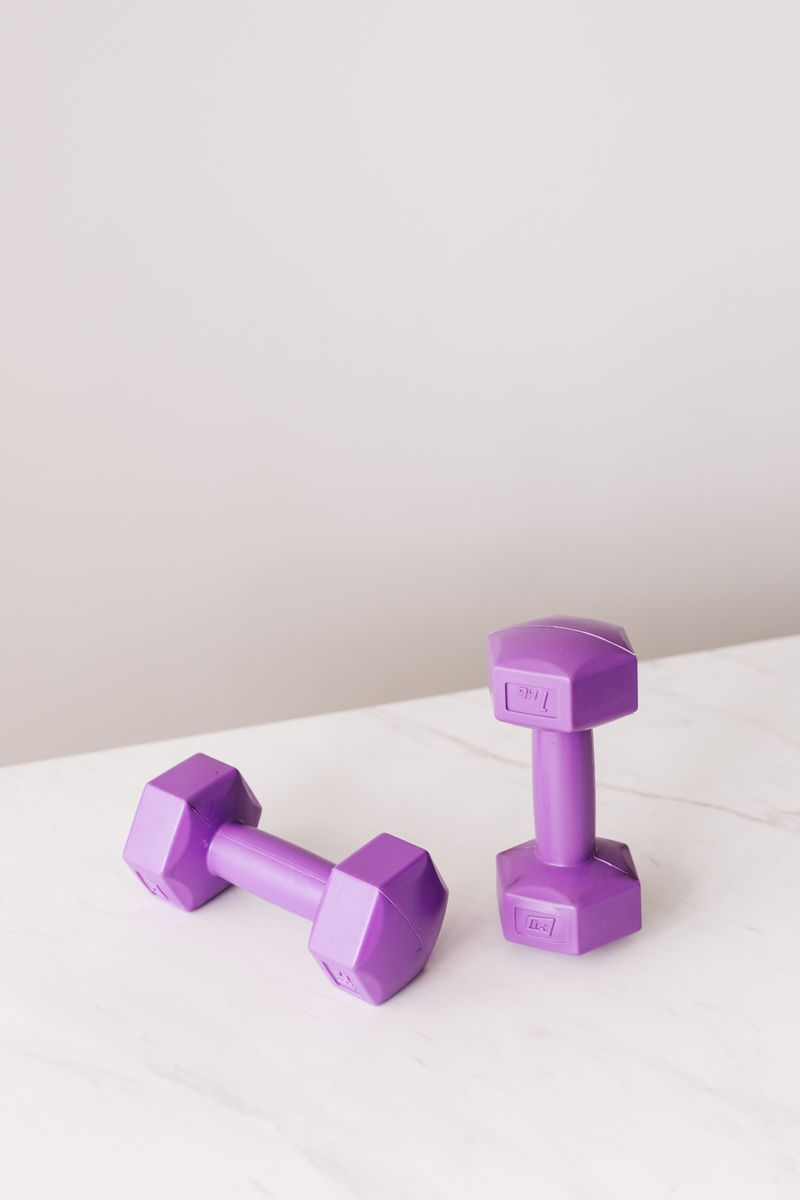
After the core kit, the next $100 has a clear priority order. A heavier adjustable dumbbell set, taking you up to 40 or 50 lb per hand, unlocks more progress on squats and rows. A flat-incline bench comes next and makes pressing far more comfortable than the floor. An ab wheel is a cheap, brutal core addition that stores in a drawer.
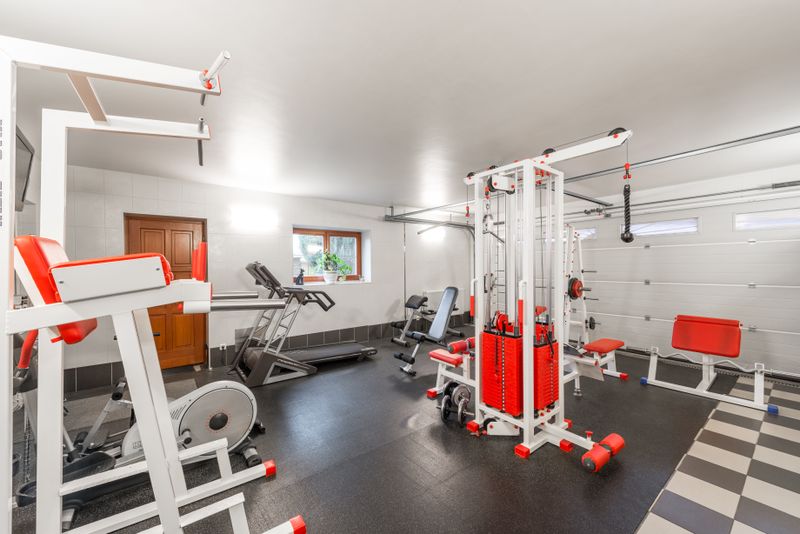
Skip the cable machines, mirrored wall stations and vibration plates that fill marketplace listings. They are space-hungry, single-purpose and rarely worth the footprint in an apartment. Spend on free weights and bands that scale with you, and your gym grows without ever taking over the room.
The one-shelf storage plan
Everything in the core kit stores on one closet shelf or in a single under-bed bin. Bands roll into a shoe box. The pull-up bar lifts off its frame and leans in a corner. Adjustable dumbbells sit on the closet floor. The mat rolls and stands on end. Set-up to first rep takes under two minutes, which matters more than it sounds. The faster a gym deploys, the more often you actually use it.
A $200 apartment gym is not a compromise version of a real gym. For a beginner or a returning lifter in a small space, it is the correct first purchase, and it will carry you well past the point where most people quit.
Where to spend and where to save
The band set and the adjustable dumbbells are the two purchases that decide whether this gym lasts a year or breaks in a month. On bands, pay for replaceable handles and a metal-clip carabiner system rather than fixed rubber tubes moulded to plastic grips. The cheap moulded sets tear at the handle exactly where the stress concentrates, and you cannot replace just the damaged tube. A $35 modular set outlives three rounds of the $15 version.
On dumbbells, the failure point is the collar. Spin-lock adjustable dumbbells let plates work loose mid-set on a press, which is how a plate slides off over your face. A dial or pin-selector mechanism locks the weight positively and changes in seconds, which matters in a tight space where you do not want loose plates rolling under furniture. The mat, the pull-up bar and the suspension trainer are commodities where the cheapest reputable option is fine.
You can shave $40 to $60 off the whole kit by buying the dumbbells and pull-up bar used. Both turn up constantly on local marketplaces because people overestimate how much they will train at home and resell within the year. A barely-used dumbbell pair often sells at two-thirds of retail. Inspect the selector through its full range in person, confirm it locks cleanly at every setting, and you are buying a simple mechanical item with almost nothing to go wrong.
The single biggest waste is buying a cardio machine first. A folding treadmill or a compact bike eats the entire $200, takes a permanent footprint even folded, and trains one thing. In a small apartment, a $10 jump rope plus a brisk circuit of the strength moves above raises your heart rate without surrendering a square foot to a machine you may stop using by spring.
The second mistake is over-buying accessories before the core gear is in place. Gloves, a branded water bottle, lifting straps and a fitness-tracker ring add up fast and contribute nothing to the actual training. Put every available dollar into bands, dumbbells, a bar and a mat first. The wrist wraps and the app subscription can wait until you have trained consistently for a couple of months and know what you actually reach for.
A third trap is buying everything in one order to feel set up. Sequence the purchases over two or three paychecks instead. Start with the bands and the mat so you can train the same week, add the adjustable dumbbells next, then the pull-up bar and the optional suspension trainer. Training begins on day one, the cost never stings in a single month, and you learn what you reach for before you commit the last of the budget.
🛠️ Free tools for this topic
No sign-up. They do the calculating and checking for you.
Published by the Gym4Home editorial team. Published August 31, 2026. Updated October 4, 2026.
Editorial responsibility: see Imprint.
Spotted an error or have something to add? corrections@gym4home.com
Home Gym Tips, Weekly
Equipment picks, workout ideas, and setup guides — for every space and every budget. No fluff, just useful.
🎁 Free bonus: The Home Gym Starter Checklist (PDF)
You might also like
A Quiet 20-Minute Apartment Gym Morning Routine
A 20-minute quiet strength circuit you can do at 6am in an apartment without waking the neighbors below. Full routine and how to do each move.
Jumping Rope in an Apartment Without Annoying the Neighbors
Jump rope in an apartment without complaints. Why impact noise travels through the floor, how to build a quiet stacked surface, and the technique that keeps you silent.
Foldable Rowing Machines for Apartments: Picks and Trade-Offs
Folding magnetic rowers store in 2 square feet and stay quiet for downstairs neighbors. How resistance type affects noise, what specs to check, and picks by budget.
📖 All articles on Gym4Home →
Browse our other articles